Saturday, October 25, 2014

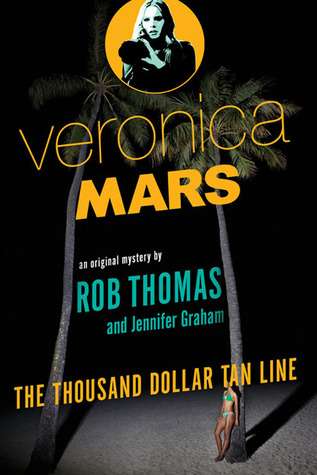
The Thousand Dollar Tan Line: Veronica Mars Keeps Going

This has been a terrific year to be a Veronica Mars fan. If it wasn't enough that the cast and creator were able to give us the Veronica Mars movie after a successful Kickstarter campaign, Rob Thomas proceeded to also write a novel featuring our beloved blonde detective. I devoured my copy of The Thousand Dollar Tan Line last weekend and was thoroughly entertained.

The book picks up exactly where the movie left off, so you should watch the film before embarking on the novel if you don't want to be blindsided by any of the numerous changes in Veronica's life. It features a spring break mystery; a girl who has been partying hard in Neptune disappears and Veronica is hired to help with the case since the local Sheriff's department is proving to be massively incompetent as usual. Another girl disappears, which would be bad enough if it wasn't for the fact that Veronica is connected to her in a way that makes her investigation even more complicated. I trust that's intriguing and vague enough to pique your interest. 

The regular cast of characters are all back and reading this novel genuinely feels like you're just watching an episode of the show. Rob Thomas and co-author Jennifer Graham know these characters inside and out and you can picture them perfectly in your head as you follow their twisted exploits. The beauty of novelization is that it gives fans more access to the character's inner monologues. We always had Veronica's voiceover to give us an insight into her thought processes but now we get a richer understanding of her friends and family and just what makes them tick. It's like a brilliant piece of fan fiction, except that it's written by the guy who created these characters in the first place so it's completely credible and amazing. 

Veronica Mars was a great show, then became a great movie, and now has been turned into a great novel. The Thousand Dollar Tan Line is just the first in a series and I am fully looking forward to subsequent novels. This book is a well-written potboiler mystery that has twists and turns, cliffhangers and red herrings galore. It's not highbrow literature but it is hugely satisfying to read and fully in keeping with the Veronica Mars legacy. If fans can't see her on screen, we'll happily settle for seeing her on our bookshelves. 

Friday, October 24, 2014

How to Train Your Dragon 2: Another Animated Treat

If 22 Jump Street was a good example of how to make a self-deprecating comedy sequel, How to Train Your Dragon 2 is a great example of how to make a sequel to a hit animated franchise. Developing old characters, throwing in some very interesting new ones, playing with dramatic conflicts while tossing in jokes, and wrapping everything up neatly in 2 hours. Who could resist?

The story picks up five years after the first movie. The Viking villagers of Berk are huge fans of dragons now, using them in every aspect of their daily lives, and happily co-existing with the previously feared creatures. Our hero, Hiccup (Jay Baruchel), is flying about on his dragon, Toothless, trying to find more species of dragons and map out the unchartered territories around the village. He is also trying to tune out his father, Stoick the Vast (Gerard Butler), who is urging him to take over as the chieftain of Berk. Things seem to be grand, but of course, trouble is on the horizon.

Hiccup and his fiance Astrid (America Ferrera) run into some dragon trappers, who try to steal their dragons. When confronted, they are told about a mysterious man named Drago Bludvist, who is collecting dragons to form an army that will be able to take over Berk. Stoick the Vast is terrified of Drago and believes there is no way to reason with him. But Hiccup believes that just as he was able to tame dragons, he will be able to reason with the murderous Bludvist and reach a compromise. Against his father's wishes, he sets off on a quest that will lead him to make unexpected discoveries about his family, dragons, and himself.

As with the original film, the animators have painstakingly rendered each dragon with a set of unique characteristics that delineate their species and abilities. Each human character is also lovingly rendered and voiced by extremely capable actors (though as ever, I find it confusing that all the adults are Scottish and the kids are American). The supporting characters provide a great deal of comic relief (Kristen Wiig is particularly hilarious as the weird Ruffnut) and the movie contains as many jokes as it does moments of heartfelt family drama or pounding action. There's also a very touching romantic interlude in the middle, which takes advantage of the fine score by John Powell and will appeal to a lot of the adults. A few female characters get to play rescuers instead of rescuees, which will be welcome to any young girls watching the movie, and overall, care has been taken to make a creative movie that still caters to a wide audience.

How to Train Your Dragon 2 is a fun film, guaranteed to please fans of the original and any people who would just like to hear Gerald Butler and Craig Ferguson sing a delightful Scottish ballad. The animators have constructed a beautiful and imaginative world, and they continue to add new characters and twists to keep it engaging.

Tuesday, October 21, 2014

Highway: A Rocky Road

Imtiaz Ali's first movie, Jab We Met, was a marvelous Bollywood romcom, funny and touching and perfectly reconciling modern romance and old-fashioned Bollywood storytelling. His subsequent movies have left much to be desired, which is why I did not watch his latest film, Highway, until I found myself bored on a plane. But having watched it, I am reminded that Ali is still a great writer-director who knows just how to merge the old with the new. 

Highway stars the spectacular Alia Bhatt as Veera Tripathi, the daughter of a rich businessman who is about to be married. Tired of the endless wedding preparations and forced politeness to interfering relations, she persuades her fiancĂ© to take her out for a drive in the middle of the night to get some fresh air. (Yes, that is literally all she wants to do, this is Bollywood after all.) However, when they stop at a gas station, they witness an armed robbery, and Veera is kidnapped for ransom. 

The leader of the gang is a man named Mahabir (played with angry restraint by Randeep Hooda). He knows it was a mistake to kidnap the daughter of such a well-connected man and simply wants to obtain his ransom and unload her as soon as possible. However, matters get much more complicated. Veera's a rather chatty and neurotic woman, seemingly more suited to being a Woody Allen heroine than a Bollywood damsel in distress. After her initial terror, she grows accustomed to her bizarre life on the road, and becomes increasingly friendly with her captors. But before you chalk this up to a case of Stockholm Syndrome, halfway through the film she reveals something to Mahabir that makes it clear why she might prefer this dangerous life to the opulent one she left behind. 

Imtiaz Ali concerns himself with character first and foremost, plot second. While the plot of Highway might meander slightly and veer in and out of cliche, Veera is a brilliantly realized character, full of dreams, darkness, ambition, and heartbreak. This is completely Alia Bhatt's movie; she commits wholeheartedly to this grimy, glorious role and her evolution over the course of the film is remarkable. Hooda does a tremendous job as well, but his character's natural reserve makes it more difficult to plumb his inner depths. But he still has both darkness and light within him and the two actors complement each other perfectly. 

Highway may not be innovative by Western standards, but it is certainly a valuable addition to the modern Bollywood canon. From a technical standpoint, Anil Mehta's cinematography is luscious, capturing all the beauty that the Indian countryside has to offer along with the dirt and chaos of its cities. A.R Rahman's magnificent music doesn't drown the scenes but uplifts them, lending even more emotion and pathos to the proceedings. But at the heart of it all are those wonderful performances and that powerful script that has such a sad but necessary tale to tell. This is an honest coming-of-age movie and it is refreshing to see Ali return to his roots of empowering female characters and giving them the agency in film that they still lack in real life. 

Saturday, October 18, 2014

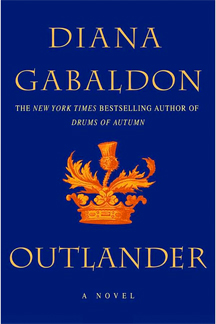
Outlander Part Deux: The Novel

Sometimes, you read a novel that is so brilliant that you feel like you've been socked in the solar plexus. This has happened to me with certain works of fantasy or Victorian literature. Since Outlander combines historical fiction with fantasy, as well as a dozen other genres, it was a perfect storm. I spent four glorious days reading (and often immediately re-reading) this novel and experiencing a roller coaster ride of emotions that left me breathless.

My recent review of the TV series contains a basic plot summary, so I won't rehash that here. I will say the show hews remarkably close to the book, even lifting entire conversations verbatim, and it is clearly catering to the needs of the long-time fans. I do wonder how the next eight episodes of the first season will tackle the rest of the novel, however, considering that an extraordinarily complex number of events take place. The writers face a seemingly insurmountable task of whittling all that down to eight hours and I look forward to seeing the results in April. But enough about TV writers - let's get to Diana Gabaldon, the original author of this magnificent tome.

Gabaldon's writing style is extraordinary. It is vivid, evocative, funny, dramatic, and moving. Every single one of her characters is a treasure - the first-person narrator, Claire Beauchamp, is an extraordinary woman, a true heroine for the ages. She is feisty, witty, intelligent, and fiercely capable. And her counterpart, Jamie Fraser, is cast in the mold of all those Victorian heroes women have been swooning over for years. Except that he is so much more useful, practical, romantic, and gentlemanly than any Mr. Darcy. Then you have characters like Jonathan "Black Jack" Randall, the most dastardly, stomach-turning villain you have ever encountered, who makes you want to tear your hair out. The secondary characters are too numerous to name, but they all leave an indelible impression as you grow to know and understand them. Whether it's a mysterious witch or some cunning clansmen, each one has a unique part to play in this intricate tale and they are all fully-realized and marvelous to behold.

Outlander's setting in the wild Scottish highlands is beautiful and meticulously researched. Gabaldon's prose places you squarely in the midst of the 1700s and we get to view it through Claire's modern 1945 eyes. Scottish words and phrases are sprinkled in efficiently, enough to remind you that a character is Scottish, but not so much to make them incomprehensible. The violence of the battle scenes and the cruelty of some of the backwards customs are jarring, and Gabaldon doesn't shy away from disgusting or terrifying her readers when such scenes crop up. Likewise, this is a famously sexy series, and she doesn't hold back in those scenes either. There's the much talked-about Chapter 14 (i.e. episode 7 of the TV series, for those not of the literary persuasion), and once Jamie and Claire get married, the novel is brimming with sex. It's not always romantic: sometimes it's angry, cruel, or resentful, but again, it offers up a complete picture of these characters and doesn't hide the turbulent moments of their complicated relationship.

The latter chapters of Outlander are a particularly gruesome and difficult read. You become so invested in these characters that you cannot believe the trials they are forced to bear. Things happen that upset me to even think about now, and yet they are perfectly plausible in the barbaric setting of this novel. The only unrealistic thing about Outlander is how so many of your favorite characters manage to stay alive - if we were really being historically accurate, Jamie would die of sepsis about twenty times over and Claire would have been raped and shot within five minutes of stepping through the stones of Craigh na Dun. Thankfully, Gabaldon does have a heart, and even though she puts her characters through hell, she gives them enough strength and resilience to keep fighting and loving till the end.

In a few shorts weeks, I have become a loyal Outlander fan, and I will be spending a lot of time reading the rest of the novels in the series. If you have been pining for a book that will reach right into your guts and stir up a whole lot of feelings, I can't recommend Outlander highly enough. If you staunchly refuse to read, you can still watch the TV show and see what all the fuss is about. But you'll be missing out on some really spectacular fiction. 

Thursday, October 16, 2014

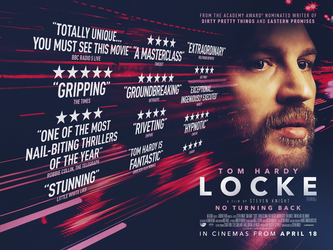
Locke: One Man in a Car

Locke premiered at Sundance in January, was released in a few theaters in April, and then disappeared. I heard great things but promptly forgot about it until I saw it was available for viewing on my flight. Now that I've seen it, I insist you seek it out immediately and treat yourself to this extraordinary movie.

It is tricky to describe this movie because it is only 84 minutes long and each second is a revelation. So here's the basic set-up. For the duration of the movie, you will watch one man, Ivan Locke, driving his car down the motorway and talking to various people on his car phone. He has to deal with a business and personal crisis at the same time, and is stuck in his car, having to explain to various people over the telephone how he is going to fix everything and not let them down. I know this doesn't sound particularly compelling, but Locke is played by Tom Hardy, who delivers a simply masterful performance as a man who is desperately trying to stay calm and calm everyone else down while things just spiral out of control. And the people he talks to are voiced by the likes of Olivia Colman, Ruth Wilson, and Andrew Scott, excellent actors who manage to make their presence felt solely through the power of their voices. I could picture them all in my head and the casting is really quite apt for these characters.

I last saw Tom Hardy in The Dark Knight Rises, where his role relied purely on physicality and menace as the villain, Bane. In Locke, his role is all about the character's psychology. In an hour and a half, you become intimately acquainted with who this man was, how the split-second decision to take a right turn is currently changing his life, and who he might become. Additionally he is doing this with a Welsh accent. I'm not sure why the character had to be Welsh, but I suspect it might be because the accent is so soothing and wonderful that you don't mind having to listen to Hardy speak in a car for the entire duration of the movie with no other change in scenery. He manages to make a concrete pour for a construction project seem like the most high-stakes activity in the world, and I was thoroughly mesmerized. I knew Hardy was a good actor, but this performance makes it clear that he is a great one, and I hope he gets more meaty leading roles in the future that continue to showcase his incredible talent.

Locke is one of those low-budget independent movies that always manage to startle me with their ingenuity. It's such a simple concept, and yet the taut script by writer-director Steven Knight is a work of art, a polished gem that manages to convey an entire world of characters and emotions despite the fact that you are only in a car with one man for the entirety of the film. The cinematography by Haris Zambarloukos is excellent, going in and out of focus on the unrelenting motorway lights and conveying the nightmarish confusion of the events that are taking place. Locke is a reminder that great cinema is driven by plot and performance, and you don't need special effects and millions of dollars to completely blow your audience away.

Wednesday, October 15, 2014

22 Jump Street: Skewering Sequels

I flew to Geneva this week, which means I got to watch a ton of in-flight movies and catch up on the films that slipped by me in theaters in early 2014. To kick things off, let's discuss 22 Jump Street

When I saw 21 Jump Street two years ago, I was pleasantly surprised. I had been expecting a hopeless reboot, and instead got a solidly funny movie that knew how to mock itself while also making full use of its comic talent. Sequels are always a dangerous proposition, but 22 Jump Street continues in the footsteps of its predecessor, as a self-satirizing, over-the-top, gag factory of a movie with two very likeable leads at the helm.

Channing Tatum and Jonah Hill reprise their roles as Morton Schmidt and Greg Jenko, the incompetent yet bizarrely successful duo at the heart of the Jump Street undercover police program. After their high school shenanigans in the last film, they have been promoted to college, where they are posing as freshmen to find the supplier of a new drug called WHYPHY. The differences between the smart but socially awkward Schmidt and dumb but charismatic jock Jenko quickly separate them in the college social structure and threaten to tear the duo apart. You can watch the movie to see whether or not their friendship stands up to the test (though I bet you can figure out the answer to that already).

There isn't much to say about the plot; it's all pretty old hat by now. But the movie is bursting with jokes about sequels and bloated budgets with nothing to show for it that make it clear they understand the audience's preconceived notions. Acknowledging the failings of sequels only makes this movie funnier and it is a two-hour mindlessly entertaining romp. My favorite sequence was a two-second scene where the duo drive past the Bernard Hill Centre of Media Studies as the score suddenly shifts to a variation on the Benny Hill theme song. It is such a throwaway gag yet highlights the filmmakers desire to pack this movie with as many hilarious moments as possible.

The cast is great - Hill and Tatum continue to play wonderfully off of each other, but the addition of Jillian Bell and Amber Stevens in key roles considerably enlivens the proceedings. Ice Cube is particularly scene-stealing as the duo's boss, Captain Dickson, and the whole movie is just brimming with a sense of fun. Ultimately, 22 Jump Street is a movie that doesn't take itself seriously at all, which is why it is a perfect sequel.

Tuesday, October 14, 2014

The Monogram Murders: Hercule Poirot Returns

As a massive Agatha Christie fan, I was thrilled to learn the Christie estate had authorized a new Hercule Poirot novel. Written by Sophie Hannah, The Monogram Murders is the first novel to feature the Belgian detective since 1975's Curtain: Poirot's Last Case. While it is thrilling to see Poirot back in action, using his "little grey cells," the novel itself a reminder that no one can craft a mystery as well as Agatha Christie.

The novel opens in 1929 London, with Poirot having a vacation of sorts and staying in a guest house. His fellow boarder is a Scotland Yard detective, Edward Catchpool. Catchpool is our narrator: it's unclear why Hannah chose to introduce a new narrator instead of the dependable Captain Hastings, but perhaps having to re-introduce one formidable Christie character was enough for her. Catchpool is very Hastings-esque, able to do solid police work but unable to make the intellectual leaps that are Poirot's forte when the two of them get caught up in a murder investigation of three dead bodies found with monogrammed cufflinks in their mouths. On the evening of the murders, Poirot met a frightened woman named Jennie, and he is convinced that she is linked to the victims and might be next. Catchpool is battling his own psychological demons and is happy to have Poirot's help on this case, despite being constantly made to feel like a dunce as the Belgian makes enigmatic suggestions and laments the deplorable state of Catchpool's intellect. It's a spot-on character study, and Hannah has certainly managed to bring back the Poirot of yore.

Despite Poirot behaving exactly as you'd expect, where The Monogram Murders fails to engage me is the plot. It is entirely too convoluted and melodramatic, reminiscent of the weird spiritualistic novels towards the end of Christie's career. Every Poirot novel features the grand denouement at the end, where he explains everything and points out all the clues that were right under our noses. This novel, however, has multiple denouements, as layer upon layer is added to the mystery until you almost don't care who the murderer is by the end. It's certainly an ingenious plot that works, but it feels too overwrought for a Christie novel. Several plot points also hinge a great deal on people's use of grammar, which makes this feel even more like a labored literary exercise than a truly exciting murder mystery. It all wraps up neatly, but ultimately does not have the ease and and awe-inspiring panache of a Christie novel. 

The Monogram Murders is a fun book for Christie fans but is certainly not a replacement for Christie herself. Rather than await future Poirot or Marple reboots, this novel has convinced me to just re-read the classic Christie novels. Nothing beats the original.