Monday, September 5, 2016

The Night Of: Nothing is Black and White

HBO's The Night Of is based on an acclaimed BBC show called Criminal Justice. However, the show it most reminds me of is The Wire. Which makes sense because it was co-created by former Wire writer, Richard Price. The show's other creator is Steve Zaillian, who won an Oscar for writing Schindler's List. With that kind of pedigree, it's no wonder that this is one of the most compelling and stark shows I've seen about the American criminal justice system.

Set in New York City, the show tells the story of Nasir "Naz" Khan (Riz Ahmed), a Pakistani-American college student who is accused of murdering a young white woman. Naz remembers entering her apartment and sleeping with her, but the next few hours are a complete blank - he woke up alone in her kitchen, and when he went upstairs to say goodbye, he was confronted with her dead body and fled the scene of the crime. The first episode of the show is a masterclass in storytelling, setting out the clues and characters like pieces on a chessboard, and the next seven episodes play out an intricate game that touches on justice, race, class, and morality.

Given that this is a miniseries with only eight episodes, any further plot details would spoil too much. So you'll have to take my word for it when I say The Night Of is well worth your time. It boasts impeccable performances from its cast - Riz Ahmed is sublime as the bewildered Naz, who goes into prison looking like Bambi and turns into something far more heartbreaking as the wheels of justice slowly grind towards his trial. John Turturro plays Naz's lawyer, John Stone, a man who may not have the best legal reputation and only became Naz's attorney by mistake, but who is willing to tap into his inner Atticus Finch and give this kid a chance. Peymaan Moadi and Poorna Jagannathan are incredible as Naz's parents, refusing to believe their son is capable of such a heinous crime and willing to sacrifice everything to get him a proper trial. Bill Camp is tremendous as the solid Detective Box, a man on the verge of retirement who does everything by the book and yet finds himself unsatisfied with this seemingly open-and-shut case. And then we have The Wire's Omar himself, Michael Kenneth Williams, playing Freddy, a prisoner who can offer Naz protection but embodies all the moral ambiguities that are at play in this story.

In addition, each episode is exquisitely shot and edited, offering up rich character studies and suspenseful intrigue. Moments of the show reminded me of Spotlight - just as that movie glorified the often humdrum nature of investigative journalism, The Night Of revels in portraying the plodding nature of police work or setting up a legal defense. A sequence where Box has to re-create Naz's movements on the fateful night is an editor's dream, cutting from police cam footage to cell tower records and E-ZPass receipts, to create a timeline of events that the audience already knew but is still thrilling to see pieced together after the fact.

The Night Of shies away from absolutes. There is no character who is right all the time, and there is no character who is truly evil. Everyone has a story and everyone has their motivations. Some might be worse than others, but in the end, everyone has a chance at redemption and a chance to fall from grace. As the story hurtles to its conclusion, every character undergoes a transformation that highlights the murky depths of human nature. Your favorite character will change from week to week, and your allegiances will keep shifting as you uncover more information about the people you thought you had pegged. The only certainty in The Night Of is that corruption, racism, and classism permeate all levels of society. And while the series offers some hope that well-meaning people can still fight the good fight, it is all too clear that the scars from that fight will last a lifetime. 

Sunday, September 4, 2016

Twelfth Night: Unfettered Joy

The first time I saw a production of Twelfth Night was three years ago at the Belasco Theatre. It was an acclaimed production, transferred over to Broadway after a successful run at Shakespeare's own Globe Theatre. It featured an all-male cast and strove for Elizabethan authenticity, showing audiences how this play would have originally been performed. Now, three years later, I witnessed a very different production of Twelfth Night put on by Public Works in the open-air Delacorte Theatre in Central Park. A zippy musical with contemporary songs mixed in with the original Shakespearean dialogue, featuring the most diverse cast of actors I've seen on stage, this production broke my brain. In the best possible way.

Directed by Kwame Kwei-Armah and featuring music and lyrics by Shaina Taub, this play opens with a musical number entitled, "If music be the food of love play on," which is the play's famous opening line. In this context, however, it is not sung by the lovelorn Duke Orsino, but Feste the fool (played with indescribable perfection by Shaina Taub), along with the play's ginormous supporting cast. The whole point of the Public Works initiative by The Public Theater is to partner with people and organizations across New York City and encourage participation from professional actors and non-professionals alike. The result is that the opening number features a bright and colorful stage crammed with a diverse and beautiful sea of humanity, featuring all ages, genders, and races, letting you know that this is going to a spectacle of epic proportions.

The play proceeds with alacrity, economically establishing the cast of characters and tangled plot featuring identical twins, unrequited love, and drunken pranks. Halfway through the play, Feste sings a quick catch-up song to remind the audience that Viola (who is disguised as a man named Cesario) is still not aware that her identical twin brother, Sebastian, is alive. As Viola and Sebastian unhappily wander on opposite sides of the stage, Feste mentions that she could reveal the truth to the two of them right now, but then the play would end prematurely and all the hard work the cast has put in over the summer would be ruined. That breaking of the fourth wall is a sheer delight, occurring throughout the play and keeping the audience engaged as they suspend their disbelief over the decidedly ludicrous plot.

Twelfth Night has always been my favorite comedy. I would giggle and guffaw at the mistaken identities and cross-dressing and random hi-jinx with the yellow-stocking'd Malvolio (played by Andrew Kober in this production with magnificently indignant pomposity - I could watch him declaim about his "greatness" for a solid hour). But until last night, I had not realized what a romantic comedy it was. Taub has penned some thrillingly soulful ballads to capture the unrequited love that Orsino feels for Olivia, Olivia feels for Cesario, and Viola feels for Orsino. Previously, I regarded all this romance as a hilarious plot point, but as the actors passionately sing their hearts out, you realize that while the audience is in on the joke, the characters are not, and their feelings transcend this comic farce. Nikki M. James, who plays Viola, has a particularly stirring voice and for the first time ever, Twelfth Night stirred up emotions in me that had nothing to do with laughter.

This production of Twelfth Night demonstrates how magnificent theatre can be when you employ a diverse cast and go all out on stage. One love song features dancers from the New York Deaf Theatre, who sign the lyrics in ASL as they employ breathtakingly graceful choreography. A fight song suddenly features drummers and martial artists from the Ziranmen Kungfu Wushu Training Center - it is unexpected, but a perfect addition to the already bonkers proceedings of this comedy. Speaking of bonkers, at one point someone in a Pikachu suit races across the stage, chased by some Pokemon Go players. You may ask why on earth that happens, to which I can only reply, Why not? This production is the polar opposite to the one I witnessed at the Belasco three years ago. And yet, despite its unconventional approach, it probably hews closest to what a modern Shakespeare would want people to see in his plays. It entertains, it delights, and most importantly, it reaches deep into your heart and conveys the true magic of a night at the theatre.

Tuesday, August 30, 2016

My Dad Wrote a Porno: Do Not Listen While Operating Heavy Machinery

Need to improve your Monday morning commute? Listen to a podcast called My Dad Wrote a Porno. You can guess that this is a NSFW (though I think I've recommended it to everyone I work with regardless), very adult podcast that you don't want your kids listening to. But if you're acquainted with the birds and the bees, grab your headphones (and your cervix) and get ready.

The show is hosted by three Brits: Jamie Morton, Alice Levine, and James Cooper. Jamie is the unfortunate soul whose father has written a pornographic e-book entitled, Belinda Blinked. His father writes under the choice pseudonym of Rocky Flintstone and this whole endeavor began as a retirement lark after he tired of writing tamer fare, like travel guides, with his wife. He gave the finished manuscript to his son, and the horror-struck Jamie decided there was only way to get through this piece of erotic fiction - reading it chapter-by-chapter on a podcast with his friends, Alice and James.

I first heard about this podcast on NPR's Pop Culture Happy Hour (the source of all of my favorite recommendations) and I was hooked after the first five minutes. And the people I have recommended it to have been similarly ensnared. I devoured the first season over a weekend, and thankfully, because Rocky Flintstone did not just stop with one book, the gang are now in the midst of reading Belinda Blinked 2, releasing a new chapter every Monday morning to start my week off right. I have frightened my fellow commuters by cackling on the shuttle or giggling on the street. But who cares, because this podcast is so brilliant. In addition, there are little "Footnotes" released on Thursdays that feature Q&As, deep-dives into themes that arose from a particular chapter, like a very informative Dutch lesson that gives you everything you need to know before a trip to Amsterdammmm, and interviews with celebrities who love the podcast (my favorite so far is the one with QI Elf Dan Schreiber from No Such Thing as the News - talk about everything I love mashed up into a glorious half hour).

I realize none of the above adequately explains what is so wonderful about MDWAP. It's an odd combination of bewildering plot (or lack thereof), un-sexy sex scenes (my fellow female listeners will back me up when I say there is nothing more cringe-inducing than the anatomically impossible references to cervixes sprinkled throughout the first book), stilted dialogue, and oddball characters ranging from our heroine, the bizarre Belinda Blumenthal who seems to think nothing of taking her kit off in every conceivable situation, to the Youngish Man, whose name we got as a complete afterthought once he was done shagging Belinda. And of course, this is all delivered in Jamie's fantastically soothing voice. He tries to be as professional as possible but simply can't hold it together when a particularly egregious event unfolds (i.e. every five to ten seconds) and requires as much moral support as Alice and James can muster. Even more hilariously, the trio will occasionally try to highlight moments when Rocky has genuinely written something well or displayed some kind of literary brilliance, only to quickly cast their praise aside as they get to the next horrifying sentence.

My Dad Wrote a Porno is the most gleeful, inane experience you can hope to introduce into your life. It is so funny, so unrelentingly preposterous, and such a product of the modern age where we can take the literary foibles of a retired Irishman and turn him into a worldwide sensation with a global audience of three million people. We can complain all we like about how fractured and chaotic the world is. But as it turns out, all we need to unite the masses is to listen to a hapless man narrate his father's erotic fiction. 

Sunday, August 28, 2016

The Great British Bake Off: Sweetly Satisfying

Much has been written about the excellence of The Great British Bake Off (or The Great British Baking Show as it's known in the States). This past week, the seventh season of the show premiered on the BBC with its highest ratings yet. Why do people love this show so much? Let me count the ways.

1. The contestants. Twelve amateur bakers are picked from across the UK. These are thoroughly ordinary citizens from all walks of life. None of them bake for a living but they all bake for enjoyment and this show will put their passion to the test. No matter where they're from or their family background, one thing unites all Bake Off contestants: their Britishness. These are not the showboating reality stars of American TV shows. These are self-deprecating Brits who will bake up a storm and then shrug their shoulders at a compliment, never willing to say they did a good job until someone forces them to acknowledge that they have accomplished a miracle. 

2. The judges. Mary Berry and Paul Hollywood. With names like that, they have to be good. And they are. They are renowned bakers in their own right but also the ideal judges - firm but fair, always willing to find something to praise if your bake went horribly wrong and bound to nitpick if you missed one tiny thing that would have transformed your almost-perfect bake into a masterpiece. They are knowledgeable, kind, and charismatic, the perfect mentors for eager amateurs. 

3. The hosts. The comedy duo of Mel Giedroyc and Sue Perkins are great audience surrogates. Two ladies who don't know anything about baking but are sure as hell going to taste all the delicious treats. As they cheerfully announce each impossible round and then wander around the tent offering humor and support to the harried contestants, they are like a pair of adorable puppies, seeking only to bring a smile to your face or comfort you when your souffle collapses before your eyes. 

4. The format. Every episode has a theme and consists of three rounds: the Signature bake, the Technical challenge, and the Showstopper. Contestants are briefed in advance about the first and third rounds so they can practice during the week in their homes and give their closest friends and families diabetes while coming up with wondrous creations that are destined to wow the judges and audience alike. But the Technical challenge is a devilish thing. Each week, one of the judges picks an obscure recipe for an item that most of the contestants have never heard of or never made. To make matters worse, the recipe doesn't have all the details, forcing the contestants to guess at how long to leave something in the oven or how long to proof the dough. It's always a wonder that anyone makes anything edible at all. 

5. It's simply wonderful. Like a perfect bake, the above four elements of the show combine to make something greater than the sum of its parts. Over the past few weeks, I watched the latest season on PBS. I already knew who had won because it was discussed at length in the British press, but as I watched each episode, I still found myself thoroughly invested in every single baker, cheering for their artistry and commiserating in their disappointments. And when I got to the finale, I teared up, because the winner was so utterly gobsmacked and so genuinely deserving. The show feels comfortable and predictable but over the course of ten weeks, you truly get to know these people and feel like they are your closest friends. Every person who gets eliminated is dearly missed and every person who wins Star Baker is genuinely celebrated. 

The Great British Bake Off is an insidious show, a seemingly simple reality program that nonetheless worms its way into your heart. It has no time for apathy or pessimism; it only wishes to promote warmth and cheer. Be warned, every episode will leave you ravenous. But as empty as your stomach may feel, your heart will be full. 

Sunday, July 31, 2016

The Wine Show: Oenological Entertainment

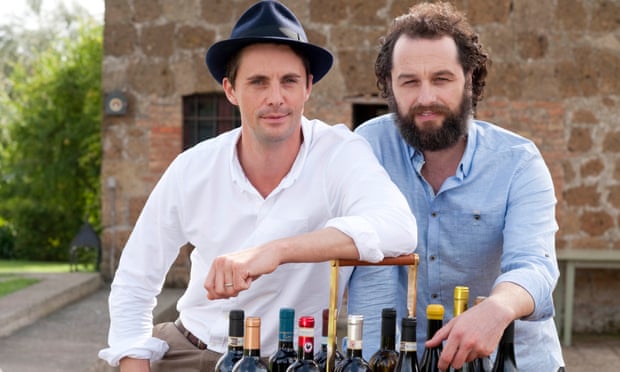
Ever wanted to know more about wine but had no idea where to begin? Or ever thought that wine is a topic far beyond your reach and your wallet? Well ITV presents The Wine Show, a comforting twelve-part series hosted by the charming duo of Matthew Goode and Matthew Rhys. They enjoy a good bottle of wine, but are far from experts, so they serve as the audience surrogates as they talk to experts who present them with reds, whites, and everything in between.

The two Matthews are based in a villa in Tuscany, and every week, they meet up with Joe Fattorini, a British wine expert who introduces them to wines from different parts of the world. Each episode follows a very structured format. First, Joe meets the boys with a couple of bottles of wine, says they came from some exotic locale, and then we watch a 10-minute video about his journey or the journey of fellow wine expert, Amelia Singer. Next up, is the gadget portion, when Joe talks about various gizmos that ordinary people and serious oenophiles can use to enhance their wine experience - this ranges from corkscrews to extravagant machines that pump oxygen into your wine for a hefty price tag. Then we visit a chef who has been tasked with selecting their favorite wine and creating a dish to go with it. This is the part of the show when you tend to stop wishing you had a glass of wine and wish you had eaten something instead. Then, Joe presents the Matthews with a task, and we get a delightful video where the two saunter off to some region of Italy to find a bottle of wine that meets Joe's exacting description. And finally, we wrap up with another video about some other type of wine, featuring either Joe or Amelia, drinking yet more delicious wine and reveling in the non-stop novelty of it all.

The Wine Show is a soothing and predictable program that is guaranteed to teach you something about how to appreciate a good bottle of wine. It offers a perfect balance between the enthusiastic novice Matthews, and the enthusiastic professionals, Joe and Amelia. Both camps are simply bubbling over with anticipatory delight when a bottle is uncorked, and the short videos are quite eye-opening about the global reach of a drink that is often considered to be the province of the stuffy elite. There are some remarkable stories about viniculture in the Middle East, and tales of the booming wine market in Shanghai and the difference between Western and Eastern palates that plays a huge role in wine preferences and descriptions.

You'll also learn that Matthew Rhys cannot stand sweet wine, while Matthew Goode is never more charming than when he is talking about a "glass of giggles." You will fall in love with Italy, wine, and everything else under the Tuscan sun because this is a show about people who are passionate about what they do and eager to showcase the hard work they have put into creating a perfect, delicious drink. Like a glass of champagne, The Wine Show is an effervescent delight that is guaranteed to put a smile on your face.

Sunday, July 24, 2016

Stranger Things: A Masterful Feat of Storytelling

The best thing you could do today is sit on the couch and binge watch the eight-episode season of Stranger Things on Netflix. A cross between The Goonies and Super 8, it encapsulates everything that is splendiferous about our current golden age of television. If it doesn't end up winning every award under the sun, who cares, because something like this doesn't need any awards for us to know that it is an instant classic.

Set in 1983 in a small town in Indiana, the show begins with Chapter One: The Vanishing of Will Byers. We meet Will (Noah Schnapp) and his friends, Mike (Finn Wolfhard), Lucas (Caleb McLaughlin), and Dustin (Gaten Matarazzo), four middle school boys who like to play 10-hour campaigns of Dungeons & Dragons in Mike's basement. Will bikes home one night after a long campaign and is all alone as his brother and mom are out (you know it's the 80s since the kids can bike around at night and the parents aren't fussing over their whereabouts 24/7). Unfortunately, there's something in the house, and it takes Will. Figuring out what "it" is and where Will has gone is the point of the next seven episodes. 

When Will doesn't show up to school the next day, his friends team up in classic 80's fashion to find him. These child actors are a brilliant bunch who are destined for greatness. Even more destined for greatness, however, is Millie Bobby Brown, who plays a mysterious girl known as Eleven. She shows up out of nowhere the day after Will's disappearance, seems to have strange powers, and unraveling her backstory proves to be the key to unraveling Will's whereabouts. In addition to the preteens, we have the full-on teenager, Nancy (Natalia Dyer), Mike's beautiful and perfect sister, who is having a classic moment of rebellion as she dates the hot guy (the perfectly named Steve Harrington, played by the perfectly coiffed Joe Keery). For reasons I won't divulge, she gets enmeshed in the spooky drama and teams up with Will's older brother, Jonathan (Charlie Heaton), to figure out what happened. 

As for the adults, we have Winona Ryder playing Will's mother, delivering one of the most pitch-perfect performances I've seen in ages. Everyone thinks she's crazy and you are with her every step of the way as you wait for someone to finally take her seriously. David Harbour plays Chief Jim Hopper, the local police chief who doesn't seem like much but gradually becomes the hero of the piece, untangling the giant conspiracy hanging over his town and vowing to find Will no matter what it takes. There are various other characters but delving into their stories and fates is too spoilery, so I shall leave you to discover them for yourself. However, every performance is a delight and this is certainly one of the best casts I've seen on television. 

It's not just the casting; Stranger Things is impeccable in every regard. The story is doled out in bewitching morsels that make it impossible not to hit play on the next episode. Every episode ends with a doozy of a cliffhanger and there is not a single moment that feels wasted or extraneous to the plot. The show's creators, The Duffer Brothers, have put a great deal of thought into keeping you engaged but never spilling all their secrets at once, ensuring that every episode is a treat that leaves you wanting more. Things unfold so naturally and brilliantly that you must marvel at the expertise that has gone into crafting this tale. It is that rare thing, a TV show that is paced perfectly, not too long but not too short, guaranteed to scare you and satisfy you over the course of the eight best hours of your life.

The show is also shot beautifully, fully capturing the look of the 80s, but invoking an eerie other worldliness that reminds you not to get too comfortable. The music choices and synth background score are a perfect accompaniment and the production design and visual effects are jawdroppingly magnificent. The big reveals are not remotely disappointing, and the show fully delivers on all of its storytelling promises. It's impossible to describe the emotions evoked by this show - it feels familiar, almost predictable, and yet it twists in unexpected, terrifying ways that leave you pining for more. Lately, many of the films and TV shows I've seen have felt like they tried to be grandiose and original but ended up bloated and rote. But Stranger Things is an intoxicating breath of fresh air and I cannot recommend it enough. 

Friday, July 22, 2016

No Such Thing as the News: Current Events with a QI Twist

When I learned that the QI Elves had put together a weekly show where they would discuss interesting facts about current events, I knew I would have to watch. However, after watching one episode of No Such Thing as the News, I knew I could never stop watching.

The show consists of 4 Elves: James Harkin, Andrew Hunter Murray, Anna Ptasynski, and Dan Schrieber. For those not in the know, they are four of the genius researchers who provide all the background material that Stephen Fry and his comedian pals juggle with on QI (a show you should be watching in its entirety, if you haven't already). As a result, they are skilled at delving into unlikely tangents and asking questions that turn the dullest news story into the most interesting thing you've ever heard. In every episode, global headline news and local council matters are given equal weight and what is often astonishing is how Mongolian postcodes can prove to have far more interesting global implications than Euro 2016.

The four panelists are charismatic and intelligent people, who clearly are as comfortable discussing global politics and economic theory as they are with making extremely bad puns and satirizing every single piece of news they lay their hands on. Anna Ptasynski is particularly adept at making her fellow panelists dissolve into tears of laughter, while Dan Schrieber is a deft host, leading them through various news stories and Twitter comments and ensuring they extract enough interesting information from every news item before they move on to more bizarre brilliance.

The most important fact about No Such Thing as the News is that it is freely available on YouTube for your global viewing pleasure. This show has extremely low production values (with one Twitter user declaring that "it looks like a hostage video"), and the only way they can convince the BBC to let them keep making more is to rack up the viewing numbers on those videos. I would watch every Sunday at the gym and nearly fall off my treadmill laughing. So while I exhort you to watch this show immediately and bump up their viewing figures so they can create many more seasons, I am definitely worried that I am going to injure myself when Season 2 is released. Oh well, it'll be worth it.