Monday, January 7, 2019

Bohemian Rhapsody: Strut That Stuff

I love Queen's music, so I've been jonesing to see Bohemian Rhapsody for a long while. I finally got myself to the theater and now I'll be singing Somebody To Love for weeks on end. As is only right and proper.

The absolute star of the show is Rami Malek. His portrayal of the flamboyant and brilliant Freddie Mercury is a tour-de-force performance, sweaty and magnetic, much like the man himself. You'd think having extra teeth shoved in his mouth to give him Freddie's overbite would make the whole performance feel forced, but anyone who has seen Malek's intensity on Mr. Robot knows that this is a man who gives his heart and soul to every performance and won't let the audience down. He is mostly lip-syncing to the music (no actor could be expected to do justice to Freddie's four-octave vocal range) but forget his lips, his whole body is thrumming to the music from start to finish.

The rest of the cast do good work as well, showcasing the variety of personalities that were around Freddie and how they dealt with his mercurial (pun intended!) temperament. Lucy Boynton is wonderful as Mary, the love of his life, who gives the man the support he needs but also has to deal with occasional unwarranted control and jealousy. Aidan Gillen and Tom Hollander are wonderful as the band's manager and lawyer, respectively, two businessmen who nonetheless get carried away by the band's brilliance and back up their wild schemes, even if that involves making an "operatic" rock album. Allen Leech has the awful job of portraying Paul Prenter, the man who ruins everything for Freddie and the band in a Disney villain-esque fashion. And Gwilym Lee, Ben Hardy, and Joe Mazzello do a nice job as Brian May, Roger Taylor, and John Deacon, Freddie's fellow misfits who make up Queen. Lee and Hardy particularly get a fair amount of screentime, which makes one wonder if that's because May and Taylor were the film's creative and music consultants.

The heavy involvement of the Queen band members behind the scenes was the cause for concern for my friend Katie, who, unlike me, actually knows about the band as opposed to just loving their music. For such a die-hard music fan, the movie is far too cavalier in re-writing the band's history to suit dramatic purpose, and is heavily sympathetic to the other members by blaming their woes on Freddie's desire to pursue a solo career. Indeed, even though I know nothing about the real-life goings-on, the movie felt incredibly Hollywood, with a screenplay by Anthony McCarten that traffics in every possible cliche. The way that characters talk or express themselves feels like something out of a Rolling Stone article about the band, not something that humans would actually say in conversation. The movie's best moments are when you focus on the music - either when it's being performed on stage or arduously put together in the studio where poor Roger must scream "Galileo" at higher and higher pitches until it's a wonder his vocal cords don't snap.

Bryan Singer is the purported director of this movie but he quit a few months into the making of the film for many undisclosed reasons. The movie looks very odd in places, with cheap special effects or poor cinematography that takes you out of the film for a bit. But I found myself willing to overlook everything as long as I got to see Queen perform at Live Aid. The final twenty minutes of the film  recreate that iconic concert and it gladdens the soul to see all these songs we've watched being put together culminate in one miraculous performance that gives you goosebumps even more than thirty years later.

All I wanted when I went to see Bohemian Rhapsody was to watch Freddie Mercury strut the stage. Rami Malek strutted like no man has strutted before and my heart was glad. It is an incredible performance in an otherwise so-so film, and there's certainly something wrong with you if you don't immediately go to YouTube and start watching that Live Aid concert. Rami Malek is somebody to love indeed. 

Saturday, January 5, 2019

Vice: Much Too Much

I'm not going to mince my words: Vice is a terrible movie. Halfway through watching it, I turned to my friend Katie, and literally went, "oh god, this is terrible." So if you were looking for a rave review, go elsewhere. However, for a dissection of how this movie went off the rails, read on.

Starring Christian Bale as Dick Cheney and Amy Adams as his wife Lynne, this is the story of how a "dirtbag" from Wyoming ended up becoming the most powerful Vice President in the history of the United States. The movie opens with 9/11 and Dick invoking executive authority in the Situation Room to make a lot of important decisions while the President is nowhere in sight. And then we flash back to follow his rise to power, starting off as a congressional intern to Donald Rumsfeld (played by Steve Carell, the only actor who doesn't quite manage to disappear into his role). 

The actors are the greatest thing about this movie. Christian Bale is well-nigh unrecognizable when he's portraying the older Cheney, and Amy Adams is brilliant, a veritable Lady Macbeth who drives Dick on to pursue greater and greater heights. Sam Rockwell as George W. Bush provides an awful lot of comic relief (much like the real man himself, sadly), and Tyler Perry has a rather marvelous turn as Colin Powell. But written and directed by Adam McKay, this movie is like a two-hour SNL sketch on cocaine.

You'll recognize a lot of the cinematic gimmicks and flourishes from The Big Short, McKay's previous film that served to explain the financial crisis in an engaging and informative manner. Unfortunately, in this movie, we're talking about gruesome wars and torture, not mortgage-backed securities. I don't need to repeatedly be reminded of the horrors of the Abu Ghraib prison and have scenes of bombing innocent civilians in Cambodia or Iraq unexpectedly flash up on the screen with no warning. It's a gimmick that almost trivializes those horrors. And there's the usual cameos of random actors breaking the fourth wall or text flashing up on the screen so you know exactly how important the unitary executive theory is and that it will be the point of the whole damn movie - did you not get that? Let's put it up on the screen five more times in ALL CAPS. 

Listen, I get it, Dick Cheney is an evil man. The only nice thing he does in the entire film is stand by his gay daughter, Mary, and he eventually turns on that too like a true cartoon villain. Interestingly, we get a lot more backstory about Lynne's parents and upbringing, but nothing at all about Dick's. And that's the trouble with this whole movie. It starts off with the premise, Dick Cheney is evil, so it's not interested in saying anything more beyond that. It's just going to serve up a litany of his abuses in as gruesome and offputtingly comedic a manner as possible. It is an ADHD nightmare, scampering from horror to horror, rapidly flicking through random frames of violence and apocalyptic scenarios while dreadful music plays in the background, because the audience would not otherwise understand that we are supposed to be appalled by what's happening in the White House.

Vice is a liberal scaremongering film, out to tell us about all the unprecedented authority Dick Cheney amassed while he was Vice President, so now we should all be terrified that Trump and Pence will do the same. Unlike The Big Short, where the entire audience could get behind it because we all universally agree that bankers are demon spawn, this is a movie that is guaranteed to anger half the nation and further their belief that all Democrats want to do is rabble rouse and attack Republicans. I already had a poor opinion of Dick Cheney going into this film. What I did not expect was that I would leave with a decidedly poor opinion of a liberal filmmaker. 

Wednesday, January 2, 2019

Green Book: Race Relations 101

Green Book won the Toronto International Film Festival's People's Choice Award in September and initially generated a great deal of awards buzz. However, this was followed by a backlash about it being a movie about racism that caters to a white audience rather than truly reflecting the black experience. Having watched the movie after all the hullabaloo, I can agree that it's a well-done crowd pleaser that suffers from being a bit too neat and elementary.

Set in 1962 (and based on a true story), the movie stars Viggo Mortensen as Tony Vallelonga, an Italian-American bouncer from the Bronx who needs a job for two months while the night club he normally works at is closed for renovations. He interviews to be a driver for Doctor Shirley, and discovers that rather than being a doctor, Don Shirley (Mahershala Ali) is a brilliant pianist who is now embarking on a multi-city tour of the Deep South. Being a black man, he needs a man of Tony's talents at navigating trouble with both finesse and his fists as needed.

What follows is your classic road movie with two diametrically opposed characters who gradually learn more about each other and develop an unlikely friendship. It's a trope as old as time, very Hollywood, but in the hands of two such fine actors, you can't really quibble. Mortensen is fantastic as the volatile and brash Tony, a man who is deeply prejudiced at the beginning, but chooses loyalty to his boss over his innate racism at key moments, thereby widening his horizons. Ali is magnificent as the dignified and mesmerizing Don, a man who can speak multiple languages, play classical and pop music with effortless grace, and has specifically chosen this tour over the easier option of staying in his swanky digs over Carnegie Hall and being revered by the Park Avenue crowd. He is out to make a point, and as he and Tony venture deeper into the Jim Crow South, things get dicier.

The title of the film is based on The Negro Motorist Guide Book, a guidebook that helped African-American travelers in the South find motels and restaurants where they could stay and dine. The movie's focus tends to be on Tony's indignation at how Don is treated; the same white people who sing his praises and are enraptured by his music are the ones who firmly remind him that he needs to use the outhouse or cannot dine in the whites-only club, only play there. There are two moments when they are stopped by cops, one time in the South and another time in the North, which makes for a very tidy contrast - however, we all know that just because you're in the North, you're not guaranteed to encounter a friendly white cop. Moments like that are where this movie is far too simplistic, and while it illustrates a lot of the blatant racism and horrors of the Jim Crow South, you see them more through Tony's eyes as a white man who is justly indignant, rather than the much more interesting perspective of Don Shirley.

The one moment in the film that truly resonated with me was when Tony kept badgering Don about how he didn't know enough about "his people." He doesn't eat fried chicken, he doesn't know who Aretha Franklin is, the list goes on. Eventually Don blows up, describing his childhood where he was sent to Leningrad as a young boy to study music and even though he can play Chopin like no one else can, record companies insist he plays popular music because there's no call for a black concert pianist. He isn't black enough for black people, but certainly not white enough for white people, so where does he belong? And that's when I knew that was the story I wanted to hear, but was sadly not going to get. Reading his Wikipedia biography subsequently, Don Shirley is a fascinating man, and this movie would have greatly benefited from taking his point of view more often. Unfortunately, when you have a screenplay written by three white men, that's going to be difficult to achieve.

Green Book is a good movie and benefits from two excellent actors giving the material all they've got. However, it makes an excellent case for the need for diversity in Hollywood behind the camera. There was an opportunity to tell a truly deep and meaningful story about a brilliant African-American man that most people have never heard of. Instead, we got a story about an Italian-American with a heart of gold who learned that black people have a hard life and his family should stop using racial slurs. This movie is good, but man, it could have been great. 

Sunday, December 30, 2018

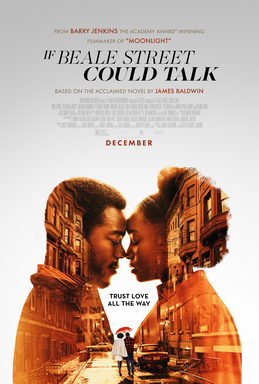
If Beale Street Could Talk: Love Can't Conquer Racism

Thanks to the score by Nicholas Britell and the deft screenplay and direction by Barry Jenkins, If Beale Street Could Talk is one of those movies I watched with a perpetual lump in my throat. Beautiful, romantic, and terrifically sad, this is a film that immerses you completely in its characters and forces you to live their experience. When you leave the theater, you still won’t have left Beale Street.

The movie tells the story of Tish (KiKi Layne) and Fonny (Stephan James), two young lovers who are trying to build a life for themselves in 1970s Harlem. Unfortunately, you know right off the bat that things don't go right for them as the film follows a staggered narrative. Therefore, you know Fonny is now in jail, and you will need to contend with that as you revisit how he and Tish fell in love and what she's going to do when she discovers she is pregnant, while he has been wrongfully imprisoned.

Adapted from James Baldwin's searing novel, the movie conveys Baldwin's outrage and despair, with Tish's narration often quoting the novel verbatim. At times, this took me out of the film - Baldwin has a very distinctive voice, and I knew these were his words, not Tish's. But he still spoke the truth. This is a story about how racism infests every single aspect of this young couple's life, and as the opening title card notes, this isn't an individual story. This is a story happening all over America. Despite being set in the 1970s, it is heartbreaking to see how much of this still holds true in 2018, with white police officers falsely accusing black men of crimes, and minorities being pitted against each other to fight for whatever scraps of dignity they can get. Those who are poor try to make their way up, but the system is so inherently rigged against them that the only joy of this movie is watching the love between Tish and Fonny that blooms like a beautiful flower amidst the ugliness around them.

When a character speaks in this movie, they are almost always in the center of the frame, directly addressing the camera. Therefore, when Tish is talking to Fonny, it feels like she is talking to you. This is such a simple but brilliant way to immediately draw the audience into the story and make them feel like a part of this world. And these actors, though newcomers, are going to be household names. Layne and James deliver soul-captivating performances, wringing your heart out as their eyes burn with love and then gradually dim with the realization that life is always going to be unfair. Regina King delivers a knockout supporting performance as Tish's mother, a woman who stands by her daughter and future son-in-law in every harrowing circumstance. Colman Domingo is similarly wonderful as Tish's father, a man who has used every means necessary to support his family and will continue doing so for as long as he needs to.

If Beale Street Could Talk is a mood piece, much like Jenkins' previous masterpiece, Moonlight. There are no hurried takes; the characters have all the time in the world to have long conversations, exchange longing glances, and show you what it's like to be a black woman or man in America. Whether it's housing discrimination, police brutality, or sexual harassment, minorities get the short end of the stick, and often their only hope is to look out for each other. The only good white person in this whole story is the lawyer that Tish finds to help Fonny and even he quickly discovers that helping a black man means he will be ostracized by the establishment. As the movie ends, it becomes clear that this relentless cycle of racism couldn't be broken in the 1970s, and it sure doesn't feel like we have broken it in 2018. But perhaps one small victory we can point to is the presence of filmmakers like Jenkins who can now shine the spotlight on these stories.

Wednesday, December 26, 2018

The Favourite: Ladies In Waiting

From the minute I saw the trailer for The Favourite, I knew this was a movie I would relish. Starring the holy trinity of Olivia Colman, Rachel Weisz, and Emma Stone, and directed by Yorgos Lanthimos, this is a cinematic slam dunk. Throw in the fact that it's a periodic piece with gorgeous production design and snappy dialogue courtesy of writers Deborah Davis and Tony McNamara, and this is two hours well spent at the cinema.

The movie is set in 1708 England during the reign of Queen Anne (Olivia Colman). A rather petulant and disinterested monarch, Anne has little interest in running the country and happily leaves the matters of governing and determining the course of the war with France to her right-hand woman, Sarah Churchill, the Duchess of Marlborough (Rachel Weisz). Sarah wields incredible political power and has the Queen's affections (which are more than just platonic), but she is also bracingly honest and refuses to be a toady. She tells the Queen if her make-up makes her look like a badger but will also take care of her when she has a severe attack of the gout. It's a bizarre relationship that gets strained when Abigail Hill (Emma Stone), a distant cousin of Sarah's, arrives looking for employment.

Do not be fooled by the pretty and poverty-stricken Abigail. She has had a miserable life after her father lost her in a game of cards to a German when she was 15 years old (yes, let that sink in) and when she arrives at the palace, she is bullied by the other staff, as well as Sarah. However, desperate to restore her status as a lady, Abigail starts to play a clever game, currying favour with Queen Anne and eventually setting her sights on replacing Sarah as the Queen's favourite. Watching how she goes about it is a masterclass in manipulation and it's rather wonderful to experience how you go from feeling sorry for Abigail, to rooting for her, to suddenly being horrified at her villainy. Sarah might be rude and demanding, but at least she does that to your face instead of in the shadows.

Olivia Colman is brilliant, playing a depressive queen who does still occasionally remember the enormous power she wields and can throw an epic tantrum. Rachel Weisz is a stylish and no-nonsense power broker who can handle war strategy and palace finances without blinking an eye. And Emma Stone is a ruthless mastermind, determined to make her way to the top but still naive enough to make mistakes along the way. All three actresses greatly benefit from Lanthimos' penchant for close-ups: they have incredibly expressive faces that can convey about 5 pages of storyline without a line of dialogue.

The dialogue is a sheer delight, full of barbed sarcasm and quintessential English dryness. It's not for everyone, but it sure was for me. And the music is eerie, with Psycho-esque strings in the background to remind you that as hilarious as some of the antics on screen may be, this is very much the story of a struggle for power with incredibly high stakes, and you shouldn't be lulled into a false of security. Lanthimos is fond of a fisheye lens and strange angles that can throw you off balance and remind you that all is not quite right in this palace. And at times he superimposes images of the three women on each other, as a reminder of how interconnected their lives have become and what a challenge it will be to untangle this mess.

Filmed at Hatfield House and Hampton Court Palace, this movie is utterly sumptuous and dripping with historical eye candy. Featuring the work of costume designer Sandy Powell (who also did Mary Poppins Returns - this woman is out to get ALL the awards this year), there are a lot of black-and-white outfits with intricate lacy designs that are geometric gorgeousness. This Vogue article elaborates in much more detail if you want to go down a rabbit hole. On the flipside, the men are foppish nightmares, bedecked in elaborate wigs, layers of face paint, and ever-increasing moles. The palace is rife with bored aristocrats engaged in insane pursuits like racing ducks or pelting naked men with oranges, while the main trio of women are essentially running the country.

The Favourite was my favourite for many reasons, but emphatically because it features three incredible female acting performances. This is still such a rarity in cinema, and to see three women at the top of their game have the chance to shine was a pure delight. The men really are supporting characters in this film, with very little to do but go along with the women's orders, and get manipulated any time they think they are in charge. Instead, it's the three ladies who get to banter with caustic sarcasm and prove that, who run the world? Girls.  

Monday, December 24, 2018

Mary Poppins Returns: Practically Perfect In Every Way

We all know 2018 has been a rough year. So what better way to end it than with a spoonful of sugar? Starring the bewitchingly delightful Emily Blunt as our favorite nanny, Mary Poppins Returns is everything you need to sit up and smile for a solid two hours. I should know - I went with my friend, Lynsey, who spent the entire film literally squealing with delight.

In this sequel, Mary Poppins returns to help the children of the now grown-up and widowed Michael Banks (played by Ben Whishaw - another delight). He has been struggling to keep the household together since his wife's death, aided by his sister, Jane (Emily Mortimer - yet another delight - notice a pattern?), and trusty housekeeper, Ellen (Julie Walters). Lin-Manuel Miranda is the neighborhood lamplighter, Jack, a former apprentice to Bert the chimney sweep from the prior movie, complete with Cockney accent (less awful than the much maligned Dick van Dyke accent but still dicey). And there are the three adorable children (Nathanael Saleh, Pixie Davies, and Joel Dawson) that Mary Poppins has to teach to use their imagination and put aside grown-up cares to remain children a bit longer.

The movie is a classic Disney romp from start to finish, brimming with brand new musical numbers and catchy choreography courtesy of director Rob Marshall. If you can, I would avoid reading the opening credits, because there are quite a few casting choices up front that are so much more exciting when revealed during the film. When I saw Sandy Powell was the costume designer, I got real excited, and boy, did she not disappoint. There's a sequence in the movie when the characters enter into a 2-D animation world, and the costumes that they are wearing do the most extraordinary job of looking like they're two-dimensional whilst being on three-dimensional humans. I can't quite explain the effect; they look slightly hand-drawn and drop-dead gorgeous.

I can't say the music is something that stuck in my head - there's no Supercalifragilisticexpialidocious-esque number that blew my socks off - but Blunt can sing her heart out and of course Miranda can too, so they sell every number. Some of the songs are incredibly moving and sad, whilst others are ribald and slightly scandalous for children - at one point, I wondered if Rob Marshall had forgotten he was directing Mary Poppins and veered off into Cabaret. But the special effects are jawdropping, and even though they're relying on old-school 2-D animation, they've found a miraculous way to blend it seamlessly with the 3-D action. By the end of this movie, you will feel like a little kid again, because you have completely suspended your disbelief and entered the world of your imagination.

Mary Poppins Returns says pish posh to cynicism; instead, every frame is pure joy distilled into its cinematic essence. It is the best Christmas movie you could offer up to yourself this year. We all need to rejoice: let Emily Blunt and Lin-Manuel Miranda show you how it's done. 

Monday, December 17, 2018

Roma: Affecting Art

If you have a Netflix account, you may have noticed your login screen has turned into a black and white ad to Roma. Forget whatever you were planning on binge watching, and spend the next two hours watching Alfonso Cuaron's masterful ode to Mexico instead.

The movie tells the story of Cleo (first-time actress Yalitza Aparicio who must now star in ALL the things), a maid for an affluent family in Mexico City. The opening credits are of soapy water flowing over tiles in the forecourt of the family home, and as you watch the shadow of a plane flying overhead on the lapping waves, you know that what you are about to enjoy is an artistic feast for the senses. Indeed, it is paramount that you turn the volume up, because this movie surrounds you with the cacophony of Mexico City. Dogs are barking, cars are honking, crickets are chirping, the radio's blaring. While the foreground may follow Cleo's adventures, there are a thousand other stories taking place in the background. I liken it to a Where's Waldo book - you know there's a central character you're supposed to be looking for, but as you gaze at the page, there's so much happening in the periphery that you sometimes have to remind yourself to return to Cleo and her employers.

I won't go into any more detail about what happens to Cleo or the family she works for. Things build on each other gradually and by the time the film reached its conclusion, I was startled to discover that I was irrevocably in love with this woman and rooting for her every moment. The reason I was startled is because this is such a classically "arty" film; shot in black and white, with breathtakingly crisp cinematography and scenes that are staged to elicit the best effects of light and shadow to dazzle your eyes. In the midst of all this beauty, I didn't think I felt an emotional connection to the story, but how wrong I was. Yalitza Aparicio and Marina de Tavira (who plays Sofia, Yalitza's employer) both break your heart in different ways as women struggling to get by, even though they come from extremely different backgrounds.

Roma is a magnetic movie, compelling to look at and listen to, but also deeply affecting and emotional. It highlights the everyday beauty in a maid's mundane existence and the ugliness among the upper classes, and brings them together in dramatic set pieces that are as gorgeous as they are frightening. There are terribly sad moments, but also incredibly funny ones (watch out for every scene with the family car - they made me laugh and then reached a very satisfying resolution). I won't be surprised if Alfonso Cuaron nabs an armload of Oscars next year - as writer, editor, cinematographer, producer, and director, this is emphatically his vision and his story, and it is a love letter to the city of his childhood. In one scene, some characters watch the 1969 space movie Marooned in a theater, and you immediately know this is what inspired Cuaron to make Gravity 44 years later.

Roma reminded me a great deal of my summers in India, and made me wonder about the inner lives of the maids who always came in and out of my relatives' homes. I am woefully ignorant of Mexican history and did not understand the political backdrop of riots and unrest, but who cares about worldly matters when your only focus is to ensure that Cleo will be alright? Like the family she worked for, I loved Cleo so, so much, and I could happily spend a few more hours watching her lie in the sun after doing the laundry and listen to the birds sing. Does the art sometimes feel artificial and heightened? Yes. But does it star a woman who is so beguiling that you will find her every movement to be as graceful as a ballerina's? Yes.