Friday, September 11, 2020

September Movie Roundup: Bill & Ted, The Secret Garden, I'm Thinking of Ending Things

Another weekend is upon us and I have another set of mini movie reviews if you need suggestions for how to while away the time. Though this is a decidedly esoteric trio of films.

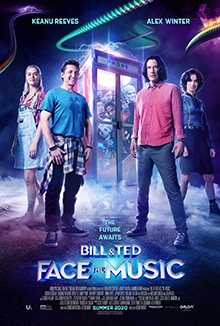
Bill & Ted Face the Music: I had never watched any of the Bill & Ted movies, so in preparation for this sequel, twenty years in the making, I rewatched Bill & Ted's Excellent Adventure and Bill & Ted's Bogus Journey. Loved the first, thought the second was odd, and as a result, Face the Music, which is a mix of the two, is excellent fan service. For those not in the know, the movies follow William "Bill" S. Preston, Esq. (Alex Winter) and "Ted" Theodore Logan (Keanu Reeves), two teenagers who have a band called Wyld Stallyns. They are flunking their history class, but then receive a visit from Rufus (George Carlin), a time traveler from 2688, who tells them to get into his time traveling phone booth and go back into history to talk to various historical figures to flesh out their final history report. Rufus is invested in their future because he hails from a Utopian society that is built around the myth of Bill & Ted as the Two Great Ones, who created a song that would unite the world. 

Yeah, it's the world's most absurd premise. In Bogus Journey, things get weirder with a whole trip to the afterlife, fighting with evil robots, and playing Twister with Death. And in Face the Music, our heroes are now middle-aged fathers who still haven't created that song that will save the world and the space-time continuum is getting increasingly warped. So what follows are extreme shenanigans that pull on themes from the prior two films with the fun twist of now including their teenage daughters in the mix. My favorite part of these movies is the dialogue - Bill & Ted have a very specific way of speaking that is an intriguing mix of California surfer dude and Shakespeare. And it's such a delight to see Winter and Reeves reprise these roles twenty years later and still have that enduring friendship. The time travel logistics are also surprisingly well-thought-out and it's all a lot of fun as long as you don't think about it too hard. It's 2020, and Bill & Ted are back. What more do you want dude?

The Secret Garden: We had to read The Secret Garden in school and I loved it. I also have fond memories of watching the 1987 Hallmark movie adaptation, where we all squealed in horror at the tacked-on epilogue where the grown-up cousins decide to get married. But now, we have our very own 2020 adaptation of this classic that stays true to the book and is a perfectly pleasant distraction for an afternoon. 

Set in 1947, the story follows Mary (Dixie Egerickx), a young orphan who is shipped back to England to stay with her uncle when her parents die in British India. She is a difficult child and initially does not endear herself to the servants in the house. Her uncle, Lord Craven (played by Colin Firth, who delightfully had a cameo as the adult Colin in the 1987 movie!) is a grieving widower and just tells Mary to behave herself else he'll ship her off to boarding school. Being an inquisitive child, she roams around the house and finds her cousin Colin (Edan Hayhurst), a bedridden, petulant boy who has been coddled all his life but also told that he is too sick to do much. He seems like a lost cause, so instead Mary befriends one of the maid's brothers, Dickon (Amir Wilson) and the two of them have adventures roaming around the estate, and playing in the eponymous garden, a mysterious but beautiful place that has been locked up and taken over by Mother Nature. What follows is a sweet tale of friendship and family mysteries, and re-introducing whimsy into the lives of adults and children who have been taking everything far too seriously.

Egerickx is a wonderful actress who seems poised to be yet another British child actor who goes on to do great things. And the movie's special effects and production design are lush and wondrous, particularly where the garden is concerned. It's a lovely movie if you want to re-kindle your childhood memories of the book, or experience the story for the first time. Is it the best movie of the year? No. But is it perfectly serviceable and entertaining? Yes.

I'm Thinking of Ending Things: I just watched this movie and I have no idea what happened in the past two hours. This film is an enigma wrapped in a conundrum wrapped in a riddle. It begins with a couple (Jessie Buckley and Jesse Plemons) driving in a snowstorm to visit his parents (David Thewlis and Toni Collette) for dinner. They get to his parents' house, have dinner, and drive back in the snow. But oh my GOD. So much stuff happens! And yet, I have no idea what happens! The entire thing is like watching a play and then a nightmare. It's classified as a psychological thriller and the soundtrack is always creeping up your spine and giving you goosebumps. The actors are absolutely extraordinary - I have always loved Jesse Plemons and he doesn't disappoint, but Jessie Buckley is a revelation and is bound to be the next big Irish import (seriously, it is astonishing that she is Irish, it's like we don't need any American actresses any more). This is the acting opportunity of a lifetime and the two of them get to deliver performances that showcase their complete range. But again, what is this movie about? I. Do. Not. Know.

Watch this movie so we can then attempt to discuss and dissect it together. I, for one, am thrilled I got through it because now I will go down the rabbit hole of reading every article about it and listening to every podcast about it, and have smarter people explain to me what the hell I just watched. There were bits I enjoyed, and the dialogue was rather delightful in its pedantry and wide-ranging references to literature, science, and movies, all things I love. But man oh man, as bonkers as I thought it was at the beginning, nothing could have prepared me for how bonkers it got by the end. This is an absolute fever dream of a movie. Do I recommend it? No. Do I still desperately want you to watch it so you can explain it to me? Yes.

Monday, September 7, 2020

P-Valley and I May Destroy You: A Binge Bonanza

I had the last two weeks off so I put them to good use by bingeing my heart out on two shows that received a great deal of critical acclaim but hadn't made their way to my watchlist yet. I'm grateful I didn't have to watch these shows week to week and could instead mainline the majority of episodes and then impatiently wait for the finales to air. And now, all episodes are available to you for your viewing pleasure: lucky you!

I May Destroy You: Written by and starring the brilliant Michaela Coel, this show follows Arabella (Coel), a British-Ghanaian woman in London who got famous on Twitter and is now a novelist and Millenial icon. She is furiously trying to finish a draft of her new novel but decided to meet up with some friends in a bar for a break. The next morning, Arabella wakes up in her flat, and can't remember anything from the night before. She assumes it was just a really wild night. However, she has a cut on her forehead and feels awful, and as the day progresses, it's clear that something's not quite right. That's when she starts having flashbacks to the night before. And has the dawning realization that at some point in the evening, her drink was spiked and she was raped. 

This is a dark show, but Coel somehow manages this insane tone throughout where there is actual comedy as Arabella tries to process her trauma and solve the mystery of what happened that night. By her side are her best friends Terry (Weruche Opia) and Kwame (Paapa Esiedu), and as the series progresses we also get to see the sexual traumas those two have gone through in the past or present. Kwame is gay, so there's a whole other mess of sexual politics and "discreet" hookups he is trying to manage, and there's an interesting juxtaposition later on in the show between how the police treat Kwame versus how they treat Arabella. 

The most fascinating aspect of I May Destroy You is that Coel doesn't especially try to make any character "likable." Arabella can sometimes be her own worst enemy, and there are moments when she lashes out against her friends, or potentially exploits her experience in selfish and strange ways. This is also a show about consent - we all know rape is wrong, but this show isn't interested in black and white; it wants to explore all the grey areas in between and the many ways in which a consensual sexual encounter can quickly turn into a nightmare scenario. It sparks uncomfortable trains of thought, and is deliciously smart and philosophical. And the series finale was a thing of beauty, an epic conclusion that felt apt but open to interpretation and offered up a satisfying ending while still ensuring nothing was tidy. 

This is the perfect show for the #MeToo era and given the mostly Black cast, it is also a perfect #BlackLivesMatter watch (I would laugh when Stephen Wight would occasionally pop in as Arabella's white roommate who really has nothing to do in this show except be the supportive friend, a neat twist on the supportive Black friend trope). Do you want to know what's it like to be a Black woman in London, the child of Ghanaian immigrants, trying to make a life for yourself on social media whilst dealing with creepy men who think they have the right to your body? Well then watch this show and prepare to be horrified and saddened, but bizarrely compelled and entertained at the same time. Michaela Coel is a fantastic actress (her face, alone, is an expressive masterpiece), but the true star of this show is the writing and she must be heralded as an absolute master for her ability to take one of the world's most difficult subjects and somehow make it both funny and human. I still can't understand how she did it, but I'm glad I got to see it.

P-Valley: Created by Katori Hall, this show is based on her play, Pussy Valley. And it is easy to tell that this show is the work of a playwright the minute you start listening to the dialogue. The story of the Pynk, a strip club in the fictional city of Chucalissa, Mississippi, this show is an absolute feast for the senses but my personal highlight is to let the dialogue wash over me and delight in the absolutely stunning writing. It wouldn't be hyperbolic to say that it often feels Shakespearean - I may not always understand what the characters are saying as there can be a lot of Southern Black slang being flung about, but much like watching Shakespeare, you don't need to understand the words to understand the sentiment. That comes pouring through simply from the cadence of the line delivery and the impeccable work of the actors who make up the motley crew at the Pynk.

This show scratches the itch left by Hustlers, a movie that left me wanting to see more strippers being badasses. Is this show incredibly graphic and not for the faint of heart? Sure. But I can honestly say the first word that comes to mind when watching these women dance isn't "erotic;" it's "athletic." My heart was in my mouth every time a woman would slide down a pole head-first, convinced that I was about to witness a traumatic brain injury. These ladies are absolute gymnastic legends, and I found myself cheering and wishing I had a couple of dollar bills to throw at my screen whenever the drama slowed down and we were treated to an expertly-choreographed dance scene where you got to revel in these women and their expertise. 

However, off the stage, there is plenty of drama to go around. There is an elaborate cast of characters, with the new girl, Autumn (Elarica Johnson), who harbors a dangerous secret, the reigning queen, Mercedes (Brandee Evans), who is planning her retirement, and the club's manager, Uncle Clifford (Nicco Annan), who is simply the most wondrous character I have gotten to see on TV in a while (Annan's line delivery would certainly make Olivier weep), and serves as a constant reminder to me to be more mindful of using the right pronouns. Apart from being a colorful and visual feast, the show also features the most incredible soundtrack. J. Alphonse Nicholson plays a rapper called Lil Murda, and the first time I watched the character of Keyshawn (Shannon Thornton) dance to his song "Fallin'," I couldn't get that song out of my head for days. And the theme song, "Down in the Valley" by Jucee Froot is a fun and eerie song that always immediately sets the tone at the beginning of every episode.

Every character in this show is brimming with complexity and doesn't fit any of your preconceived notions. As the show progressed, I found myself on the edge of my seat after every episode, desperate to know what would happen next. Would the Pynk be screwed over by corporate interests? Why does Autumn know so much about money laundering? Is Mercedes going to start her gym? Will Keyshawn ever escape her abusive partner? What amazing outfit will Uncle Clifford be wearing next? The show is compelling and witty and a rollercoaster ride from start to finish. Thankfully it has been picked up for another season, and I cannot wait to see where they go from here. 

Like I May Destroy You, P-Valley also features a mostly Black cast and it is such a welcome change to see more diverse viewpoints represented on screen because Black creatives are being given control behind the cameras. This is the kind of television we get when we finally allow Black women to tell stories, and while it took way too long to get here, we certainly can't stop now. More please.

Thursday, September 3, 2020

A Suitable Girl and Indian Matchmaking: Marriages Are Not Made in Heaven

SPOILER ALERT: I will be giving away a lot of plot points to both Indian Matchmaking and A Suitable Girl in this post. Consider yourself warned. 

Like most of the world, I bingewatched Indian Matchmaking in July and was alternately tickled and horrified. Mostly tickled by the Indian-Americans who were just desperate and looking for love, and then horrified by the regressive Indians who seemed to think that getting a wife was the equivalent of hiring a maid that you don't have to pay. So you know, slave labor. At the center of it all, of course, was the infamous matchmaker, Sima Taparia, aka Sima auntie, aka Sima from Mumbai. 
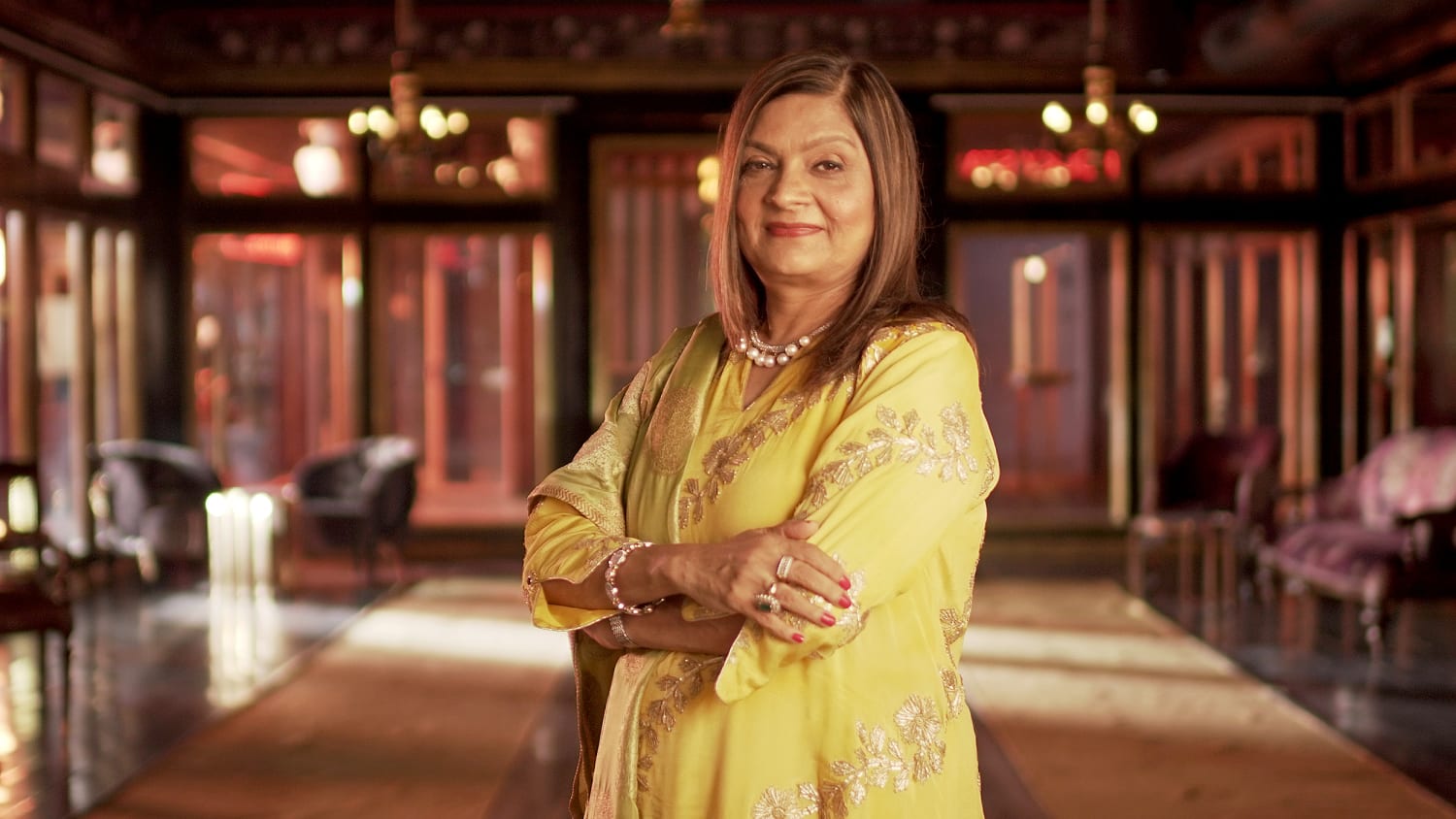
Sima got a lot of flack for her approach, but frankly, she was only reflecting the truth about how Indians treat marriage: as an economic necessity, rather than an emotional one. I found myself terrifically angry with the Indian men on the show (throughout this post, if I say "Indian," I mean those who are actually living in India, while the rest are "Indian-American") who were the typical rich boys who've had every whim catered to by their indulgent mothers and are now looking for more of the same from their potential bride. They looked bewildered when asked "what do you think women want?" because for the first time, they had to grapple with the fact that maybe women have thoughts and feelings too. It was a given that their wives wouldn't work after marriage and would have to "adjust" to living in the family home and following the dictates set out by their mother. When they went on dates with potential matches, the awkwardness was palpable as these men clearly had no idea how to even hold a conversation. It was all a far cry from the Indian-Americans availing themselves of Sima's services who actually had some semblance of personality and some idea of what kind of person they wanted to be with, as opposed to just saying "I need someone who can cook and do whatever my mother tells her to." 

White people found this all fascinating, along with the woke backlashes about all the rampant colorism where people only wanted a partner who was "fair." And one of the major criticisms of the show is that it only focused on upper class families, where the men and women actually have choices. After all, no one on this show was ultimately forced into a marriage against their will; Sima auntie's services were more like using a personalized dating app. That's certainly how the Indian Americans used her, with people ultimately loving how Aparna from Texas knew what she wanted and wasn't going to settle. The Indian heroine of this show was Ankita, the woman from Delhi who decided she wasn't enjoying this process and was going to focus on herself and her career instead. Her parents indulgently said, oh yes, she's so modern for her time, she can do whatever she likes. And that's what every liberal Indian will tell you about the use of matchmakers and the wedding industrial complex: no one is being forced into anything, it really is just like dating, it's all very modern and refined now. To which I say, fuck that. Every Indian is complicit in the way that women are raised in their society to think that their value comes from getting married. Indian Matchmaking's glossy production and comic reality show editing may not make that wholly apparent, but one of its producers, Smriti Mundhra, co-directed with Sarita Khurana the excellent 2017 documentary, A Suitable Girl. That movie, which is where Smriti first met Sima, provides much more insight and nuance into this society that allows matchmaking services, matrimonial websites, and constant pressure on women to flourish until all they ever have is the illusion of choice.

A Suitable Girl followed three women, Dipti, Amrita, and Ritu, over four years in their quest to get married. I watched this movie after hearing about the Sima auntie connection and imagine my absolute delight when I discovered that Sima isn't featured because she is the matchmaker for one of these women; she's Ritu's MOTHER. If you thought this lady was rough on her female clients, you can't even imagine what she's like with her own flesh and blood. While Sima thought her daughter should just get married after getting her Bachelor's degree, Ritu insisted on getting a Master's and getting a job as a financial services consultant. She is obviously intelligent and loves her work, but her mother is buckling under the pressure from her friends, parents, and in-laws. Everyone is making snide comments about how Sima works to find matches for strangers but doesn't seem to care about finding a husband for her own daughter. Meanwhile Ritu is completely ambivalent and shuts down every time her parents bring up the topic of marriage. When she finally does get hitched, it's to a man who, in her presence, says to the filmmakers, "Yeah, if it wasn't her, it would have to be someone else, our society doesn't give us any option except to marry. I hope I get reborn as a European so I can wait till I'm in my 40s, or don't even have to get married at all!" Ultimately, the two of them probably have a very strong marriage because the foundation of it appears to be, Hey, you are getting pressured into marrying a stranger too? Cool, guess we can be ambivalent and resigned about this whole process together! And that, dear reader, is all that Indians expect marriage to be. If you eventually develop slightly more positive feelings beyond ambivalence, that's the icing on the cake that they call "love".

Next, we have Amrita, a classic Delhi girl, who likes to party and shop, but also has her own career, the first working woman in her family. We meet her two months before her wedding to Keshav, who has told her that she can continue to work in his family business once they get married. We get a short history of their relationship from Keshav who says that he thought she was really pretty when they were in school together, but then they moved to different areas of the country. However, he would fly up to Delhi to visit Amrita and eventually they decided they wanted to get married. So theirs is a love marriage, albeit with full parental consent, natch. As we follow Amrita into her married years, we see the gradual subsummation of her identity and her independence. Her parents are so proud of how she has "adjusted" to her in-laws demands. Meanwhile, her dreams of working, or even just wearing some jeans around the house, are gone forever. And let's not forget, the topic of marriage isn't the only time a woman loses her choices. When chatting with a girlfriend, Amrita very matter-of-factly declares that oh, of course she has to have a kid after her third anniversary, she would be "declared dead" otherwise. In India, there's no need for love, but first comes marriage, and then comes baby in the baby carriage.

The final woman, Dipti, was my favorite of the three. She is what Sima would call a "difficult" match. Her family is probably poorer than the other two, and she is not "fair" and she is not "slim." This is a woman who could never afford Sima's matchmaking services, and when we meet her, she is a 29-year-old teacher who has been looking for a groom for a while. We see some potential matches she meets through matrimonial ads or a "Swayamwar" which is basically a weird Indian version of speed-dating along with your parents where the men are introduced in terms of their age, caste, and monthly income. Again, white people, you think this is bizarre, but Indians think this is perfectly normal. Because again, marriage in India is about economics. Women aren't expected to support themselves. So parents are looking to offload their daughter into a good family with enough money to support her. They are also willing to pay a dowry to get her married off, because an unmarried daughter is a shameful thing (plus, what about the grandbabies?!) Dipti's journey particularly showcases the pressure women can be under, when she falls into a period of depression after she has been ghosted by her umpteenth prospect. During her 30th birthday, every neighbor and relative says that their wish for Dipti is that she gets married soon (this includes little boys, not just elderly aunties, because this wish for all women to be married is taught to children early and continues on forever). At no point does anyone seem to care that Dipti has a job and could pursue a career. No one seems concerned that she doesn't have many friends (instead that's touted as a plus when a suitor visits, when her parents say, she only goes to work and then comes home, no wild party girl for you to worry about here!), because what's the point of having friends when all you need is a husband? There is so much people could do to help her when she's feeling down, but instead, everyone is fixated on the fact that the only possible solution to her malaise is marriage. And frankly, that is what ends up happening. She (of course) does eventually get married, but I have higher hopes for her marriage than anyone else's because all the rejections along the way seem to have at least given her a stronger sense of what she deserves from a husband. But still, there was no need for that woman to endure so much scrutiny and the constant sense of failure through the process.

If you enjoyed Indian Matchmaking but want actual social context, A Suitable Girl is a wonderful documentary that will 100% rip your emotional guts out and make you much more sympathetic to the Indian women in your life. If you have no desire to watch Indian Matchmaking glamorize the Indian marriage mart and want to go straight to the warts and all, then watch A Suitable Girl immediately. Basically, if all else fails, watch A Suitable Girl. It captures the essence of everything I find so troubling when I have to have the periodic conversations with my parents about whether they should "find me a boy" or that "it's time for me to settle down" or the fights with my grandmother about how I need to get married "because all my friends will get married and forget about me." In the modern Indian world, women still aren't independent entities capable of standing on their own two feet, and a husband is the only cure. And to be fair, this applies to the men too - they are also taught that marriage is their only destiny and are never taught to take care of themselves in any fashion, so they definitely need that bride to help iron their shirts and cook because they would otherwise legitimately perish. But, since they are also expected to work and have careers, they always have the eventual fallback option of hiring a maid and living the bachelor lifestyle. Women, however, may only have careers to pass the time before they find a groom. As such, there's a significant education/ambition gap, where women might not even pursue a degree or seek a promotion, thereby limiting their options from the get-go. As much as people proclaim to be liberal, those gender roles assigned by society from birth are deeply rooted in their psyches and modern India is still a world where people think marriage is the be all and end all of your existence. The struggle is real y'all, and A Suitable Girl is some indication as to why. 
Saturday, August 29, 2020

Class Action Park & Showbiz Kids: More Delectable Documentaries

Netflix took care of me during the early months of the pandemic and now I have been subtly shifting towards HBO as they step up their offerings. This week, I watched two of their new documentaries and they were both an engaging and wild ride. So settle in.

Showbiz Kids: Written and directed by Alex Winter (who I was shocked to discover is the same Alex Winter from the Bill & Ted movies - more on those in the near future!), this is a great behind-the-scenes look at what it means to be a child star. Featuring some incredibly well-known faces and candid interviews, this documentary sets out to explore what led these kids into show business in the first place, and the price they paid as they grew up.

The movie starts out by interviewing Diana Serra Cary, who was the famous child star, Baby Peggy, in the 1920s. Between 1921-23, she made over 150 short films and was earning a $1.5 million annual salary by 1924, at the ripe old age of 6. However, thanks to her parents' wasteful spending, the stock market crash in 1929, and general financial mismanagement, she ended up poor in the 1930s and struggled a great deal. A story that is not uncommon among the other child stars interviewed for this film.

We get to hear from Evan Rachel Wood, Henry Thomas (aka the kid from E.T.!), Mara Wilson, Todd Bridges, Milla Jovovich, Wil Wheaton, and Cameron Boyce, a "Disney kid" who seemed to have gone through the ordeal of child stardom more unscathed than everyone else. The stories won't shock you (too much), and the common theme is around missing out on childhood. While other kids were playing with their friends and having regular experiences at school, these actors were on set, surrounded by adults, working at something that they may or may not have enjoyed, but not realizing what they were missing out on until it was too late. Some had family pressure to keep acting, while others thought they were doing it for themselves. There's a lot of trauma around loneliness, feeling misunderstood, and of course, the awful predatory nature of Hollywood that led many to experience childhood sexual abuse and turn to drugs.

Showbiz Kids isn't a feel-good documentary at all, but it's a vital look at how we treat those precocious "child stars" when they're off camera. I have admired the work of many of the people interviewed in this documentary, but hearing about their childhood experiences, I wonder if it was worth it. There are also some stories focused on current actors who are trying to make it big in Hollywood and Broadway, and while one has the hope that in the #MeToo era, both children and parents are a lot more clued in, it still seems like a gruelling process. There certainly is a good way to do it, but the consensus appears to be that ideally, you shouldn't do it for too long. Hollywood is too toxic and all good things come to a sudden and abrupt end.

Class Action ParkI haven't laughed so hard as I have while watching this movie. It is so utterly ridiculous and incredible that I found myself giggling non-stop as the former employees and patrons of Action Park kept describing various rides at this amusement park that operated in New Jersey from 1978-96 and had to shut down when the volume of personal injury lawsuits got too high. The movie's central tenet is that timing was everything - this park reached its peak in the 80s when America was all about deregulation, greed, and doing whatever you wanted. And Action Park was the living embodiment of that spirit.

Founded by disgraced trader (of course), Gene Mulvihill, the park featured three sections: the Alpine Center, Motorworld, and Waterworld, the latter of which was one of the first water parks in America. All three sections featured rides that were often conceived by Gene, involved shoddy construction with absolutely no feedback from an actual engineer, and trial runs by the park's teenage employees, many of whom would suffer unconsciousness or bloody injuries during these test runs. The documentary features interviews with former employees, as well as comedian Chris Gethard, who went to Action Park frequently as a child, and my God, hearing these people describe these rides and how insane they were, induces both hysteria and horror. And the staff were all teenagers, leading to a general sense of abject lawlessness about the place. Every day consisted of accidents, fights, and general chaos, and yet somehow, this place only got shut down in 1996. At one point, they even had to arrange to have their own ambulances, because they were taking away resources from the New Jersey residents around them. It's a wondrous story.

Halfway through, the movie does take a turn as it focuses on the story of a boy who died at Action Park. At least six people are known to have died after accidents on the park's rides, and who knows about the number of lasting injuries? The state of New Jersey had no regulations mandating that Gene accurately report injuries resulting from his crazy rides, so all we have to go on are the stories from the people interviewed in this film to guess at the devastation wreaked during the years of operation. In fact, I first heard of "Traction" Park from my colleague, Anthony, who used to visit as a kid and either broke something or got very banged up on one of the rides. It's a badge of honor connecting all park attendees - if you had no scrapes or bruises, you must have been doing something wrong. To paraphrase one of the interviewees, part of the thrill of going to Action Park was that it was a 50/50 shot that you would either have the greatest time of your life, or come out in a body bag. 

Directed by Chris Charles Scott and Seth Porges, Class Action Park is a scintillating documentary about a truly bonkers subject. I only finished watching it yesterday but I'm already planning on re-watching it because I still can't believe some of the things I saw. One hopes that you couldn't get away with such a place in 2020, but given how crazy life currently feels, it's nice to know that we've dealt with plenty of craziness in the past too. One particularly revealing factoid? Donald Trump had the chance to invest in this park in the 80s, and he didn't because HE thought it was too nuts. So strap on your seatbelts and get ready to watch this documentary - it's gonna be a bumpy ride. 

Sunday, August 23, 2020

Documentary Double Feature: Boys State and The Speed Cubers

This Friday, I enjoyed yet another unusual double feature, this time focused on documentaries about boys. One gave me hope, one gave me some despair. So par for the course in 2020. 

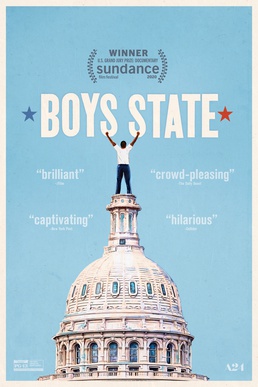
Boys State: Every year, the American Legion runs a week-long immersive program in each of the 50 states where politically-minded teenagers can participate in an exercise in self-government. There is a separate Girls State, but filmmakers Jesse Moss and Amanda McBaine chose to make this movie about the 2018 Boys State in Texas, and the result is an intriguing documentary that won a Grand Jury Prize at Sundance.

It’s hard to know how to feel about this movie, given that it presents a mass of contradictions, much like our current political system. The film closely follows the boys who have chosen to run for State Party Chair or Governor of the two parties that the boys are divided into at the beginning of the week. It’s Texas, so the crowd skews conservative, but there is a particularly telling moment when a kid delivers a rousing speech about how he is passionately pro-life, but then in a private interview with the filmmakers, admits that he was just pandering to the crowd; he is personally pro-choice, but he recognizes the need to play politics. Which begs the question - why should a bunch of 17-year old boys have such strident opinions on abortion anyway? These are the dolts who grow up to become the men who tell women what they can do with their bodies. And of course, their political stance may be pro-life, but the minute their mistress gets knocked up, it’s pro-choice all the way.

On the flip side, there are the kids who genuinely want to change policy, establish gun reform, and embrace a "you do you as long as you’re not hurting me" ethos. They stick to their principles, rally the crowd, and deliver speeches based in genuine moral conviction. Of course, it's no surprise that the boys of color seem largely charged with doing the work and garnering votes based on actual policy reform and visions of bettering society for all, while the white kids thrive on rabble-rousing and generating faux outrage to muster votes. The challenge with Boys State is the same challenge with current political life - both types of candidates do enjoy some measure of success, so it’s a bit of a crapshoot regarding who gets to come out on top. I had strong views about who was the more empathetic and compelling speaker, but ultimately, there’s a clear distinction between personal passion and political ambition. For some folks, politics trumps policy-making, and it’s quite easy to tell which is which. The trouble is, voters seem to prefer the politics, and that's where things go awry. 

Setting politics aside, however, it’s obvious that this is an immersive and engaging experience and at the end, there is some overwhelming emotion and love that these boys express for each other. They have forged truly close bonds and friendships in just one week and maybe that's the only takeaway that matters. Political opinions come and go, but human connection makes a lasting impression. 

The Speed Cubers: This is a short 40-minute documentary about two very different but remarkably talented boys named Feliks Zemdegs and Max Park. They both share a passion for speed cubing, i.e. the ability to solve a Rubik's cube in an extraordinarily short amount of time. I learned to solve a cube when I was ten, using algorithms I learned from a Google search. I am not an innate solver who can see the patterns and right the cube without having to recite the formulas in my head, so it usually takes me two minutes to solve a standard 3x3 cube. Speed cubers like Max and Feliks, however, are solving these in under ten seconds.

Feliks is from Australia and was the world champion for years. Until Max came along and slowly started beating all of his records. Max is autistic, and we get his backstory about how his mom first introduced him to cubing as a way of improving his fine motor skills. This is a really simple documentary, but at the heart of it is the relationship between these two boys who have developed an unlikely friendship instead of an antagonistic rivalry. Rather than resenting Max, Feliks sends him congratulatory texts every time Max breaks one of his world records. When they meet up in Sydney for the 2019 World Championships, it's clear to see how much love and esteem they share for each other. It’s a very sweet story about how two people can challenge each other to be the best rather than tear each other down for a crazy competition. And of course, you get to see a lot of kids solving Rubik’s cubes in rapid time, sometimes one-handed, sometimes blindfolded, sometimes with their feet. 

I get it, it’s a niche subject, but by telling this story through the lens of two such unique and humble cubers, filmmaker Sue Kim hit the jackpot. The result is a genuinely heartwarming movie that has a pulse-pounding finale as you eagerly wait to see who will be crowned World Champion and if yet another world record is going to be smashed. It's a nerdy thrill, but it's also quite wonderful, and it's a worthy way to spend an hour of your day.

Thursday, August 20, 2020

Weekend Watch: First Cow and An American Pickle

Let's be clear: the combination of First Cow and An American Pickle might be the most unlikely double feature ever devised. But in pandemic times, you watch whatever you can find, and that's what I did last Friday. These are two insanely different movies but at least one of them has to satisfy your itch for cinematic satisfaction. So are you looking for a spare and meditative western about two men in Oregon in the 1800s, or a bizarre comedy about a turn of the century Jewish immigrant who gets pickled in brine and re-emerges in present-day Williamsburg? Either way, I’ve got you covered!

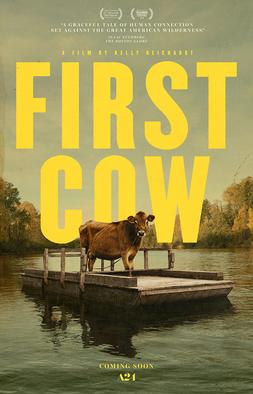
First Cow: Written (with Jonathan Raymond, who wrote the novel the movie is based on), edited, and directed by Kelly Reichardt, this movie sneaks up on you. My main sentiment on finishing it was how I wished I had seen it in theaters, because this is the kind of slow, lush movie that is meant to be an immersive and absorbing experience, and not something that you distractedly watch while playing Candy Crush on your phone.

Set in 1820, it’s the story of Cookie (John Magaro), a cook who meets a Chinese man, King-Lu (Orion Lee) in the Oregon Territory. The two men team up and hatch a scheme based on Cookie’s excellent cooking skills and King-Lu's business acumen. They sell delicious biscuits for significant sums of money to the traders and trappers and other grimy men who are seeking their fortunes in Oregon but are also seeking a warm and delicious treat that reminds them of home. However, the magic ingredient in these biscuits is the creamy milk that Cookie gets by secretly milking the cow that belongs to the wealthy Englishman who recently moved to the settlement. This is the first and only cow in the area, and it’s a dangerous scheme to be stealing its milk like this, but the rewards seem to outweigh the risks.

First Cow is a mood piece. It is very quiet, with many long and languid scenes where not a lot happens. There is much excitement around the cow and the ensuing shenanigans, and the film does turn into a bit of a heist film, but at its core, it’s a deep movie about friendship, hardship, and the ingenuity that characterizes the American entrepreneurial spirit. Also, special shout-out to Eve, the cow that is the real star of the film (this was her first ever film role!). I have never wanted to drink a glass of milk more in my life than when watching this movie. And the line of folk waiting to get a biscuit reminded me of the line outside Dominique Ansel’s bakery to get a Cronut. While the setting of this film might be in the past and unfamiliar, the emotions and general capers feel just as relevant to the modern day, and it is a transporting and tranquil weekend watch.

An American Pickle: The one word I would use to describe this movie is, “cute.” Which you don’t imagine going into it, because the premise seems so utterly bizarre and ridiculous that you think it has to be a raucous, weird comedy. But instead, it turns out to have a rather heartfelt premise that sneaks up on you and makes you feel all warm and fuzzy inside.

Seth Rogen plays Herschel, a Jewish immigrant who flees the Russian Cossacks and arrives in NYC in 1919 in search of a better life. He works at a pickle factory, and one day, in a freak accident, he falls into a vat of pickle brine. No one notices, and that happens to be the day the factory is shut down, so for the next century he is just slowly pickled in that vat, until in 2019, he is discovered, perfectly preserved and alive, a scientific miracle! He is released into the custody of his only surviving relative, his great grandson Ben (also played by Seth Rogen), who is a freelance app developer in Williamsburg. As you can imagine, it’s a challenge to explain to your pickled great grandpa what it means to be a freelance app developer. 

There’s a typical clash of the generations, and as things escalate, Herschel moves out and decides he is going to create his own pickle business. The jokes keep on coming, mocking Williamsburg and its hipsters, Jewish identity (for more Jewish humor, you should check out Seth Rogen's recent interview on WTF with Marc Maron, where the two men proceed to offend the entire nation of Israel), and the political and technological landscape of modern America. The movie is written by Simon Rich, based on a wonderful four-part story he wrote for the New Yorker in 2013 (even if you don't watch the film, I highly recommend reading the story), and the film wisely keeps its focus sharp and doesn’t wander off on too many tangents. In a breezy 89 minutes, we get a funny movie that mocks the sillier elements of how we live now, but also delivers a nourishing story about the importance of family, dealing with grief, and moving on with your life. Instead of broad shtick, Rogen delivers a splendidly nuanced performance, and I wouldn’t be surprised if he gets nominated for a Golden Globe. An American Pickle is a fun distraction, so figure out if you have HBO Max and give it a shot!

Wednesday, August 5, 2020

Folklore: The Album of the Year

One sign of how insane this year has been is that I’m about to write a gushing review of Taylor Swift’s new album, Folklore. Yeah, I’m as surprised as you are. But in the fiery hellscape that is 2020, this album has proven to be one of the rare treats that reminds you humans are still capable of greatness after all.

The only Taylor Swift song I was obsessed with was Love Story. Prior to writing this post, I was convinced I was in high school when that song came out, but nope, it was released in September 2008, when I had just started medical school. Swift was 18 when she wrote that song, and it does have a very high school teenager vibe to it, so perhaps that’s why I misremembered; or I was likely in desperate need of some escapism at the time. The song had a sweeping, soaring melody, with an irresistible hook and a 3-min tale about Romeo and Juliet, except in this case (spoiler alert!) they got a happy ending. The accompanying video was lavish and charming and tapped into my penchant for Jane Austen melodrama.

But I subsequently never really connected to her music. I was aware of the hits of course, but they always seemed too anthemic and over-produced, and just a bit too enthusiastic for my curmudgeonly tastes. Two songs did stand out, however: Style, which was released in 2015, and Delicate, released in 2018. Both feature my preferred Swift aesthetic; slightly ethereal vocals, a synth-pop, somewhat techno dance beat, and hooks that don’t quit. I can only remember the lyrics to the chorus for either song, but they are a jam. Which finally brings me to Folklore and how it has suddenly bundled up the things I love about Swift’s music into one perfect package.

Written during quarantine, this album was not designed with stadium crowds and screaming fans in mind. Instead, The National’s Aaron Dessner co-wrote and produced eleven tracks on this album and that man knows exactly how to employ lush instrumentation and impeccable production value to bring out what Swift does best. As a bonus, there’s the song Exile, a collaboration with Bon Iver, which adds to this album's For Emma, Forever Ago feel of “I recorded this in a cabin in the woods.” But of course, Swift is no Justin Vernon, and this is a carefully produced masterpiece that elides the fact that Swift isn’t a great singer, and instead places the focus on her greatest strength: songwriting.

Remember how I loved Love Story? I thought it was so clever and fun that a song would actually tell you a whole story instead of being an arbitrary collection of sentences where the band’s focus was more on a guitar solo or dropping a great beat. Well, with Folklore, you have sixteen stories to choose from, each a precious gem that you might not quite appreciate on the first go-around, but will later come back to and be awed by as you obsessively stream this album for the hundredth time. When I first read the track listing, I immediately fixated on Mad Woman - that title alone sounded like it would be my jam. And it was. I hummed that shit for two days straight, wrote angry posts about abortion and Indian Matchmaking, and lived my best Wellesley woman life. But as I looped through the album again, I found myself captivated by Illicit Affairs, then by Betty (who is Betty, what is the worst thing that you ever did, Taylor?!). The Last Great American Dynasty has led me down a rabbit hole to learn about Rebekah Harkness; Epiphany hearkened back to my med school days as well as reflecting the current nightmare besieging our hospitals today. 

But the song currently blowing my mind is Invisible String. Essentially a story about her current romance with Joe Alwyn, it is the perfect Taylor Swift song. It has this marvelous syncopated rhythm and melody that burrows its way into your head and just won’t let go. And once I got over that and started paying attention to the lyrics, I realized this was Love Story all over again. The greatest moment in the song comes when she says, “Cold was the steel of my axe to grind / For the boys who broke my heart / Now I send their babies presents.” I mean, come on. Within those few lines, you have the entire trajectory of this woman’s life. Infamous for her relationships and subsequent breakup songs, she has now gotten to the point where she can forgive and send her ex-Romeos presents for their kids. It’s not the fairytale of Love Story but the viewpoint of a mature songwriter, a woman who is older and wiser, and still knows how to craft the hell out of a song.

Folklore is a joy, and much of its joy comes from the fact that your relationship to it constantly evolves. I have been listening to it for less than a week and have already cycled through a slew of revelations and favorites, and who knows where I will be a week from now? I just re-listened to Exile, and given how much I love Bon Iver, I’m wondering how this hasn’t leapfrogged to the #1 spot in my brain yet, but just give it time. Or maybe with my birthday coming up, August will take precedence. It’s a wild ride, and I am grateful for it in a year that has offered very few pleasures. So give it a listen; this time, the hype is real.