Sunday, February 15, 2015

Funny Girl: Chasing Laughter & Fame

Nick Hornby is a fantastic and funny author who dabbles in a variety of forms. Whether it's his football memoir, Fever Pitch, that first brought him to the world's attention, or his wonderful novels like About a Boy and High Fidelity, or his collections of essays and literary reviews for the Believer, the man can write about anything. Lately, however, I've noticed his impeccable screenwriting, with the Oscar-nominated screenplay for An Education and the gorgeous script for Wild. While his previous literary efforts were focused on men and their obsessions, his screenplays have centered on women and told their stories empathetically and emphatically. So it comes as no surprise that his latest novel, Funny Girl, is about yet another marvelous woman, who is coming-of-age in 1960s Britain and trying to reconcile her ambitions and reality.

The novel tells the story of Barbara Parker, a beautiful girl from Blackpool who idolizes Lucille Ball. She watches I Love Lucy every Sunday, and her dream is to run off to London, become a comic actress, and make the world take notice. These are alien ambitions to her working-class father and aunt (her mother isn't in the picture, having run off with another man when Barbara was younger), but their lack of encouragement cannot dampen Barbara's enthusiasm. By the second chapter, she has set off for London with stars in her eyes.

What follows is a rather beautiful story about lucky chances, fateful choices, and the difference between the fantasy of achieving your dreams and the reality once you achieve them. Barbara changes her name to Sophie Straw and becomes part of an iconic BBC series; along the way, she is forced to come to terms with her working-class background, evaluate her intelligence alongside her Oxbridge-educated colleagues, and determine whether or not she is OK with the sacrifices she is making to become an adored and famous actress. Hornby also dissects Barbara's colleagues, all men with varied personalities and problems, who are in love with Barbara in different ways and become her support system in this incredibly strange and unique environment. Because of her looks and ferocious ambition, Barbara doesn't have any female friends, so it's her interactions with these men that must keep her going in London and sustain her as she builds up her career.

Funny Girl is a very warm and real look at a complicated woman and her complicated friends. Set in the 1960s with multiple historical references and photographs from the period, it sometimes feels like a biography instead of a novel, and Hornby expertly recreates this world of BBC light entertainment and the political messages woven into the sitcom landscape. Thanks to his screenplay expertise, the dialog in this book is unlike anything I've read before - the interactions between characters crackle with wit and verve, and there are long conversations that get so intense and funny that I felt like I was watching them onscreen instead of reading them on the page. It is moving, absorbing, wise, and uplifting.

Hornby continues to be a writer I admire, who keenly observes the world around him and tells funny and heartbreaking stories about flawed, genuine people. The following passage from the novel perhaps summarizes everything we need to know about him and his literary motivations:

Years later, Tony would discover that writers never felt they belonged anywhere. 
That was one of the reasons they became writers. 

Saturday, February 14, 2015

And the 2015 Oscar Goes To...

After thinking I would never get through this year's Oscars roster, New England was covered in heaps of snow and I stayed indoors and marathoned my way through the year's finest films. Without further ado, here's my second annual wishlist of who should get a golden statue on February 22nd.

Best Picture & Best Director: Boyhood is the lock for Best Picture. It was a unique, never-before-seen revelation of a movie and the sheer audacity of making a movie over twelve years and crafting something meaningful out of that experience is worth a dozen Oscars for both the movie and director, Richard Linklater. In terms of the other nominees, the only one that gave me as much of a thrill would be Whiplash, but it simply doesn't stand a chance against the Boyhood juggernaut. For Director, Linklater is the only one I can imagine giving the award to. While Wes Anderson has made many fine films, and it's great that the Academy is finally giving him some love in this category, The Grand Budapest Hotel was certainly not my favorite Anderson movie. Alejandro Gonzalez Inarritu is the only really stiff competition here, for creating the technically brilliant, one-shot marvel of Birdman, but Linklater still has the edge for creating something both skillful and stirring.

Best Actress: Julianne Moore is guaranteed the Oscar, and she fully deserves it for her devastating performance in Still Alice. However, the women she is up against also put forward simply astonishing performances, and I would be perfectly happy to give the Oscar to any one of them. This category is an abundance of riches, and while Moore will walk away with the prize, I urge you to watch all 5 performances, because they are indescribably wonderful. Reese Witherspoon and Marion Cotillard showcased exactly why they have already won Oscars through their jawdropping performances in Wild and Two Days, One Night. And after seeing their phenomenal work in The Theory of Everything and Gone Girl, this certainly won't be the last time Felicity Jones and Rosamund Pike are nominated. Check these women out, because they are going to be astonishing us for a long while yet.

Best Actor: This one's a doozy. It's shaping up to be a battle between Michael Keaton for Birdman and Eddie Redmayne for The Theory of Everything. While early on it seemed like Keaton was the favorite, the tide has been shifting in Redmayne's favor (much to the chagrin of fellow Brit and nominee, Benedict Cumberbatch, I'm sure). Keaton is the acting veteran who is overdue for recognition, while Redmayne is the bright, young thing. In the end, I think the Academy's penchant for dramatic performances about people with disabilities will win out over its need to celebrate a comic performance by someone who has been in the business for a long while. Given the choice, I would pick Redmayne myself, as his performance moved me far more than Keaton's. The only other actor I would secretly root for in this category would be Steve Carell, but that's more because I want Michael Scott to get an Academy Award. I'm still smarting over Bradley Cooper's nomination - while he does a fine job in American Sniper, it is unthinkable that David Oyelowo would go unrecognized for his work in Selma, or that Cooper could also edge out Timothy Spall's performance in Mr. Turner. Perhaps this field needs to be expanded like Best Picture.

Best Supporting Actor & Actress: These are pretty clearly going to J.K. Simmons for his scary and fantastic performance in Whiplash and Patricia Arquette for her moving and marvelous performance in Boyhood. Both were performances I loved and I can't think of two more deserving actors. They have slogged in the industry for a good long while and fully deserve this recognition. I wouldn't really pick anyone else for Best Supporting Actress (if the Into the Woods nomination had been for Emily Blunt instead of Meryl Streep I might have felt more torn). For Supporting Actor, I do have a soft spot for Ethan Hawke, and Edward Norton was hilarious in Birdman. But again, no one came close to J.K. Simmons.

Best Original & Adapted Screenplays: For Original, my money's on the wildly inventive and twisty Birdman, though The Grand Budapest Hotel certainly has a shot. For Adapted, I really hope it's Whiplash. This screenplay is only in the Adapted category because it is based on a short film Damian Chazelle did in order to drum up funding for the full feature film. Hopefully, that will now give him the edge, because this script is a fresh, original work of art, that is fully worthy of an Oscar.

My other miscellaneous picks include Big Hero 6 for Best Animated Feature (full confession, I've only see 2 of the nominees, and this is the one I liked best), and Dick Pope for Best Cinematography for Mr. Turner, although he has stiff competition from Birdman's Emmanuel Lubezki. I would be happy with most wins, except anything for American Sniper would be a travesty. Fortunately, this year's race seems fairly predictable, and it looks like the right people are going to win for truly splendid work. While that may be boring, it's still worth celebrating.

And forgetting the nominees for a second, the whole thing will be hosted by Neil Patrick Harris. Surely that's worth tuning in all by itself? So I'll see you on Twitter on February 22nd. It is bound to be a bloated, overlong, stuffy affair, but some great people will win awards, NPH will (hopefully) sing and dance, and we can finally bid adieu to the people and movies that delighted us over the past year. 

Saturday, February 7, 2015

Big Hero 6: Inventive & Invigorating

I had heard many good things about Big Hero 6 when it was first released in November, but I never got around to watching it. Then it received an Oscar nomination, so I figured the hype must amount to something. Boy does it. Big Hero 6 is a further indication that animation is where it's at if you're looking for creative storytelling, witty dialogue, engrossing action, and jaw-dropping beauty.

The main character is 14-year old Hiro Hamada, a boy who lives in the futuristic city of San Fransokyo (a Tokyo-esque San Francisco if the name didn't give that away for you). He is a child prodigy, incredibly intelligent and particularly talented in the field of robotics, but he's also wasting his potential. He likes to build robots and gamble in illegal underground robot battles. His parents are both dead, so he and his older brother, Tadashi, live with their Aunt Cass, who fusses over Hiro and isn't quite sure what to do with him. One day, Tadashi cleverly takes Hiro into his university robotics lab, where he meets a group of Tadashi's friends and sees the incredibly cool technology they're developing. He also meets Baymax, a healthcare robot that Tadashi has developed, which is a big, white, cuddly, balloon-like robot that can scan you to determine where you are hurt and then provide the adequate treatment. 

There is a huge tragedy in the first half hour of the film, which then drives the rest of the plot forward. Hiro needs to identify and fight a scary villain, and to do so, he must enlist Baymax and Tadashi's friends for their unique technological skills. Outfitted in a series of elaborate costumes, they become the Big Hero 6, and set off on a wild adventure to track down a mysterious masked man who has gotten hold of one of Hiro's inventions and is clearly hell-bent on using this technology for nefarious purposes. It's a very classic Disney plot, but told so inventively and outrageously that it is a sheer joy to watch from start to finish. 

Big Hero 6 is a beautiful, intricate movie with a big, beating heart. Every frame has been composed with careful attention to detail and mindbending artistry, and the plot is a wild rollercoaster that ensures you are never bored. The voice acting is superb, the script is wildly funny, sweet, and dramatic in equal measure, and there's nothing you won't love. This is what children's movies should be: clever, entertaining, and heartening, an equal joy for both adults and children. So regardless of your age, watch this movie. It reflects everything that's wonderful about animation and its ability to portray weird scenarios and incredibly creative stories that you wouldn't get to see anywhere else.

Wednesday, February 4, 2015

Still Alice: Gradually Fading Away

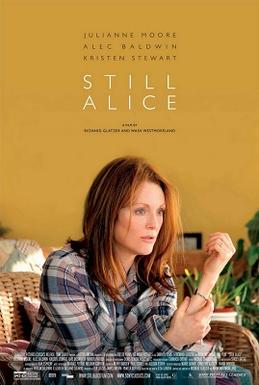
The Oscars don't embrace comedy and the nominated movies can be a bit of a slog to get through. Still Alice is based on the novel by Lisa Genova, which tells the story of a woman who develops early-onset Alzheimer's. That premise was enough to keep me from watching the movie for several months. However, I finally bit the bullet and watched it last week. It was terribly sad, but simply terrific.

Julianne Moore (almost guaranteed an Oscar) plays Dr. Alice Howland, a respected linguistics professor at Columbia University. She starts to feel like something is just wrong - always facile with language, she finds herself forgetting simple words and phrases, and when she goes on runs, she suddenly loses track of where she is and how to get back home. Concerned she has a brain tumor, she visits a neurologist, who tells her that she has early-onset Alzheimer's Disease. Her husband, John (Alec Baldwin), is supportive and loving, but gradually grows impatient and bewildered as Alice deteriorates rapidly in front of his eyes. Her three grown children (the excellent trio of Kate Bosworth, Kristen Stewart, and Hunter Parrish) have their own unique ways of dealing with the news, each with their own fears and reactions about what this means for them and their mother.

Less than her family though, this is emphatically a story about Alice herself, and how she is gradually losing everything that made her an intelligent, incredible woman. The writer-directors, Richard Glazer and Wash Westmoreland, do a brilliant job of incorporating both sweeping dramatic moments but more importantly, the minor heartbreaks that pinpoint the ways in which Alice is struggling to get by. At the beginning of the movie, she is playing Words with Friends with her daughter and is happily racking up triple word scores. As the movie progresses, she is hard-pressed to think of anything longer than three letters, until eventually her daughter just can't bear to play the game anymore.

Throughout the movie, composer Ilan Eshkeri's violin-laced score deviously tugs at your heartstrings and amplifies the everyday defeats that will build up over time. Moore's performance is miraculous - Alice starts out as an articulate, brilliant, confident woman, and then gradually this disease takes over her body and her brain. Her fight to make herself heard and stop her family from talking at her and making decisions about her as though she is no longer there is fierce and unforgettable. There are some genuinely frightening moments, others of quiet desperation. And finally, there's a message about the inevitability of how families deal with crises and who can be relied upon to be a caregiver for an ailing relative.

Still Alice is an impeccably crafted movie, well edited (1 hour and 40 minutes is the perfect length for a movie that deals with such a heavy subject), superbly acted, and lovingly told. The family dynamics are pitch perfect, the central and supporting performances are awe-inspiring, and it presents an urgent portrait of a devastating disease. It is heartbreaking and moving, difficult to watch, but entirely worth it. 

Monday, February 2, 2015

American Sniper: War, What is it Good for?

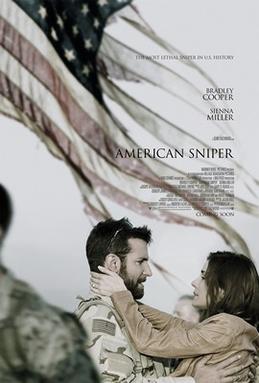
There were several movies nominated for Oscars this year that I had to push myself to see. When I did, I discovered they were absolutely moving and wonderful (see: Whiplash, Two Days, One Night, Wild, etc.) Unfortunately, American Sniper, a movie I did not want to see, fully lived up to my expectations.

To be fair, there is nothing wrong with the performances in this movie. Bradley Cooper does a really great job portraying real-life Marine sniper, Chris Kyle, a man who went through four tours of duty during the Iraq war and made more kills than any other sniper in history. Cooper captures Kyle's initial hesitations, fears, gradual hubris, PTSD, and the other assorted psychological and physical transformations that are part and parcel of a soldier's life. Sienna Miller, who plays Kyle's wife, Taya, does an equally impressive job portraying the fear and uncertainty of an army wife, who can never know if her husband will return safe to her at home, and must then face even more worry when he returns home but still seems miles away.

The trouble with the movie is its gratuitous, rah-rah depiction of the nature of war. We don't need war movies where the Americans save the day and the Iraqis are "savages" who are shot down like characters in a video game. The movie is adapted from Kyle's memoir, and from what I hear, the movie at least attempts to be a little more ambiguous than Kyle's straightforward account of how he just liked killing bad guys. I can't pretend to be an unbiased viewer: this is emphatically not a movie made for me, and I don't understand how it is breaking records at the box office.

American Sniper is a very basic war movie. Man goes to war, shoots a bunch of people, comes home, suffers, and then starts to rebuild his life. It feels very bloated and violent, peppered by overlong war sequences and dramatic battles than only grow wearisome and don't develop the plot or characters in any significant way. If director Client Eastwood's object was to make me battle-weary, then he succeeded admirably, but I think this was supposed to make me cheer and root for an American hero. Instead, I just felt a bit sad and tired and decided I'd rather watch a small movie that told a moving story instead of a re-hashed war-mongering film that has nothing new to say.

Saturday, January 31, 2015

Two Days, One Night: Struggling to Survive

You may not always agree with the Oscars and their penchant to nominate small movies over popular ones, or honor stodgy favorites over diverse newcomers. But despite all the lobbying and glad-handing that make up the Oscars race, there are always a couple of nominations for truly deserving films that would otherwise have been overlooked. Marion Cotillard's Best Actress nomination for the Belgian movie, Two Days, One Night is a perfect example.

Written and directed by the Dardenne brothers, Two Days, One Night (Deux Jours, Une Nuit if we want to acknowledge the actual French title) is a masterclass in deeply personal, dramatic storytelling. Cotillard plays Sandra, a woman who has been away from her job in a solar panel factory for a few months due to severe depression. After therapy and medication, she is ready to return to work. Unfortunately, in her absence, her employers have discovered that 16 people could easily do the job of 17 and that they don't need her. On Friday, the foreman tells her colleagues to vote on whether they want Sandra to be hired back, or whether they want their bonus of 1,000 euros. He implies that if Sandra is not fired, someone else will be, which scares 14 out of 16 people into voting for their bonuses. However, after discussing it with the boss, Sandra's friend Juliette is able to request a secret ballot to be held on Monday, where everyone will vote again, this time without the threat of redundancy if Sandra returns. Now Sandra has a weekend to convince at least 9 colleagues to vote for her instead of the bonus.

It's a beautiful story, filled with urgency and despair and genuine humanity. Cotillard's performance is heartbreaking - Sandra's depression is constantly trembling on the surface, threatening to engulf her and sweep her back into the abyss. Her loving husband, Manu (Fabrizio Rongione), is her champion, cajoling and supporting her, insisting that she fight for her job and take a stand, yet trying his best to not push her too hard. As she meets each of the 16 people she needs to convince to vote for her, we are introduced to a diverse range of working-class people, all of whom have very valid reasons for wanting their bonuses. Their reactions to the pleading Sandra are incredibly varied; some flat-out refuse to vote for her, while others have amazingly moving reactions when confronted by this woman whose life depends on their decision.

It might seem odd to call this movie a thriller but it is genuinely tense as you near the end and wonder what the outcome of the vote will be. These are the kinds of high-stake situations that working-class families face every day and it is gripping to see this story play out on the big screen. Hollywood rarely deigns to tell the story of ordinary people who are just struggling to get by, but Two Days, One Night is a fascinating look at one woman and what constitutes a fight for her life and dignity. It is thoroughly satisfying and unpredictable, a perfect human movie. 

Thursday, January 29, 2015

Birdman: Backstage at Broadway

Birdman is a technical masterpiece. Shot so that the entire movie looks like it was filmed in one take (a la Hitchcock's Rope, albeit much more sophisticated), the movie is a mesmerizing, claustrophobic look behind the scenes of a Broadway play and a winking ode to Hollywood, stardom, and the dangers of staging a comeback.

Michael Keaton stars as Riggan Thomson, an actor who famously played the superhero Birdman decades ago (a hilarious nod to Keaton's real-life tenure as Batman), but has been on a bit of a career downslide ever since. He has now decided to establish himself as a serious actor by writing, directing, and starring in a play adapted from a Raymond Carver short story. The movie starts the day before previews are due to begin, when an actor is injured by a falling light and Riggan has to deal with the first of many snafus that will cause the play to devolve into a raucous shambles. 

The movie's tone is black and hysterical. The cast is pitch perfect, with Emma Stone playing Sam, Riggan's fresh-out-of-rehab daughter who is obsessed with social media and fed up with her father; Naomi Watts and Edward Norton playing a couple of married actors with wildly differing levels of Broadway experience and narcissism; Zach Galifianakis as Riggan's best friend and producer, who will do or say anything to get the show on the road; and Andrea Riseborough and Amy Ryan as Riggan's current girlfriend and ex-wife, an interesting duo who only serve to complicate matters further. 

I've neglected to mention another key character - Birdman himself. Throughout the movie, Riggan has hallucinatory (or maybe not?) conversations with Birdman, who has a very Christian Bale-like sinister voice and is constantly tormenting Riggan with his failures and ineptitude. The sense of dreamy insanity is further propelled by the brilliant percussive score by Antonio Sanchez, a drum-fueled nightmare that relentlessly pounds through every scene and keeps you on the edge of your seat. 

Ultimately, Birdman is a movie I need to see multiple times before I figure out what it's about and how I feel about it. Director (and co-writer) Alejandro Gonzalez Inarritu has created what is clearly a cinematic masterpiece, but it feels so perfect and polished that I felt distanced from it. It contains some sharply-observed humor and reflections on the state of Hollywood, and the performances, particularly by Keaton and Norton, are blustery and brilliant. It's a great movie, but it is also twisted, bizarre, and weird, and it demands to be dissected and analyzed for a good long while.