Saturday, December 17, 2016

American Housewife: Hysterical Insights

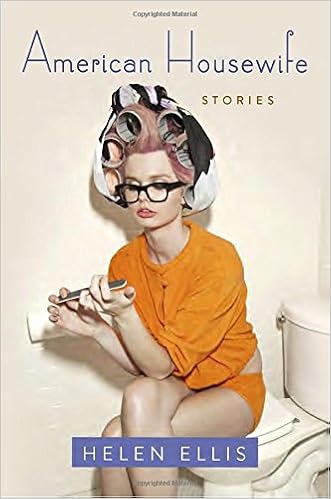
If you want to end 2016 with a laugh, you must pick up a copy of American Housewife: Stories by Helen Ellis. This bizarre collection of short stories about housewives across the country will make your brain explode with delight. Like a cross between George Saunders and David Sedaris, except if both were bored housewives living out insane fantasies, Helen Ellis unveils the twisted inner workings of the most overlooked branch of the populace and ensures you will never talk to a housewife ever again without experiencing mild terror.

I was hooked after reading the first two pages of this book. Opening with a short essay entitled, "What I Do All Day," Ellis gives us such gems as, "Back home, I get a sickening feeling and find out it's just my husband's coat hung the wrong way in a closet. I break into a sweat when I find a Sharpie cap but not the pen." These mundane observations keep accumulating until every sentence elicits a chuckle and a sense of wonderment at this woman's ability to string words together in effervescent combinations. This is followed by "The Wainscoting War," an epistolary tale narrated via the e-mails exchanged by two feuding neighbors that quickly escalates into an epic battle akin to something out of Game of Thrones. We then get "Dumpster Diving with the Stars," an incisive look at reality television and celebrity culture, followed by "Southern Lady Code," which tells you everything you ever wanted to know about what Southern ladies really mean when they say, "She's the nicest person."

The stories in this book can be divided into two broad categories: short snippets that offer up truly great advice about how to live your life (read "How to Be a Grown-Ass Lady" and learn the following: "If you don't like something someone says, say: 'That's interesting.' If you like something someone says, say: 'That's interesting!'"); and crazy tales that devolve into murder, vengeance, or Shakespearean levels of tragicomedy. Stories like "The Fitter," about a man who has the gift to find any woman the perfect bra, are incredibly funny and then suddenly go dark, whilst other tales, like "Hello! Welcome to Book Club" are seething with a passive-aggressive geniality that you can't quite comprehend until the narrator slowly winds through all the introductions and unveils what this Book Club is all about.

By the time you get to the book's final story, "My Novel Is Brought to You by the Good People at Tampax," you know what to expect in terms of tone, but still have no idea what to expect in terms of story. Ellis does not disappoint, ending her collection with an absolute corker of a tale that manages to touch on the publishing industry, corporate branding, social media, kidnapping, and blackmail. The insanity relentlessly builds on itself until you are completely invested in the narrator and her horrific struggle with her corporate overlords, i.e. "The Good People at Tampax."

I have never been more delighted by a book and more sad to finish it. Each story reminded me of a P.G. Wodehouse novel, with every sentence meticulously crafted and guaranteed to provoke joy. Given that women were accused of being "hysterical" for centuries, Ellis has captured the most incredible sense of hysteria in this collection, taking all the everyday worries and concerns that women face and amplifying them into hyperbolic fantasies that manage to both unsettle and delight the reader in equal measure. American Housewife: Stories should be essential reading for anyone who has ever wondered what women are really thinking; though I must assure you, I am generally worrying more about uncapped Sharpies than murdering my doorman. 

Monday, November 28, 2016

Gilmore Girls: Nourishing Nostalgia

My love for the Gilmore Girls began in January 2015. I had never watched the show when it was on air, but once all seven seasons hit Netflix, people kept recommending it to me. Finally, I decided my New Year's Resolution would be to see what all the hype was about. And then I lost three months of my life.

Here's the basic premise: Lorelai Gilmore (Lauren Graham) was a single teen mom, giving birth to her daughter, Rory, when she was only sixteen. She chose to leave home, get a job, and raise Rory by herself, rather than taking the easy way out and marrying the wealthy boyfriend she didn't love. As a result, Lorelai and Rory share less of a mother-daughter relationship and more of a best-friends-forever dynamic. In the pilot episode, Rory (Alexis Bledel) is sixteen and has gained entrance into the very prestigious and pricey Chilton Preparatory School. Lorelai would do anything for her daughter, so she swallows her pride and goes to her estranged parents (Kelly Bishop and Edward Herrmann) to ask for a loan to help with Rory's tuition. Lorelai's always-scheming mother, Emily, agrees, but only if Lorelai and Rory will have dinner at the Gilmore house every Friday. And thus begin the weekly Friday dinners, a sometimes funny, sometimes dramatic ritual that pits Lorelai against her upper-class parents, while allowing Rory to bond with her grandparents and make them proud.

Setting aside Friday dinner, however, we must discuss Stars Hollow, the Connecticut town where the Gilmore girls live. This town is insane in the best possible way. It is like a Christmas card and Carnival rolled into one, with a long list of bizarre inhabitants who pop in and out of the show with unfailing regularity and give it so much of its charm and warmth. While the various citizens of Stars Hollow may get on each others' nerves (some much more than others), they are a tight-knit community who love and support each other when push comes to shove. They serve as an idyllic and zany supporting cast for the many adventures that Lorelai and Rory experience in the show's seven seasons.

The show passed the Bechdel test from the first minute and was relentless in its quest to develop these two characters into intelligent, quirky, and oddly relatable women. There were multiple successes and failures, romances and heartbreaks, new opportunities and bitter losses. But through it all, mother and daughter always found their way back to each other and a cup of coffee. Which brings me to A Year in the Life, the four-part revival of the show that Netflix dropped on Friday. While I adored Gilmore Girls when I first started watching it, the final season was a bit of a slog. When I spoke to longtime fans, they informed me this was a truth universally acknowledged, stemming from the fact that the show's creator, Amy Sherman-Palladino, had left the show after Season 6. This show owes everything to her distinctive voice and vision, and A Year in the Life is her triumphant return to the helm. Considering I, a fan of one-year's standing, was already thrilled to see this revival, I can't imagine how ecstatic other people must have been who had been waiting for nine years since the show went off the air.

As it's only four episodes, I shan't spoil a word. All I will say is that it is bizarre and wonderful. It isn't perfect but it captures all the whims and vagaries that made the show such a pleasure. Gilmore Girls always managed to strike a chord, delving into deep-seated neuroses I had always imagined were unique to me and reassuring me that these were a universal experience. Watching A Year in the Life is like a distilled dose of that sense of shared belonging. All the familiar characters and settings are back, along with the whiplash-inducing rapid-fire dialogue, pop cultural references, and general jollity laced with family drama. It feels both fantastical and real at the same time, with multiple tangents, dream-like non sequiturs, some moments that are silly and pointless and others that feel heartbreakingly right. Ultimately, it is comfort food of the highest order, nourishing and warm, a perfect serving of post-Thanksgiving nostalgia and pre-Christmas cheer. Women of all ages can find something to relate to in this story of three generations of Gilmore women, and I urge you to binge watch your way through every episode.

Saturday, November 26, 2016

Dr. Strange: Dizzyingly Delightful

I've never taken LSD but I imagine parts of Dr. Strange are akin to experiencing a thoroughly spectacular acid trip. The fourteenth installment in the Marvel Cinematic Universe, this movie lends a fresh twist to the superhero genre by introducing magic and sorcery to the proceedings.

Benedict Cumberbatch stars as the eponymous Stephen Strange, a renowned New York neurosurgeon with a perfect surgical record. He takes difficult, interesting cases, but only if he is certain they can be successful, and like many surgeons of my acquaintance, the man is arrogance personified. His ex-girlfriend, Christine (Rachel McAdams), is a trauma surgeon at the same hospital and they have a good working relationship, if not a very fulfilling personal one. However, one day he gets into a terrible car crash, mangles his hands, and is told he will never be able to operate again. He spends all his money pursuing every available treatment until he finally ends up in Nepal, seeking a mysterious guru who allegedly helped a paralyzed man walk again.

At a compound called Kamar-Taj, Strange meets the Ancient One (Tilda Swinton) and her protege, Mordo (Chiwetel Ejiofor). After your standard bout of scientific skepticism, he is convinced that there really is a multiverse brimming with magic and miracles, and he might be able to access them to heal his hands. Therein begins his training and the subsequent battle with the dark sorcerers, led by the Ancient One's former protege, Kaecelius (Mads Mikkelsen), who is, of course, trying to use the ancient magic to gain immortality.

This film features astonishing visuals. As people jump through worlds and alter their surroundings with a wave of their hands, conjuring fiery spells and icy weapons, your eyes will be assaulted with beauty and wonderment. I am reliably informed that parts of the film's jaw-dropping aesthetic are a direct ode to the comic books, so there is plenty to satisfy the Marvel purists as well as the casual enthusiasts like myself. The teachings of the Ancient One are a fascinating mix of classic philosophy, meditation, and Marvel gobbledygook that don't overwhelm the plot but clearly allow Strange's development from a selfish surgeon to a superhero sorcerer. And the acting is top notch, with every actor delivering action, drama, and flashes of humor to keep things moving at a briskly entertaining pace. Cumberbatch's American accent is a tad tortured, but you won't be paying attention to it once you're transported to the Mirror Dimension.

At a brief two hours, this is a fairly short movie for Marvel and a winning addition to their canon. It follows the standard formula but adds so many genuinely breathtaking special effects that I was spellbound. Michael Giacchino's score is also remarkable, featuring jangly synth music that is both unnerving and amusing, reminding you that strange things are afoot but they will all get sorted out in the end. So watch Dr. Strange and don't give in to superhero fatigue. Every year I think I will reach a point when I am over Marvel, and every year they prove me wrong by coming up with something new, silly, and a little bit strange.  

Thursday, November 24, 2016

Arrival: Soul-Stirring Sci-Fi

Arrival is an incredible movie. And I'm tempted to end the review right there because it is well-nigh impossible to explain why it is such an incredible movie without giving away all the plot points that make it so. However, let's give it a try.

Amy Adams stars as Louise Banks, a linguistics professor who gets called up by Colonel Weber (Forest Whitaker) to help the US government when aliens land on earth and they need someone to communicate with them. When she arrives at base camp, she is partnered with astrophysicist Ian Donnelly (Jeremy Renner: insert joke here about how Renner playing an astrophysicist is the most unbelievable thing about the movie). The two of them suit up in bulky orange Hazmat suits and head on over to the spaceship to meet the aliens. And the rest of the movie proceeds as a mind-bending philosophical treatise on the nature of language and humanity.

A common gripe scientists have with science fiction movies is their insistence on rendering aliens as humanoid creatures that look a lot like us except for distorted features (think green skin, big head, and skinny limbs for your classic Martian). However, the aliens in Arrival are the weirdest things you've ever seen, a bit like a cross between an elephant and a jellyfish. And their language is impossible to describe. Louise gives up entirely on understanding them via speech as they only seem to make a series of loud booming noises. Instead, she decides to communicate via writing, and the movie painstakingly goes through her attempts to reconcile their writing system with English. If you thought English was a complicated beast of a language to master, wait till you see what these aliens have come up with. Their "writing" consists of black circles that have splotches all around to symbolize different words. They also don't express these words linearly, a fact that becomes mighty significant in the second half of the movie.

Enough about language, on to humanity. One of the odd aspects of this invasion is that there are twelve separate alien ships that have landed in distinct areas across the globe. Louise is working with the aliens who landed in rural Montana, but at the same time, there are scientists in Russia, China, Sudan, etc. who are dealing with their own set of aliens. The governments of all these nations begin by cooperating and the specialists are in constant audiovisual communication to share their findings (to a point). However, once China gets spooked by something the aliens say, they decide they've had enough of this friendly banter and it's time for war. Louise is unconvinced, insisting that the Chinese have misunderstood the creatures' intent because they were using a game of chess to understand their language instead of her more nuanced approach. When you play games, you inevitably set up themes of winners and losers and battles, which limits your vocabulary to war-like concepts. Therefore, she's in a race against time to divine the aliens' true purpose and convince the rest of humankind to choose peace over war.

None of the above hits upon what truly makes this film sad, beautiful, and mesmerizing. That lies in an aspect of Louise's personal life and something she learns from talking to the aliens. The movie's twist is poignant and heartbreaking, and while reminiscent of Interstellar, it manages to cut deep because of the empathy we have come to feel for Louise over the course of the movie. Director Denis Villeneuve is an expert at making movies that are deeply character-driven regardless of genre. All that matters to him are the people at the center of the drama, and Arrival is no exception. Amy Adams' performance is sublime, and the overall message of hope and living for the moment is one that sticks with you for a long time after you leave the theater.

Beautifully adapted by Eric Heisserer from a short story by Ted Chiang, Arrival is a spare, wondrous movie, one that purports to be science fiction about aliens but really is a meditation on human beings. It is imaginative and thought-provoking, an intellectual treat that still manages to sock you in the gut.

Wednesday, November 9, 2016

We Interrupt Your Regularly Scheduled Programming...

Regular readers of this blog are probably aware of my political beliefs. As an Indian woman who grew up in Bahrain and Canada, has been living in New York for the past fifteen years, and got her Bachelor's degree from Wellesley College, I am an unapologetically liberal feminist who was 100% in the tank for Hillary Clinton.

I only became an American citizen two years ago and yesterday was my first ever chance to vote in a Presidential Election. I went down to my polling station at 7 am, proudly filled in the bubble next to Hillary Clinton's name, scanned my ballot, and smiled when the machine told me my vote had been counted. I was working from home, so I stuck my "I voted" sticker on my bedroom door, and spent the rest of my day working. Then at 7 pm, I turned on the TV and watched the election results come in. I stayed up till 1 am, until I couldn't bear it any longer. I slept fitfully and finally checked Twitter at 5 am to have it confirmed that Hillary had lost. I spent the rest of my morning writing and re-tweeting sad, funny, and angry messages, trying to process my emotions. Part of me felt betrayed - it was a slap in the face that half the country couldn't bring themselves to vote for a woman. Part of me felt horribly defeated - if a woman as accomplished as Hillary was deemed not good enough, what chance did an average woman like me have in the world? Part of me was furious, part of me was desperate, all of me felt unhinged. I went to work in a fog and spent a few hours in meetings, wondering how on earth the world could keep turning when everything felt so broken.

Then at 11:30 am, Hillary Clinton made her concession speech. I watched at my desk and was holding it together. She was gracious and magnanimous in defeat. She said all the right things, was patriotic and professional. And then she said:

"And to the young people in particular, I hope you will hear this. I have, as Tim said, spent my entire adult life fighting for what I believe in. I’ve had successes and I’ve had setbacks. Sometimes, really painful ones. Many of you are at the beginning of your professional public and political careers. You will have successes and setbacks, too.

This loss hurts, but please never stop believing that fighting for what’s right is worth it.

It is — it is worth it.

And so we need — we need you to keep up these fights now and for the rest of your lives.

And to all the women, and especially the young women, who put their faith in this campaign and in me, I want you to know that nothing has made me prouder than to be your champion.

Now, I — I know — I know we have still not shattered that highest and hardest glass ceiling, but some day someone will and hopefully sooner than we might think right now.

And — and to all the little girls who are watching this, never doubt that you are valuable and powerful and deserving of every chance and opportunity in the world to pursue and achieve your own dreams."

That is when I finally cried. That is when I understood what I felt and why I felt it. I was grieving because this great woman, who was my champion, had been unable to shatter that glass ceiling. I was grieving because her dreams had become inextricably entwined with my dreams and this time, we could not make our dreams come true.

In the afternoon, friends started posting stories on Facebook and Twitter of relatives, friends, and strangers who were being harassed, spit on, and told to go back where they came from. It resembled the immediate aftermath of Brexit this summer in the UK, and despite the predictability, I am still disgusted by these human beings who cannot resist the urge to hurt and demean those who are different from themselves.

When I got home, I watched Obama's gracious speech and Stephen Colbert's stirring closing monologue from last night's election special. And I re-read Hillary's speech (I cannot re-watch it because it will make me cry again). And I realized, I should not hurt and demean those who are different from me. I am still grieving and I am still angry. But Hillary has asked me to move on and keep fighting. Obama does not want me to give in to cynicism. Colbert wants me to go hug a Republican. They are wise people who have had their fair share of successes and setbacks, and I cannot complain because my very first vote did not go according to plan. I still got to cast a vote for the first female US Presidential nominee. And I know that eventually I will get to say I voted for the first elected female US President.

I may have only become a citizen two years ago, but the one thing I have learned from this election is that America has become my home. I care deeply about its future and my place in it. So I will move on and fight twice as hard for the ideas and people that made me fall in love with America in the first place. Which brings me to this blog. Many of the things I write about here are the things I love about America. Yes, a lot of it is silly and frivolous, but a lot of it is deep and meaningful too. And when I recommend a movie, for example, I sometimes get a note from someone who watched it because of my review and it made them happy, or it made them think about the world in a different way. That is a small success, and it is one that I cherish. So I will continue to post reviews of the wonderful, strange, and terrible things I watch and read on a weekly basis, and I hope you will continue to read. And four years from now, I will vote for the second time in a Presidential Election, and I will let you know how it goes.

Wednesday, October 26, 2016

13TH: Stark & Searing

Ava Duvernay's new Netflix documentary, 13TH, is a shattering expose on mass incarceration, slavery, and America's continuing struggle with racial inequality. It is a powerful movie, one that will make you both angry and contemplative, and showcases how insidious and pervasive institutional racism can be.

13TH begins by outlining the language of the 13th Amendment, which emancipated slaves but contained a clause that has led us to where we are today. That clause is "except as a punishment for crime whereof the party shall have been duly convicted." The result was that while African Americans had been freed, they were now increasingly found guilty of petty, inconsequential crimes, so that they could be re-enslaved under the aegis of the prison system and continue with a life of indentured servitude with their rights stripped away.

It is a simple yet horrifying thesis, and one that Duvernay effectively proves in 100 minutes as we hear from prominent black thinkers and civil rights activists. Each participant is a thoughtful, articulate speaker, laying out some powerful truths and destroying pervasive lies. At times it is heartbreaking to hear how they recognize that their own communities have bought into the prejudices laid out by the white majority, so that black people start thinking of their own as "super predators."

As we progress through history, D. W. Griffith's 1915 film The Birth of a Nation comes under scrutiny for its glorification of the Ku Klux Klan and perpetuation of the criminal Negro who is a threat to the nation's white women. We learn about Nixon's rhetorical war on drugs, made literal by Reagan, and how it was intended as a war on minorities and the disenfranchised. We watch as the number of prisoners skyrocket as the prison system becomes privatized and Bill Clinton imposes mandatory minimums and harsh sentencing laws through his 1994 crime bill. Until we reach our present state, where America houses 25% of the world's prison population despite only housing 5% of the total population.

Duvernay's direction is impeccable, with a perfect blend of inspired imagery, powerful music, intelligent discussion, and healthy debate. She and writer-editor Spencer Averick present their case confidently and clearly, leaving no room for doubt but plenty of room for rage and introspection. 13TH is a masterclass in documentary filmmaking, a reminder that this format can provide a world of education in under two hours. After watching it, you will have a better understanding of what African Americans have endured, from slavery, to Jim Crow, to the Civil Rights movement, to Black Lives Matter. It should be required viewing for all children and adults, to understand where we started, how we got here, and how much further we have to go. 

Monday, October 10, 2016

Nutshell: Murder Most Foul

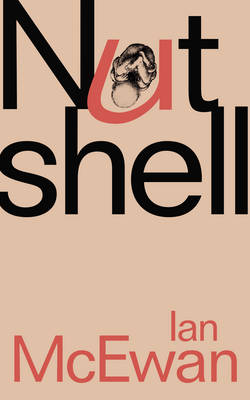
Need a break from movies and television? Pick up a copy of Ian McEwan's latest novel, Nutshell. In a slim 200 pages, this book tells a Shakespearean tale of murder, vengeance, and cunning that will satisfy your every literary craving and leave you wanting more. 

Given that this is such a short novel, I am loath to discuss much of the plot. In fact, even the description on the book jacket gives away a plot point that the author only reveals till the end of Chapter Three. The main thing to know is that this novel is narrated completely in the first person. And that person is a nine-month-old fetus. Admit it, that is an immediately intriguing concept. 

Our unnamed narrator lives in London, in the womb of a woman named Trudy, who is separated from her husband John, and sleeping with a man named Claude. She is unhappily pregnant with John's baby, and she and Claude have concocted a plan to get rid of John and get on with their lives. The fetus introduces us to all the characters in this tale, laying out the groundwork for how we got to this point. And then we are plunged into a maze of twists and turns, until we hurtle to a conclusion that seems inevitable only when we get to it. 

Ian McEwan is a brilliant writer, and I never cease to be amazed by his prose. Nutshell is a tour de force, drawing inspiration from Hamlet but giving it the most twenty-first century update imaginable. Only McEwan could describe an embryo in such scientific and poetic detail that it made me simultaneously remember my college seminars in Embryology and Victorian Poetry. This is a novel that can appeal to lovers of both science and literature (ergo in me, McEwan has found the ideal reader) and it casually weaves in references to T.S. Eliot and Dante alongside discussions of global warming and sociopolitical inequality. This fetus is the most articulate and erudite narrator you'll have encountered in your literary wanderings, and while you may want to roll your eyes as he offers up a discourse on New Zealand white wines, he also shows flashes of humorous self-awareness regarding his first world privilege. When he is starting to sound pompous and racist, there will be a sudden shift that acknowledges his limited worldview, having been confined to the womb of a wealthy white woman who listens to random podcasts and the BBC all day. 

Beyond the mesmerizing prose, however, lies a truly thrilling tale that will grip you in its talons and won't let go till the final sentence. For all the narrator's brilliance, he is completely helpless, forced to listen to Trudy's devious plans and see if they come to fruition or implode. All the while, he solipsistically ponders his fate when he finally enters the world that he has hitherto only experienced from the comfort of Trudy's wine-laced womb. It's a remarkable perspective from which to behold the world, and you'll luxuriate in it for a long time after you put the book down. Nutshell is an ideal novel: funny, wise, and thrilling, a perfect jigsaw of genres and themes that come together to produce an unforgettable story.