Thursday, January 19, 2017

Fences: Theatrical Cinema

Watching Fences is an exhilarating experience. Considering how intense it felt to watch it onscreen, I can't imagine how it felt to watch the live play on Broadway. Playwright (and screenwriter) August Wilson's story about a black man and his family in 1950s Pittsburgh is extraordinarily compelling, and this movie features performances that will make it impossible to forget.

Denzel Washington both directed and starred in the film, and for the first time, I understood why everyone considers him to be this generation's Sidney Poitier. He plays Troy Maxson, a garbage collector with a long and checkered past and many failed ambitions. This is an angry, powerful, and elegant performance that manages to convey all the many ways in which society has failed this man and he has subsequently failed society. The only person who can overshadow Washington's performance is, of course, Viola Davis, who plays Troy's wife, Rose. You might think you know what to expect since her most powerful scene already features in the trailers for the film, but there is nothing quite so viscerally thrilling as watching how her character quietly builds up to that explosive moment. Rose initially appears to be a woman who has everything she wants out of life, bu as the cracks in her marriage are gradually revealed, she must re-build the foundations of her existence.

The story features many twists and turns and while the movie feels clearly like a play that has been put on screen, it still works beautifully. There is near-constant dialogue, with Troy either spinning strange stories about his fight with the Grim Reaper or railing about the many ways in which the world is unfair to black men. Washington is such a charismatic actor that it would be easy to immediately empathize with Troy and take his side. However, as the movie progresses, you realize how bitter and angry this man is, and gradually, Rose emerges as the true hero of the piece. At first I didn't understand why Rose didn't feature more prominently - she was always off to the side, making a few comments while Troy rambled on endlessly about his day. However, it becomes clear that this is just a reflection of society - while Troy might think the world is unfair to black men, it's even more unfair to black women.

Fences is a fantastic film and I cannot imagine anyone winning over Viola Davis for the Best Supporting Actress Oscar this year. It features intense performances, an engaging story, and serves as a reminder that family dramas that take place in cramped settings often contain more sweeping anguish and power than the biggest blockbuster. It is also a reminder of the different ways African Americans have played the cards dealt to them by society - they can be resilient, crushed, or some combination of both, and this movie doesn't try to justify or glamorize any aspect of that struggle. It just lays it all out on the table and takes you along for the ride. 

Wednesday, January 18, 2017

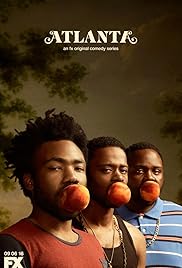
Atlanta: A Distillation of the Black Experience

I recently binged my way through the first season of Atlanta. At first I didn't know what to think - the first episode established the characters and location, but I wasn't sure if any of it was interesting enough to keep watching. But as I progressed I became enchanted, finding a new favorite character in every episode and becoming increasingly steeped in creator-writer-director-actor Donald Glover's vision of what it feels like to be black in America. It is impossible for a non-black person to fully understand the black experience, but watching Atlanta certainly helps.

Glover stars as Earn, a man who has recently returned to his hometown after dropping out of Princeton (for reasons that have yet to be explained and ensure Earn remains a bit of an enigma throughout the first season). He is fairly aimless, alternately crashing with his parents or Vanessa (Zazie Beetz), the mother of his child with whom he has a somewhat fluid relationship. Perpetually broke, he comes up with the idea to manage the fledgling rap career of his cousin, Paper Boi (Bryan Tyree Henry). Much of the initial comedy of the show ensues from the antics of Paper Boi and his right-hand man, Darius (Keith Stanfield). However, once the show hits its stride, it delivers a couple of standalone episodes that are on a whole other plane of storytelling genius.

The most talked about episode was probably the seventh one, "B.A.N." The premise is that Paper Boi is on a Tavis Smiley-esque serious talk show to discuss the portrayal of black culture and the treatment of the trans community, featuring a segment about a black man who is "transitioning" to white. There are also fake commercials, including a seemingly innocuous cereal advertisement that inexplicably (but hilariously/shockingly) devolves into a treatise on police brutality. It is a weird and wonderful episode, and while I'm still not clear what the takeaway was, it certainly was like nothing I had ever seen on TV. However, my favorite episode was "Value," where we get to spend twenty minutes with Vanessa. She had previously only been on the periphery of the show, existing solely in her capacity as Earn's baby mama, but now we finally learn more about this woman and get the perspective of a black woman in Atlanta after we've spent five episodes with the men. It is a remarkably incisive episode, touching on topics as varied as friendship, ambition, jealousy, and the Wodehousian ineptitude of public school bureaucracy.

In ten episodes, Atlanta has developed a very distinct style and flair. It's impossible to describe the show's tone - sure it could be called a comedy, dealing as it does with some very amusing supporting characters and shenanigans. But at the same time, it touches on issues of drugs, poverty, and gun violence, weaving them in so matter-of-factly into the day-to-day existence of these characters that you get weirdly inured to it, until you suddenly realize, "Wait, someone was just shot and killed, are we not going to talk about that?" That carefully casual tone speaks volumes, highlighting that being black in America often involves a resigned acceptance of the fact that you will see some awful things and just have to ignore them and keep on living your life. The final scene of Episode 10 serves as a wake-up call - we are so caught up in Earn's antics that it is a shock when real life intervenes and we are forced to acknowledge he isn't just living in a sitcom. It's thought-provoking television, and while it cannot speak for all black people everywhere, it is a critical addition to the rising chorus of black voices in pop culture.

Tuesday, January 17, 2017

Hidden Figures: Women Getting Things Done

Hidden Figures (or Hidden Fences as the Golden Globes would have you call it) is about the black women who worked in NASA's space program and helped America send a man into space. Based on the book by Margot Lee Shetterley, this is a vital story that finally deserves its moment in the spotlight.

Set in 1962, Taraji P. Henson, Octavia Spencer, and Janelle Monae star as Katherine Goble Johnson, Dorothy Vaughan, and Mary Jackson, three black women who work as "computers" in NASA's segregated West Area Computers division. Back then, computers were actual human beings who performed all of the calculations to determine the trajectories necessary to launch a rocket, put a man in orbit around the Earth, and get him safely back to Earth. These three women were brilliant and the movie tells the story of how they eventually got their due and became pioneers in their respective fields. All three pursued their dreams and ambitions, chafing against the restrictions placed upon them by Jim Crow laws but refusing to back down. Thanks to their perseverance, the world got to benefit from their intelligence and hard work, but like many female scientists and women of color, their astonishing work remained unacknowledged for decades. It's a shame we're only getting their stories now, but better late than never.

The script by Allison Schroeder and Theodore Melfi (who also directed), is quite straightforward and there is little in this movie that you won't see coming. It follows very familiar Hollywood beats and the swelling music and grandiose actions to say "segregation is wrong" are a little on the nose at times. However, all that is unimportant when you are being gifted with the scintillating trio of performances from Henson, Spencer, and Monae. These women are magnificent, whipsmart and engaging, playing the game and following the rules except when those rules get in their way and need to be neatly sidestepped. Every parent should take their child to see this movie, both to inspire them to work harder at school but to also instill a little streak of rebellion so that they always fight to get their rightful due.

Hidden Figures is not a traditional biopic, focusing very firmly on the work life of these women and only giving us occasional forays into their personal lives and families. Even those personal moments reiterate the solid support structure these women had, with mothers, husbands, and children who wanted them to achieve greatness and did not begrudge them their long hours and seemingly impossible dreams. I have rarely seen a movie where working women are championed so fiercely and allowed to pursue their careers without constantly having to fight their families. Apart from the obvious message of racial equality, this movie is also tackling gender equality and illustrates how these women succeeded not just in spite of being black, but also in spite of being women.

Watch this movie. It is important and necessary, and still manages to be funny and charming. After the "Oscars So White" controversy last year, it is spectacular to see a movie that delivers powerful performances from not just one but three black actresses who steal every scene they're in. The white characters in this movie are the more one-dimensional ones, serving only to get in the way of these ladies and receive their comeuppance. Kevin Costner, Jim Parsons, and Kirsten Dunst all deliver perfectly fine performances, but they can't hold a candle to the main trio. Katherine Goble Johnson, Dorothy Vaughan, and Mary Jackson are American heroes, and while their contributions (and the contributions of all the other unnamed women who served as computers and then programmers at NASA) have remained hidden for far too long, I imagine they would be proud to have their legacy celebrated in this fashion. 

Monday, January 16, 2017

Loving: A Quiet Victory

The first thing that startled me about Loving was how the events it depicts are set in the very recent past. It spans the years of 1958 to 1967, which is not very long ago, and yet somehow it was illegal for a black woman and a white man to get married. The second thing that startled me about the movie was how quiet it was. It is the story of an interracial couple's fight to have their marriage recognized by the state of Virginia, resulting in the landmark Loving v. Virginia Supreme Court ruling that would repeal anti-miscegenation laws across the United States. And yet, instead of choosing to tell the story as a sweeping court drama with impassioned speeches and Hollywood bombast, we get two quiet, perfect performances from Ruth Negga and Joel Edgerton, who demonstrate how love is all you need to change the world.

Since I've already summarized the plot for you, let me go into further raptures about the central performances in this movie. Ruth Negga is a revelation as Mildred Loving. She is shy and quiet, yet has a backbone of steel when it comes to defending her marriage and her children. Mildred is the one who writes to Robert F. Kennedy and sets off the chain of events that will eventually lead to multiple court cases and the famous ruling that marked the first victory in the ongoing fight for marriage equality. Joel Edgerton, as Richard Loving, is taciturn but noble, hating the spotlight but willing to do anything for his wife and to legitimize his children who are regarded as bastards by the state of Virginia. He barely speaks during this movie, but everything about the way he interacts with Mildred speaks volumes about his love and dedication to his family.

There is a stretch in the film when the Lovings are visited by Grey Villet (played by the reliably wonderful Michael Shannon), the LIFE Magazine photographer who took the iconic pictures of the couple. These photos showcased that all-important fact: Love is love is love, and helped the country recognize that despite the color of their skin, these were simply two people in love who wanted the right to declare that love and raise their family in peace. The two of them are tested in many ways over the course of the movie - they are arrested, harassed, and humiliated by the police and the general public. But through it all, they never entertain the idea of not being together, and that dedication is what ultimately changes the world for the better.

There are very few courtroom scenes in this movie. Nick Kroll plays Bernie Cohen, the volunteer ACLU attorney who took on the Lovings' case despite having very little background in constitutional law and provides some lighter moments in the film. Apart from getting the opening of his speech to the Supreme Court, we don't see much more of the various court rulings and appeals. And that makes sense. We all know what happened, but what is more important is why it happened. By keeping the focus squarely on Mildred and Richard, writer-director Jeff Nichols ensures we understand why these anti-miscegenation laws were so inherently cruel and barbaric. It is one thing to academically understand the need for civil rights. But Loving gives you an emotional understanding of why the fight for these rights was and continues to be so important.

In 1967 we had Loving v. Virginia and in 2015 we had Obergefell v. Hodges. It's the same fight to marry who you love, and it is ridiculous that we have continued this argument well into the twenty-first century. One can only hope more people watch this poignant movie and realize that we need to stop arguing about civil rights and marriage equality once and for all.

Sunday, January 15, 2017

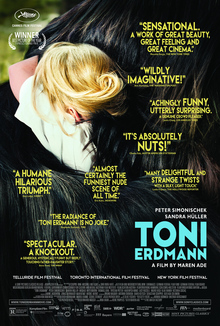
Toni Erdmann: German Giggles

I could not stop laughing during the last half hour of Toni Erdmann. And with a runtime of nearly three hours, it's quite a feat that this film keeps you engaged till the very end. This is one of those foreign films I only discovered because of awards show buzz (it was nominated for a Golden Globe and might nab an Oscar nod for Germany for Best Foreign Film), and I am so glad I gave it a chance. Because it genuinely turned out to be the most absurd and hilarious way to begin my 2017 movie watching.

The movie has a bizarre premise. Winfried Conradi (Peter Simonischek) is a German man who has a habit of wearing false teeth and wigs to prank people. He generally does this around friends and family, who are used to his eccentricities and take it in their stride. However, when his incredibly uptight daughter, Ines (Sandra Huller), visits him during one of her rare breaks from a consuming consulting gig in Romania, he decides she needs some livening up. He hops on a flight and suddenly shows up at her office in Bucharest in a disguise. Calling himself Toni Erdmann, he proceeds to thoroughly horrify her for the duration of the film. I know it sounds bonkers (imagine how you'd feel if your parent appeared out of the ether when you were with colleagues and tried to ingratiate themselves with the crowd while you look on in stupefaction) but it works brilliantly, thanks to Huller's superb performance as the seemingly humorless Ines.

The role of Ines could be thankless, consisting of a woman who has resting bitchface for three hours while all the glory goes to the funny father who's only trying to make his daughter smile. However, this movie is written and directed by a woman, Maren Ade, and it has never been clearer to me why female writers and directors matter. She ensures that Huller's performance is given the utmost respect it deserves - while at first she seems like a pointlessly dull career-hungry woman, she is gradually revealed to be a complex, over-stressed, but fundamentally decent lady, who simply needs a break and the chance to reevaluate her life choices. By the time we get to that epic final half hour, you won't think of Ines the same way ever again.

You might be wondering what happens in those last thirty minutes, given all of my hype. I can't tell you. You can Google it and find out from multiple sources since it's all anyone can talk about, but I believe the payoff is so much sweeter if you have absolutely no idea what's in store. I suppose I should offer some general warning - it involves a great deal of nudity, though none of it sexual (admit it, now you're intrigued about what ''non-sexual" nudity entails, aren't you?) and it is gut-bustingly funny. It is the best reward you can expect for reading subtitles for so long and you will want to re-watch that scene again and again.

Toni Erdmann is that rare thing - a foreign film garnering massive critical acclaim that also happens to be hilarious. If you thought all important German movies are long slogs about the Holocaust, think again. Sometimes they are clever, curious confections that start out by bewildering you and then suddenly become one of the best movies you've seen in the New Year.

Thursday, January 5, 2017

Rogue One: The Beginning of Everything

Caveat: I am not obsessed with Star Wars. I barely remember the original trilogy and apart from recognizing the central characters like Luke, Leia, and Han, I would be hard-pressed to tell you much more about the mythology and lore surrounding this franchise. I loved The Force Awakens last year, precisely because it did not treat me like an idiot for not knowing the backstory and let me enjoy it on its own terms, with a fantastic leading lady to boot. And for similar reasons, I can say that this year, I quite enjoyed Rogue One.

Rogue One is the story of how the Death Star's design plans were obtained by the Rebel Alliance and used to kickstart the events of the original Star Wars trilogy. As you can imagine, that means this movie is far more esoteric than The Force Awakens, and involves miles of backstory that would be a Star Wars fanatic's delight. The first half of the film is about how that fatal design flaw in the Death Star came to be, and introduces Jyn Erso (Felicity Jones), the troubled heroine who is going to eventually help the Rebels get the plans and save the galaxy. Therefore, I did not understand much of what was happening, stuffed as it was with allusions to events and characters from the original trilogy. Apparently they even used CGI to resurrect the late actor Peter Cushing so he could reprise his role as Grand Moff Tarkin from the first Star Wars movie, a fact that was completely lost on me until I read all the hullabaloo about it online.

Despite that, the movie won me over with its second half and also with the presence of Alan Tudyk as the hilarious droid K-2SO. Ever since Douglas Adams introduced Marvin the Paranoid Android in the Hitchhiker's Guide, having a droid as comic relief has always been the most reliable way to keep me engaged in science fiction. Felicity Jones is also one of my favorite young British actors, and watching her zip around the galaxy with Diego Luna and Riz Ahmed as fellow Rebels was never going to get dull. The action sequences are dramatic and cinematic, and overall, this movie delivers plenty of entertainment even if you have no clue what's going on half the time.

This franchise isn't going anywhere and you can either get on board or get out. Given the sheer number of Star Wars fans I count amongst my friends, I don't have the option to get out, so I'm just grateful that the new crop of movies are proving to accommodating to both fans and novices. As a standalone film, Rogue One is decidedly more dedicated to fan service, but it still delivers remarkable visuals and action, and ensures we can add another brilliant heroine to the previously male-dominated Star Wars canon. I can't say I loved every second of this film, but I certainly enjoyed watching it.

Sunday, January 1, 2017

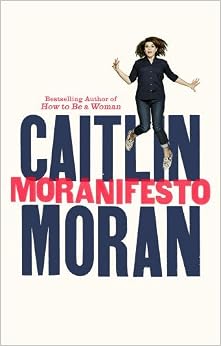
Moranifesto: Make Your 2017 Resolutions

I ended my 2016 by reading British journalist Caitlin Moran's remarkable Moranifesto. A collection of her recent articles, it is the funniest and most incisive set of musings I've read on the current state of the world and how we might go about fixing it. Moran opens the book with a clear declaration of how unsuited she felt to being a political commentator. But she decided to write about the world and its ways anyway (alongside hilarious interviews with Benedict Cumberbatch of course, because why would you ever give THAT up?) and the result is a truly wondrous insight into the brain of a truly wondrous woman.

The book is divided into four parts: it begins with the current state of affairs, followed by a riveting series of articles on feminism, then a section on the future and how we can (and must) do a better job of things, and ends with Moran's personal manifesto of the issues that matter to her and which she hopes the government (whatever form it takes) will address. Each part is a scintillating read, varying wildly in terms of subject matter and tone, but always conveyed with captivating passion. Her writing is vivid and visceral and you will delight in the sheer Wodehousian flair with which she deploys words and sentences.

And yet, despite being an exceedingly funny woman, she does not choose to be "blithe." In the brilliant piece, "The Rich are Blithe," she breaks down the fundamental difference between an optimistic working-class woman like herself and a blithe posh man like David Cameron or  Wodehouse's Bertie Wooster. According to Moran, "Optimism is saying, firmly, 'Things will get better.' Blitheness is saying, easily, 'Things never get that bad in the first place.'" It's a sobering and utterly valid explanation of the difference between left and right wing political philosophies, both in the UK and the US. Moran explores that idea throughout the book as she muses on socialism's benefits in tandem with capitalism's advantages and how someone like her would never have reached such heights if it weren't for the welfare state that supported the struggling citizenry.

Naturally her thoughts on feminism are poignant and powerful, ranging from the serious topics of rape and abortion to comical (yet still necessary) declarations on how she will no longer wear heels. These articles ought to be required reading for adults and children alike because they explain what exactly women and girls are dealing with on a daily basis and imbue the reader with the empathy that is required before we can deliver true equality and social change. Reading this book gave me a whole new sense of why I am the woman that I am and reminded me that I am not an anomaly. Of course, Moran cannot (and does not) speak for every man, woman, and child's struggles on this planet, but she routinely points out the absurdity of our current age where pioneers are mocked or declared disappointments if their focus is too narrow and fails to include every cause that is currently in fashion. Instead, Moran argues for a team approach - everyone grab one piece of the quilt that you want to patch up and then we will put all the pieces together.

Moranifesto is the perfect way to begin your 2017. You may not (and likely will not) agree with everything in this book, but Moran has the uncanny ability to put the opposing viewpoint into perspective. She will get you thinking about the things that are important to you, as well as the things that are important to the world. She won't stop being a liberal feminist, but she can firmly argue why you ought to be one too. And most importantly, this book is a rousing call to action, demanding that you stand up for the things you believe in and help the world become a better place. Some of her ideas can seem like a bit of a pipe dream, but in her words, "if we can make New York, we can make anything." That sentiment right there? That's not blitheness, that's optimism. And it's what we need in 2017.