Tuesday, May 29, 2012

The Pirates! Band of Misfits: Comedy on the High Seas

I already declared my love for Aardman Animations when I wrote about Arthur Christmas in January. So it should be no surprise that I was desperate to see The Pirates! Band of Misfits, the latest addition to the Aardman legacy of stop-motion magic.


The movie is set in 1837 and follows a band of English pirates led by their captain, who is imaginatively named the Pirate Captain. He is voiced by Hugh Grant, and if I hadn't told you that, you would never guess it. The Captain is desperate to win the Pirate of the Year award but simply cannot compete with the other far more competent pirates who are raking in the gold and jewels. Desperate to plunder his way into the big time, he tries to hold up every passing ship but he can only seem to find ships filled with rotting plague victims, schoolkids on a field trip, or ghosts. His First Mate (voiced splendidly by Watson, i.e. Bilbo Baggins, i.e. Martin Freeman) urges him to loot one more ship. It turns out this ship is the Beagle, containing a man named Charles Darwin (perhaps you've heard of him?). The pirates are disgusted to find that they've captured yet another ship that is sorely lacking in gold but stuffed full of baboon kidneys. However, Darwin discovers a real treasure when he realizes that the Pirate Captain's pet parrot, Polly, is in fact a dodo.

Darwin tells the Captain that if he shows off Polly at the Royal Academy in London, he will be a shoo-in to win the glamorous Scientist of the Year award. With stars in his eyes, the Captain agrees, despite the protestations of his crew who are worried about entering London where the pirate-hating Queen Victoria might have them arrested at any minute. What follows is a lot of scheming and intrigue, as Darwin turns out to have designs on the dodo himself, and Queen Victoria turns out to not be such a genteel royal after all.

The highlight of the movie for me was the voice acting. Hugh Grant, Martin Freeman, and David Tennant (as Charles Darwin) are all delightful and throw themselves into their characters with gusto. Ashley Jensen, Brendan Gleeson, and Imelda Staunton also offer up their talents, and recognizing their voices is one of the key delights of watching this film. True to form, Aardman's stop-motion animation is breathtaking but also incorporates a great deal of CGI for the extended landscapes and sea graphics. And of course, the dialogue is characteristically sharp and funny, with plenty of one-liners and innuendo presented at a rapid-fire pace.

Perhaps it's because we've already been saturated with the Pirates of the Caribbean franchise, but the movie didn't feel as fresh as other Aardman features have been, and the Pirate Captain could sometimes seem like just another goofy Captain Jack Sparrow. But the story is sufficiently compelling and even features a cameo from a flirty Jane Austen. Really, what more could you want?

Friday, May 25, 2012

Mirror Mirror: A Delightful Romp With Snow and Charming

Snow White is currently experiencing a renaissance as America's favorite princess. It started in the fall with ABC's fairytale drama Once Upon A Time. And 2012 brings us two very different Snow White movies. Snow White and the Huntsman is set to release next week and promises to be a gritty action drama with little room for laughs. While Mirror Mirror, which came out in March, is a hilarious re-telling of the classic tale, both mocking it and elevating it to a more entertaining story for the modern age. Like I said in my review of The Cabin in the Woods, it's difficult to make a movie that is faithful to its genre while simultaneously mocking that genre. Mirror Mirror accomplishes that feat spectacularly and makes you wish all fairytale franchises were this amusing.

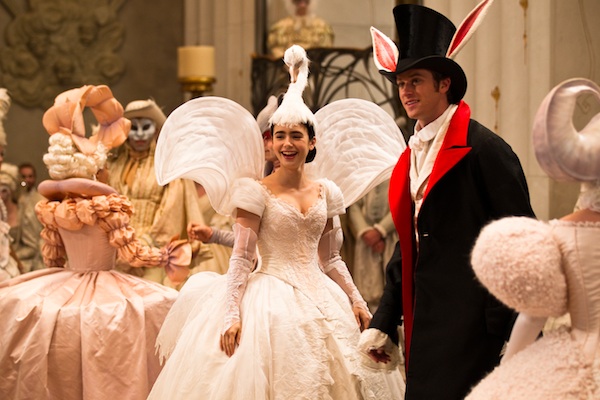
The movie stars Julia Roberts as the Evil Queen and she is clearly having the time of her life being unreasonable and vain while flouncing around in outlandishly large gowns. After the death of the King, she has locked Snow up in the castle and proceeded to host a number of lavish parties that have rapidly depleted the Kingdom's coffers. She finds Snow deeply irritating as the girl refuses to be anything other than polite and chipper during her imprisonment. However, on Snow's 18th birthday, the servants convince her to leave the castle and explore the Kingdom. And then the fun begins.

As Snow walks through the woods, she hears some calls for help and happens upon Prince Alcott and his companion who have been robbed and tied up by bandits. Seven bandits. The Prince describes these bandits as giants, because who could believe he was bested by dwarves? Snow rescues him and then goes off to the town while the Prince heads for the castle to see if someone can give him a shirt. Both are blissfully unaware that the other is a member of royalty, but their brief encounter is enough to sow the seeds of young love.

While Snow gets to know the townspeople and hear how they've been mistreated by the Queen, the Prince gets acquainted with the Queen, who decides that she needs to marry him and use his wealth to fund her extravagant lifestyle. She throws a lavish ball, as is her wont, but when she discovers that all he wants to do is dance with Snow, she orders her manservant Brighton (played to sniveling perfection by Nathan Lane) to get rid of Snow White once and for all. As expected, Brighton leads her into the woods but can't kill her, so he just leaves her to her own devices and she meets the seven dwarves. Who have names like Chuck and Wolf and are decidedly more entertaining than your standard Disney dwarf. With their help, Snow hatches a plan to defeat the Queen and goes through extensive fight training sequences that would impress Rocky Balboa.

Unlike the other actors in this film, Lily Collins doesn't get much of a chance to be funny as Snow White, but she is fully convincing as she transitions from innocent Disney princess to a sword-wielding renegade who has to keep rescuing her Prince. Speaking of Prince Alcott, did I mention he's played by the rather delightful Armie Hammer? Hammer commits wholeheartedly to this character, who manages to be both an imperious goofball and a dashing royal laden with Charm with a capital C. He has no fear of appearing utterly ridiculous in the name of comedy, as evidenced by a hilarious sequence resulting from the Queen's use of a slightly botched love potion.

Mirror Mirror is a visual extravaganza with lavish sets, brilliant costumes, and eye-popping colors at every turn. Director Tarsem Singh has done a wonderful job of creating this world and letting the characters run riot. Without spoiling anything, let me just say that the final scene of this movie will definitely remind you that it was directed by an Indian. So if you feel like you need to escape from your humdrum world for an hour, watch this movie. Of all the versions of Snow White I've seen so far, this is the fairest of them all.

Wednesday, May 23, 2012

Episodes: Matt LeBlanc Has Some New Friends

As a rabid Friends fan, I have watched almost everything the six main cast members did after that show ended. I even watched Joey, the rather awful spin-off starring Matt LeBlanc, which lasted for a miraculous two seasons. I worried that Matt LeBlanc had called it quits and was going to retire with his millions but last year he marked a triumphant return in the BBC-Showtime sitcom Episodes, which stars Matt LeBlanc as...Matt LeBlanc.

Of course, he's playing a slightly skewed version of himself. He's not as dumb as Joey Tribbiani, but he isn't the sharpest tool in the shed either. He's still prone to indiscriminately sleeping with any woman he sees but he's much more arrogant and content to take advantage of his huge celebrity status. His sense of humor is more sarcastic and he is much more self-aware and witty than his character ever could be on Friends. Altogether it is a hilarious portrait of a celebrity trying to find his next big role, and Matt LeBlanc is clearly enjoying poking fun at himself in every episode. No wonder he won the Golden Globe for this role last year, after never winning one for his role on Friends.

But enough about Matt. As excited as I was to see him on my TV screen again, I was just as excited for the two British leads, Stephen Mangan and Tamsin Greig, who were absolutely fantastic on Green Wing. On Episodes, they play Sean and Beverly Lincoln, a happily married comedy-writing duo with a critically acclaimed UK show called Lyman's Boys. The success of their show results in an offer from Hollywood to come over to Los Angeles and adapt the show for American audiences. The American executives promise the duo complete creative control and they are thrilled about this dream opportunity.

However, by the end of the first episode, their smiles have quickly turned upside down. The star of their UK show is Richard Griffiths and they are assured that he will star in the American version. Of course, Griffiths does not test well with the focus groups so he is quickly dispatched and replaced by megastar Matt LeBlanc, a decision that is met with complete horror by Sean and Beverley. Their lead role is supposed to be played by a compassionate and articulate acting veteran; instead they've got Joey Tribbiani. And from that moment on, the list of compromises they have to make keep growing. Suddenly they find themselves writing for a show that doesn't resemble their original material in any way, shape, or form, and their corruption by Hollywood is complete.

Episodes is a satirical look at the business of creating American television and even though it was created by two Americans (David Crane and Jeffrey Klarik) it has a very British sensibility. The first season was a mere seven episodes and the second season (which is currently airing on BBC Two and will air on Showtime in July) will give us a further nine episodes. The first season was a work of genius and so far the second season is continuing to fire on all cylinders. Everyone involved is fully enthused about mocking the giant American sitcom machine and their delight in playing these ridiculous characters is clearly evident. Wherever you are, find a way to see this gem of a show. It might be the best thing a former Friends star has ever done. 

Monday, May 21, 2012

Craig Ferguson in Scotland: Hold the Haggis But Bring On the Laughs

Craig Ferguson is my favorite late night TV host. Yes, Conan, Fallon, and Letterman all bring me joy, but Craig's brand of joy comes with a great deal of wisdom and a lot of heart. Last year, he took the Late Late Show to Paris for a week, and the result was a marvelous five days of Craig sharing wonderful anecdotes, philosophizing with Jean Reno, wandering around Versailles with Kristen Bell, and dancing the cancan at the Moulin Rouge. It was his usual blend of low-brow humor and extremely high-brow whimsy and I loved every minute of it. So last month, when he unveiled the following trailer for his week of shows in Scotland, I knew this would be a week of unmissable late night TV.


This trailer made me smile the instant I saw it, and for the next few days I would catch myself humming the Imagineers song that it's set to. While Paris was fine and dandy, Craig performing in Scotland is far more personal and the week of shows did not disappoint. Craig famously refuses to have scripted conversations with his guests - unlike other late night shows where guests come prepared with set stories that the host will nudge them into telling, Craig just launches into an informal chat. The movie or TV show that the guests are promoting will barely get a mention, but the audience gets a much better sense of who these people are in real life. But with taking the show to Scotland, there isn't even a couch or a host behind the desk. It's just Craig showing Mila Kunis around a Glaswegian graveyard or eating crumpets with David Sedaris, and the conversations that result are always surprising, insightful, and hilarious.

Of course, the celebrity shenanigans aren't the real reason to watch. The loveliest moments are when Craig returns to his old high school and has a chat with the current headmaster about his reasons for dropping out of school. Or when he revisits his childhood home and talks to the lady who lives there now about whether she would want her kids to stay in Cumbernauld. He has such a complicated history with Scotland but he shares it all with the audience with a healthy dose of self-deprecation and humor. You can find the shows on the CBS website or with some assiduous YouTube searches and see for yourself. And afterwards join me for crumpets so we can have a rambling discussion about how awesome Craig Ferguson is. 

Thursday, May 17, 2012

Death Comes to Pemberley: What If Jane Austen Wrote Mysteries?

After reading every Agatha Christie novel I could find in my teens, someone suggested I try P.D. James, another female British novelist who was renowned for her mystery novels. I enjoyed her books but wasn't as rabid about them as I was about Christie novels. However, last month a friend told me that P.D. James had written a murder mystery set in the fictional world of Pemberley, Mr. Darcy's abode in Pride & Prejudice. As someone who loves Jane Austen and loves mysteries, clearly I had to read this.

Obviously, this book is just Jane Austen fan fiction. But it's written by a celebrated author, which lends it an air of respectability that is usually missing in most fanfic. Also, it is a completely different genre from Pride & Prejudice, so despite the use of the same characters and settings, it still feels fresh and unexpected. This is no Pride and Prejudice and Zombies, where the text is identical to the original with only a few zombie battles thrown in. Instead, James has a wholly original story about a man being murdered in the woodlands surrounding Pemberley, and the subsequent arrest and trial of Mr. Wickham for the murder, despite his protestations of innocence.

Now this is not a perfect novel by any means. I wholly recommend it if you're a Jane Austen fan, but not if you're just looking for a good murder mystery. The story concerns itself more with the characters and looking at what they've been up to since Pride & Prejudice ended, and it's only in the last 90 pages that the mystery really kicks into high gear. The plot is fairly rushed and barely sustains any suspense. But if you know your Austen, you will derive a great deal of amusement from this novel.

There is a great deal of exposition in the opening chapters to explain the events that took place in Pride & Prejudice. Frankly this seems unnecessary because the only people who will want to read this book have already read Pride & Prejudice a dozen times. But once these formalities are dispensed with, James gleefully takes us into her imagined world of Pemberley. There are some sly digs at the original novel as Elizabeth ruminates on her tempestuous courtship with Mr. Darcy and thinks, "If this were fiction, could even the most brilliant novelist contrive to make credible so short a period in which pride had been subdued and prejudice overcome?" It's readily apparent that James does think Austen was brilliant enough to make the Elizabeth-Darcy romance credible, but nonetheless the entire novel is filled with amusing remarks like these that serve as a critique of Pride & Prejudice. 

What I loved most were the casual references to characters out of other Austen novels. I've always viewed Austen's six novels as existing in separate worlds, but it is rather delightful to acknowledge that all the characters lived in the same Victorian England and could be interconnected. So if you (like me) have always regretted that Austen didn't write more novels, Death Comes to Pemberley is an agreeable way to pass the time and re-visit characters who have become familiar friends. 

Wednesday, May 16, 2012

Agatha Christie: Still the Reigning Queen of Crime

Last month I discovered a box filled to the brim with my Agatha Christie novels that had been languishing in storage. Delighted at this reunion, I proceeded to blaze through five novels over a week and came to the conclusion that Agatha Christie still has my vote for the best mystery novelist of all time.

The problem with modern mysteries is the advent of technology. Solving a crime in the digital age has largely become a matter of electronic surveillance, CSI minutiae, and paperwork. It's hard to build up suspense when the lead detectives are just waiting for the lab technicians to compare DNA fragments or analyze gunpowder residues. The best mysteries tend to be the ones where the protagonist is trapped in some remote location without access to all these technological conveniences and has to rely on instinct and intelligence alone. Perhaps that could explain the recent popularity of Scandinavian mystery novelists like Jo Nesbo or Stieg Larsson. After all, you can't get much more remote than Norway or Sweden.

However, when Agatha Christie started writing novels in the 1920s, old-fashioned police work was very much the norm. Doctors could examine the body and give you a pretty accurate time and cause of death, but if you found a hair at the crime scene, all that could tell you was the color of the murderer's hair. Footprints and fingerprints were the most impressive clues you could find and usually Christie refused to provide these. Instead, her detectives had to rely on their "little gray cells" and employ deductive feats of genius. Rather than strewing her crime scenes with a host of clues, Christie's mysteries were utterly character-driven, where understanding the suspects' motives and relationships was the only way you could hope to solve the crime.

The first Christie novel I ever read was Sad Cypress, starring her famous Belgian detective, Hercule Poirot. The novel ends in the courtroom with witnesses providing disparate items of evidence that gradually piece together an incredibly ingenious plot. I was hooked after that one book, and I subsequently spent years buying every Christie novel I could lay my hands on. If you're not much of a reader, the film and TV adaptations of her novels are always entertaining, although some are more faithful to the books than others. In fact, you'd be hard pressed to find a single British actor who has not appeared in a Christie adaptation at some point in their career. Movies like Death on the Nile or Murder on the Orient Express had all-star casts in the 1970s and they still hold up today as thoroughly suspenseful and compelling stories.

Agatha Christie wrote 66 novels that ranged widely in terms of settings, characters, and tone. None of her novels feel like a repetition of another and I am always amazed by the creativity and complexity of her plots. If you've never read an Agatha Christie novel, I might suggest starting with her first Poirot novel, The Mysterious Affair at Styles. You can follow it up with The Murder of Roger Ackroyd, which has a truly insane and mind-boggling twist. But really, just pick up any Christie novel you can get your hands on. They all showcase the superb craft of the one and only Queen of Crime.

Monday, May 14, 2012

Veronica Mars: Nancy Drew For the 21st Century

The first season of Veronica Mars aired in 2004 but I only discovered it in 2005 when I was desperately seeking some quality entertainment in the wasteland of summer TV. I devoured the 22 episodes over the course of a week and come September, I was ready for Season 2. Sadly, Veronica Mars was one of those cult shows that had a loyal fan base, widespread critical acclaim, but no wider audience. It also had the misfortune of being on the UPN network as it transitioned into the CW and was constantly in flux. However, the vocal fans managed to convince the network to produce three seasons of the show. I recently re-watched the first season and it is just as amazing as I remembered; so much so, that I now find myself halfway through the second season and furiously downloading the third.

The show stars Kristen Bell as Veronica Mars, an extremely intelligent, fiery high-schooler who works part-time for her father's private detective agency. They live in Neptune, a Beverly Hills 90210-esque town that is teeming with millionaires and the people who resentfully work for them. Veronica used to be part of the elite crowd - her father was the Sheriff and her boyfriend was Duncan Kane, son of billionaire Jake Kane and brother of Veronica's best friend, Lily. However, when Lily was found brutally murdered on the Kane estate, Veronica's father launched an investigation that would ultimately get him fired from his position as Sheriff, break up his marriage, and make Veronica a complete outcast among her rich friends. 

However, out heroine is made of sterner stuff. Characterized by biting sarcasm and utter fearlessness, she ignores the rumors and gossip swirling around her and concentrates on her amateur detective duties. Even though a man has been convicted of Lily's murder, Veronica unearths evidence that suggests that he wasn't the real killer. Her father had similar doubts, and he was quickly run out of the Sheriff's department when he dared to suspect Jake Kane of having a hand in his daughter's murder. The entire first season concerns itself with the mystery of the murder of Lily Kane and each episode gives you a little clue that helps put together the entire horrifying picture in the epic season finale. 

Every episode of Veronica Mars was structured impeccably. There was a mystery of the week - a missing dog, a false accusation of cheating, a straying boyfriend, etc. that Veronica would attempt to solve for one of her classmates in exchange for some much needed cash. At the same time, she would also be pursuing new leads in the Lily Kane murder investigation, as well as trying to solve a personal mystery about something that happened to her at a party a year ago. The show's writers were adept at keeping you interested in both the smaller and overarching mysteries of the season and Kristen Bell was just masterful at getting you to empathize and root for Veronica at every turn. This structure was repeated in the second season when Veronica had to solve the mystery of a bus accident that resulted in the death of several classmates, but the third season was slightly different. The network decided that the show couldn't get new viewers if the season was occupied with one long mystery, so the show was divided into three acts where each of the three "big" mysteries was wrapped up over 7 or 8 episodes instead of 22. This worked just as well as prior seasons, but unfortunately did nothing to increase the show's audience, ultimately leading to its cancellation.

Good mysteries are hard to come by on TV, but Veronica Mars did an amazing job of keeping you engaged throughout the course of a season. The show is probably best watched on DVD when you can just go through an entire season in one fell swoop without having to wait impatiently for further developments and keep track of all the information. So seek out this show and revel in some truly inspired television that illustrates that suspenseful mystery writing doesn't necessarily have to be in a book.