Saturday, December 15, 2018

Widows: Bleak Heist

If you go into Widows assuming you're going to be treated to a frothy Ocean's 8-style caper, you're going to be sorely disappointed. However, if you go into it expecting a noir thriller directed by Steve McQueen and starring Viola Davis with guns of steel, you will be thrilled beyond belief.

The movie opens with a heist gone wrong, and a gang of robbers are killed. Led by Harry Rawlings (Liam Neeson), their misdeeds finally caught up with them. Unfortunately, the money they stole belongs to a Chicago gangster and he needs it to finance his political campaign. So he rocks up to Veronica's (Viola Davis) penthouse and demands that she pay up $2 million to satisfy her dead husband's debts. Thankfully, Harry left her his notebook, which contains the plans for his next heist, a job that would net a cool $5 million. So, Veronica reaches out to the widows of her husband's gang and asks if they will help her before they are all murdered by the mob. Unsurprisingly, they agree.

This female dream team includes Michelle Rodriguez, Elizabeth Debicki, and Cynthia Erivo. You may think you know what part each has to play in the heist, but as the movie progresses, each lady demonstrates hitherto unknown depths and resolve to get this plan moving along. They may be poor and on the brink of ruin, but these women aren't going down without a fight. And all of this takes place against the political backdrop of the special election for Chicago's 18th Ward, a fight rife with corruption, racism, and nepotism ('Murica!). There are a lot of seemingly disparate plots in this film, but stick with it - they all coalesce in a fashion that led the audience in my particular theater to gasp out loud.

This movie is extremely dark and violent - Daniel Kaluuya plays one of the mobsters threatening the widows, and if you thought you loved him from Get Out and Black Panther, be prepared to now be insanely frightened of him for the rest of your days. He is a merciless psychopath in this movie, and I need him to star in a romcom ASAP so he can stop featuring in my nightmares. Meanwhile, the ladies of this film put Wonder Woman to shame. The minute Viola Davis is in a tank top hauling bags of money, you'll be wondering what her gym routine is, because that lady is a bona fide action star. The dialogue between her and the other women is a Bechdel dream, revealing little nuances of the women's characters. It is particularly enlightening to see how she and Erivo have a different dynamic as two black women, and the initial distrust and then grudging respect they amass for each other.

Co-written by Gillian Flynn and Steve McQueen, Widows covers a whole slew of themes, whether it's race, gender, or political corruption. It is a movie of our times and while oftentimes cringe-inducing with its violence, you will definitely whoop and cheer for these women as they overcome the odds to fight the man. Hollywood, pay attention. We want more movies like this please. 

Sunday, December 9, 2018

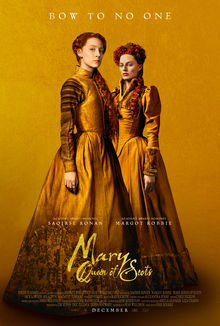
Mary Queen of Scots: The Bland and the Beautiful

My main takeaway after watching Mary Queen of Scots was that this should have been turned into a Netflix series that I could cozily watch at home on a rainy afternoon. At least then there would have been time for character development, some attention to historical accuracy, and many more hours of gorgeous costumes, sweeping Scottish vistas, and Saoirse Ronan and Margot Robbie ruling the land. Unfortunately, as a movie, this endeavor is more irritating than enthralling.

As the title implies, this is the story of the reign of Mary, Queen of Scots (not sure why the film title eliminates the comma but add that as one more irritating thing about the film). Raised in France as a baby, she returns to rule Scotland at the age of 18 after she is widowed, and demands that Elizabeth I of England name her as the heir to both the English and Scottish thrones. As Mary, Saoirse Ronan delivers an unsurprisingly fantastic performance, while Margot Robbie is equally captivating as Elizabeth I (though she has much less screen time and seems to be relegated to a much more petty role). Honestly, if the movie had solely consisted of these two women engaged in heated political battle, it would have been glorious. But, as with real life, enter the men to ruin everything.

This movie feels like a soap opera and romance novel - not the good kind. I had to read an article afterwards about what was fact vs fiction to see if maybe this was one of those instances where I was being too critical and the events depicted in the film actually happened in real life. But no they did not. There are weird elements about the sexuality of certain characters, and frankly the notion that Mary picked her next husband after he went down on her is insulting. Give the woman a bit more credit for thinking with her head than her vagina. And Elizabeth I is portrayed as an oddly weak-willed monarch who is jealous of Mary's beauty and fertility. Again, ladies can be jealous of each other for their intelligence and political strategy, not just because they have pretty portraits and functional uteri.

Of course, the screenplay is written by a man (Beau Willimon of House of Cards fame), and it does feel like a TV movie than a proper cinematic spectacle. It's directed by a woman, Josie Rourke, who is a brilliant theater director, but needs to do a lot of work when it comes to film direction. There are set pieces in this movie, particularly the final face-off between the two Queens (which again, never happened in real life) that are highly choreographed and theatrical; rather then providing heightened tension, they feel staged and artificial. However, I will say this - the hair and costume design is bewitching.

Mary Queen of Scots has two incredible actresses and aims to tell the story of two incredibly powerful women. Unfortunately, it falls into the trap of all the men in the English and Scottish courts - it fails to recognize the intelligence of these women and decides to turn their relationship into a cat fight. Let's re-do this movie as a miniseries and give Mary her rightful due.

Sunday, December 2, 2018

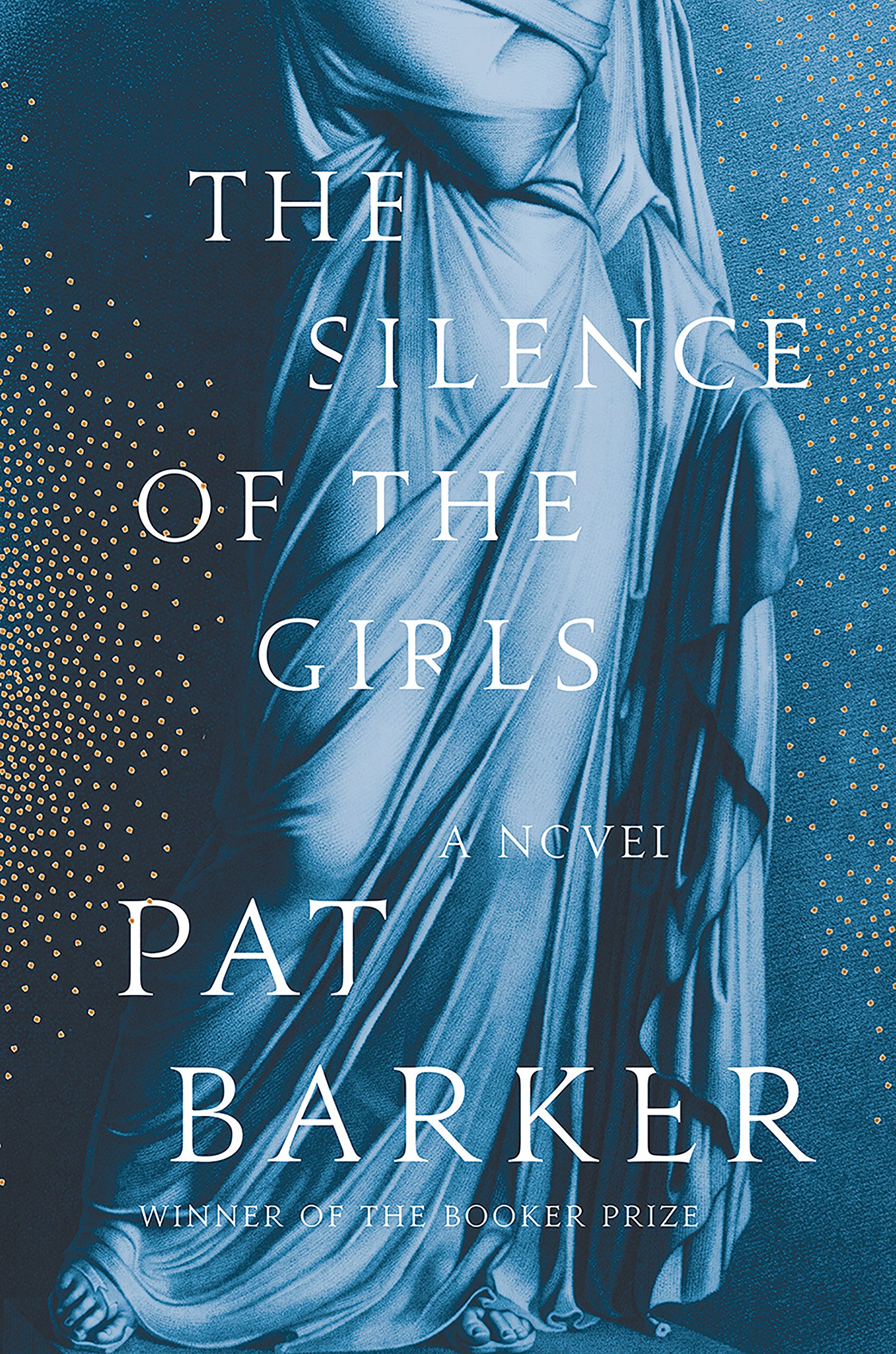
The Silence of the Girls: The Women of Troy Speak Up

I love classical mythology but Homer's Iliad never held much appeal for me. Men waging bitter war over a beautiful woman, with long odes to ships and Greek fighting prowess, topped off with the praises of the great Achilles? Yawn. When I took Classical Mythology 104 in college, I asked my professor what she thought of the movie Troy, and she looked at me in horror and said it was Hollywood garbage. However, I like to think that if I asked her what she thought of Pat Barker's The Silence of the Girls, she would say she loved this book with all her heart. I certainly did.

The Iliad begins, "Sing, goddess, the anger of Peleus' son Achilles..." Right off the bat, we know this is a story about the anger of men and gods. But in The Silence of the Girls, we get the story of the enslaved Trojan women, the "prizes" of war, forced to witness the slaughter of their husbands, fathers, and sons, and then pressed into service for the very men who killed their families. In particular, this is the story of Briseis, the Trojan princess who became Achilles' slave and concubine. In the movie Troy, Briseis and Achilles are played by gorgeous actors and make sweet, sweet love. In this novel, Briseis is rightfully depicted as a victim of war, raped by her captors and always fearing for her life and the lives of the women around her. Towards the end of the novel she muses on how people of the future will hear about the tale of Troy and says, "They won't want to be told about the massacres of men and boys, the enslavement of women and girls. The won't want to know we were living in a rape camp. No, they'll go for something altogether softer. A love story, perhaps?" Well, Pat Barker isn't here to give you a soft love story. This is a story of war, and the anger of Briseus's daughter, Briseis. 

This novel is filled with gorgeous, riveting prose that brings the Trojan war to life. I recognized all the familiar names, but now they had rich internal lives, not just poetic epithets that glossed over their emotions and only emphasized their victories. While the focus of the story is Briseis, we get plenty of backstory on Achilles, an emotional wreck of a man who is absolutely destroyed when his friend and lover, Patroclus, is killed in his stead. He has abandonment  issues with his immortal mother, the sea goddess, Thetis, who Briseis reminds him of (which makes the whole thing creepily incestuous). And all throughout, we have Briseis, delivering a traumatic tale of shock, guilt, remorse, and survival. When Patroclus is kind to her, she feels conflicting loyalties. When the Greek armies start losing to the Trojans, she doesn't know how to feel: on the one hand, she wants the Trojans to win. On the other, she knows that this simply means she will be traded as a war prize to a new set of captors, who will not care that she was Trojan to begin with - now she is just a slave, a thing. 

In one memorable chapter, she starts naming the men that Achilles kills on a particularly bloody day and details the gruesome ways in which they were killed. However, she then tells the stories she heard from their mothers about who these men and boys really were. Instead of "Dryops. A sword swipe to the neck that very nearly took off his head," she tells us about, "Dryops, whose mother's labour lasted two full days." It is a story about humanizing the statistics of war and further emphasizes the futility of this nine-year catastrophe that was kicked off solely because one man stole another man's wife. Men are monsters, and this novels illustrates the toll that their arrogance takes on the women and children who are the innocent bystanders. 

I know it all sounds horribly dreary, but The Silence of the Girls is certainly one of the best books I read this year. Evocative, haunting, and rich, it tells an age-old story from a completely fresh perspective and immersed me into Homer's world in a way that I never thought possible. The next time I pick up The Iliad, I will be reading between the lines, searching for the names of those silent women. They are not just Priam's daughter, Hector's wife, Achilles' slave. They are Polyxena, Andromache, Briseis. "Oh, those fierce young women."

Sunday, November 25, 2018

First Man: The Human Toll of Ambition

You may be wondering why you need to watch a movie about Neil Armstrong, when you already know he successfully landed on the moon in 1969 and uttered those iconic lines. However, in First Man, director Damian Chazelle tells a poignant story about men in the 1960s, the women who took care of their families, and the perils, rewards, and foolhardy ambition that fueled the US-Soviet space race.

Ryan Gosling plays Neil Armstrong, a casting coup because you need an actor in this role who can convey a great deal with his face instead of dialogue. This is a man who doesn't talk much, and instead is intently focused on his love of flying and eventually space travel. He is level-headed and calm in the most alarming situations, which is why he is a stellar astronaut, but also why he is a difficult husband and father. At the beginning of the film, we see how the Armstrongs' young daughter, Karen, dies at the age of two from cancer. Neil never discusses this with his wife or his colleagues, instead throwing himself back into work and shoving aside his grief. However, in moments of peril, visions of his daughter always come flooding back, and we see the culmination of that grief in a particularly profound moment during the moon landing.

Claire Foy is magnificent as Armstrong's wife, Janet, and is probably in the running for a Best Supporting Actress statuette this year. She grounds the whole movie, providing the female perspective in a story that is otherwise dominated by men and their ambitions to one-up each other. One of my favorite moments is when she storms into NASA demanding they turn her communication box back on so she can listen to what is happening to Neil in space (they cut off her comms when they realized he was getting into some trouble.) She rebukes them, declaring that they are all "boys building models out of balsa wood," which is not an inaccurate description of the entire Space program.

Indeed, the moments you spend inside a rocket are the most claustrophobic and bewildering of the movie. Expertly shot so that you can almost feel your stomach lurch and your chest compress as the G-force piles up during a launch, Chazelle has perfectly captured the absurd wonder of those early space missions. There are shots of streaky windows and rusty rivets, and as you watch the spaceship rattle and every dashboard light up and every alarm go off, you wonder how anyone ever made it into space, let alone landing on the Moon and safely returning. It's a magnificent space movie and the utter silence during key moments help to fuel your awestruck wonder at the visuals. Then the theremin-laced score swells and tugs at your soul some more. Ultimately this is a magnificent human story about how grief can fuel ambition and men can continue to strive for greatness despite personal tragedy. But again, they can only do this because of the women they leave behind. When Janet insists that Neil talk to their sons and prepare them for the fact that their father may never return from space, you are reminded of how much is being sacrificed.

There are many fine character actors throughout this film and you can start taking bets on which of them will die first to represent the rising death toll of the Gemini and Apollo missions that preceded the successful moon landing. There is so much tragedy that has been overshadowed by this unparalleled human achievement, and First Man gives those men their due.  Nowadays, we only hear that man set foot on the moon, but this movie highlights all the political protests against NASA and the huge cost of sending men into space instead of taking care of the people on the ground. It's a fight that continues today, which is why NASA has yet to send any men to the moon in the 21st century. Ultimately, First Man looks at whether all of this was worth the cost, and frankly, I still don't the answer.

Friday, November 23, 2018

The Ballad of Buster Scruggs: The Absurdity of Mankind

Last night I was reading up on The Myth of Sisyphus, an essay that posits Albert Camus' philosophy of the absurd and man's futile search for meaning. Then this morning, I watched The Ballad of Buster Scruggs, the latest Coen Brothers film that is essentially a visual depiction of absurdism. I did not plan this, but my it was a revelation.

The Ballad of Buster Scruggs is a series of short films that all take place in the old American West. The conceit is that you are reading a book called The Ballad of Buster Scruggs and Other Tales of the American Frontier and an unseen hand turns the pages to introduce each new story and then show you the closing pages as you move on to the next vignette. That flourish made me glad I was watching on Netflix as I could pause the movie and read the last few words of every story to glean some more wisdom from the mysterious minds of Joel and Ethan Coen.

I won't delve into too much detail about each of the vignettes as they pack a wallop and should be experienced firsthand. But if you've ever watched a Coen Brothers movie before, you know what you will find. A bewildering mix of comedy and pathos, with dialogue that falls trippingly off the tongue and makes you want to write it all down so you can read those sentences over and over again. I simply do not understand how they can craft such poetry but every word is a delight. Most importantly, every actor they've hired delivers those lines with the appropriate panache. However, that is only the case in some of the stories. In others, dialogue takes a backseat to Bruno Delbonnel's epic cinematography where Nature provides the necessary poetry. The pristine landscapes and wilds of the frontier are jawdroppingly splendid and highlight the absurdity of it all. These men will play their foolish games to their foolish ends but the land will carry on long after they are gone.

Be warned: this movie is a Western and extremely violent and graphic in spots, oftentimes becoming Tarantino-esque. If bloodshed and bullet wounds turn your stomach, you might want to skip some stories entirely. But each one has one central thesis: men are constantly searching for something, and ultimately, it doesn't matter whether or not they get it. The journey is the destination. As Camus said, "The struggle itself toward the heights is enough to fill a man's heart. One must imagine Sisyphus happy." And you will really have to stretch your imagination because happy endings are not plentiful in this film.

Of the six vignettes, I naturally gravitated to the only one featuring a meaty role for a woman, The Gal Who Got Rattled. (One could argue that in the Wild West women didn't do much, but we all know that's a paltry argument and is my main quibble with this film - if you have six stories, can't some of them feature more interesting roles for women?) Zoe Kazan's performance is captivating, and the camera lingers on her face even when others are talking because getting her reaction to their words is more important than watching the words be delivered. This vignette felt the most sweet and hopeful...for a while at least. I also enjoyed Near Algodones, starring James Franco, as that featured some of the most outright absurdist comedy (Franco is not allowed to mumble more than a few words during the entire piece as that man is impossible to imagine as a cowboy). And for utter bleak despair, Liam Neeson and Harry Melling (Dudley Dursley's all grown up and magnificent in this role!) deliver quite the gut punch in Meal Ticket.

The Ballad of Buster Scruggs is a cinematic feast, offering an amuse bouche to tickle every palate, but with a central theme of utter Sisyphean futility. It is beautifully shot, impeccably written, and well acted. I can't say it is a warm and fuzzy holiday movie, but it certainly shows you what cinema can do to transform the written word into a moving spectacle. 

Sunday, November 18, 2018

Chilling Adventures of Sabrina: Bloody Good Fun

I started watching Chilling Adventures of Sabrina with a bunch of girlfriends who came over to my house to make bread pudding. Which really is the best way to start bingewatching any new series about an empowered young woman, no matter how gory and weird it may be. Subsequently I have finished watching the show at the gym, where I'm sure people passing me on the treadmill recoiled as they saw blood continually splatter on the screen during all manner of diabolical events.

I was a huge fan of Sabrina The Teenage Witch, which aired in the 90s and early 2000s and was a highlight of my childhood. I also read a lot of Archie Comics as a kid, so was well aware of Sabrina in the comics realm as well. However, apart from having the same characters, Chilling Adventures of Sabrina is way darker than its predecessors lead you to expect. As evidenced by the fact that Netflix and Warner Brothers are currently being sued by Satanists who are objecting to how the show makes them look bad. Seriously. This show is bonkers and brilliant.

Kiernan Shipka plays Sabrina, a teenage half-mortal, half-witch (her mother was mortal, while her father was a progressive High Priest of the Church of Night), who has been living a mostly mortal existence in the outside world, with mortal friends and a boyfriend in her high school, but plenty of magic spells and incantations at home with her aunts Hilda (Lucy Davis) and Zelda (Miranda Otto) and cousin Ambrose (Chance Perdomo). However, upon the eve of her sixteenth birthday, things come to a head, and the Church of Night insist that she must fully embrace the witchy half of her nature after her dark baptism. At this point, Sabrina is too fond of her mortal friends, and what follows is the quest to find all the loopholes so she can have her cake and eat it too. And also combat the Dark Lord who is hell-bent on bringing Sabrina into the Church of Night, which gets up to all manner of bloody shenanigans.

This show is packed to the gills with jump scares, and a number of my friends have complained they got way too scared to wander around their houses at night after watching this show. I wouldn't go that far, because as freaky as it is, there's still a kitschy and fun element to it that helps release the tension. I was particularly delighted to discover that Richard Coyle (who I adore from Coupling) and Michelle Gomez (who I adore from Green Wing) are series regulars, playing terrifically devilish characters in vast contrast to the bumbling British comedy roles I've always seen them in. The entire cast of this show is fantastic; Lucy Davis and Miranda Otto are an excellent double-act as the indulgent and kind Hilda and strict and overzealous Zelda; Michelle Gomez is mysterious and bewitching (pun intended) while Richard Coyle as Father Blackwood is a deliciously unholy and horrifying villain. And Kiernan Shipka binds the whole thing together with the dazzling confidence and backbone we all knew she possessed as we watched Sally Draper grow up on Mad Men.

Chilling Adventures of Sabrina may be about a Greendale coven and a teenager struggling with her mortal and witch identities, but it cleverly manages to incorporate real-world issues like bullying, homophobia, and the need to overturn stereotypical gender roles. The production design is impeccable with eerie sets that creep you out even if the actors are doing nothing out of the ordinary. And the costumes are gorgeous, with Sabrina often kitted out in a blood red coat that seems to lend her both the innocence of Little Red Riding Hood but also the worldliness of a witchy woman. Everything is heightened and crazy in this show, but the underlying storylines are magnificent and watching how everything culminates in an explosive conclusion will certainly whet your appetite for the second season. 

Monday, November 12, 2018

The Prisoner in the Castle: Maggie Hope Meets Agatha Christie

Over the years I have become an ardent fan of Susan Elia MacNeal's Maggie Hope series. Starting with Mr. Churchill's Secretary, which was released in 2012, the series tells the story of Margaret Hope, an American who moves to London at the start of World War II and becomes a part of the war effort. Over the course of the books, she has moved up from secretarial work to becoming a spy who has worked undercover in the US, Germany, and France. The stakes couldn't be higher and the emotional toll can be quite wrecking as you get through each installment, but MacNeal deftly weaves in historical facts with scintillating fiction to tell a story that reminds us what exactly this war cost the world decades ago.

The latest installment, The Prisoner in the Castle, is a bit of a departure for the series. Rather than putting Maggie in the center of the action in war-torn lands or Churchill's Cabinet Rooms, our heroine is on an island in the remote Scottish Hebrides. She knows too much and has been deemed a risk to the war effort, so has been exiled to a remote location with other British spies who can no longer contribute but know too much to be returned to civilian life. While that sounds rather dull, never fear, MacNeal is about to take inspiration from Agatha Christie's And Then There Were None and Richard Connell's The Most Dangerous Game to give you a chilling murder mystery where the inhabitants of the island start dropping dead in increasingly gruesome ways and Maggie must find the killer or be killed. 

I love a good murder mystery and when you combine it with a female heroine I've gotten to love over the course of seven novels, it's a recipe for greatness. The plot is juicy, the secondary characters are shady and intriguing, and the reveals startle you as you turn each page. Full disclosure, I started reading these books because MacNeal is a Wellesley alum and Maggie Hope also went to Wellesley, so there's nothing more entertaining than reading about a fictional woman who kicks ass and also happens to have attended your beloved college. However, putting that bit of partiality aside, I have truly enjoyed reading MacNeal's prose and how the plots get more riveting as Maggie becomes a more integral part of the spy network. World War II is a period in history that never ceases to captivate my interest, and this series does a phenomenal job of giving you a history lesson in the disguise of an espionage thriller.

The Prisoner in the Castle is well worth your time if you are a fan of the Maggie Hope series, or if you're merely interested in a stand-alone murder mystery (though a lot of the side plots may be lost on you in that case). It has thrills, chills, and a brilliant heroine who is not afraid to fight for her life, and you will not be able to put this book down until you have devoured every single page. It's a quick and engrossing read and perfect for a winter weekend when all you want to do is curl up on the couch and read about a fascinating woman having adventures during a fascinating time in our history.