Sunday, October 2, 2016

Fleabag: Hilarious, Touching, & True

Amazon Studios
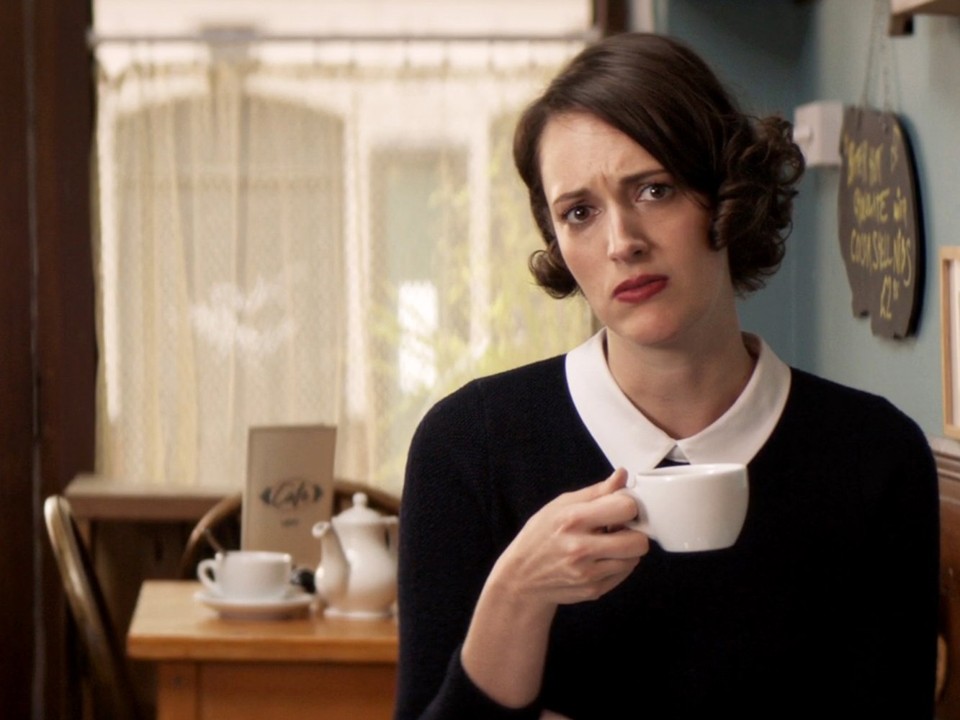
Where would we be without the BBC and Amazon? I just finished watching the six-episode season of Fleabag, and I can't even wait to process all my emotions. I simply had to take to the blog to tell everyone to watch it immediately.

Written by and starring the incomparable Phoebe Waller-Bridge, Fleabag is the story of a single woman in London and her approach to sex, work, and family. It is only now, when I am writing this review, that I have realized we never learn her name (she is simply the eponymous "Fleabag"). Phoebe Waller-Bridge spends a lot of time making direct asides to the camera, offering up the most expressive faces ever and delivering an internal monologue to the audience as her life happens to her, and you feel so in tune with her thoughts and emotions that knowing her name is not remotely important. What is important, however, is meeting the various characters who come in and out of her life, and slowly piecing together the back story of this incredibly hilarious but ultimately sad woman.

Fleabag is a comedy. But like all comedies in the current Golden Age of TV, there is an undercurrent of drama and I would be remiss if I said this show will only make you laugh throughout its six-episode run. While the first three episodes feature spectacularly raunchy R-rated comedy and sarcastic, brilliant jokes, something happens towards the end of the fourth episode that made me realize this show wasn't just interested in making me laugh. It was definitely going to make me cry. Hugh Dennis delivers a warm and heartbreaking monologue set to an incredible piece of music and that's when you discover this show has wormed its way into your heart.

Apart from Waller-Bridge's captivating central performance, Sian Clifford is blisteringly good as her Type A sister, Claire; Bill Paterson is remarkable as their father, who manages to be both hands-off and a bewilderingly awkward worry wart; and Olivia Colman is the most gleefully evil stepmother portrayed on screen since Cinderella. The show is adapted from Waller-Bridge's one-woman play from the Edinburgh Fringe, and she manages to tell this story in six perfect episodes that manage to simultaneously wreck you and build you back up. It has been a mere two hours since I finished the last episode, and I am already keen to go back and re-watch my favorite scenes, both comedic and dramatic. Much like You're the Worst, Fleabag is a miraculous show that understands real life is not easily compartmentalized into comedy or drama; while it packs in humor, it is not afraid to allow grief and sadness to enter the fray. I love, love, love this show, and I'm willing to bet that you will too.

Wednesday, September 28, 2016

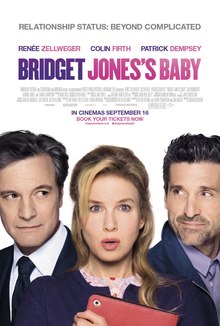
Bridget Jones's Baby: V. V. Good

I was in Boston for a girl's weekend and naturally, I went to see Bridget Jones's Baby. Halfway through the movie, it dawned on me that I had seen the last Bridget Jones movie in Boston as well, 12 years ago as a college firstyear. Like Bridget, I had come full circle.

Let me start off by saying that I unapologetically love Bridget Jones. This is in contrast to the majority of my female friends (the males are stereotypically unwilling to even give her a chance) who think she is a terrible fictional character. Yet, as my friend Alison put it, Bridget Jones gives hope to us all. She is a comforting presence, a foul-mouthed, boozy, inarticulate weirdo, who manages to get through life through sheer force of will. And her perpetual will-they-won't-they relationship with Mark Darcy is founded on the fact that she is genuinely a funny and lovely woman. She may not be an Oxbridge-educated top human rights lawyer, but she has her own personal charm and wit that can bring out the best in the stuffy Darcy.

 The plot of this movie is fairly farcical. Single at 43 after the relationship with Mark didn't work out (for reasons that are explained halfway through the film), Bridget is trying to live it up again. Through a series of events, she ends up sleeping with a stranger named Jack Qwant (played by Patrick Dempsey, a poor substitute for Hugh Grant's Daniel Cleaver, who does not appear in this film for reasons explained at the very beginning), and then sleeping with Mark a few days later at their goddaughter's christening. Twelve weeks later, she discovers she is pregnant and comedy ensues, as she has no idea who the father is. It seems silly but once the premise is set up, we get a truly fun film, with two earnest lovers wooing our heroine. There are loads of laughs but also a great deal of emotion as Mark struggles to convey his feelings and we get indulgent flashbacks from the old movies to remind us of their epic romance. Colin Firth is still as dashing as ever and there is nothing more glorious that watching the stern Mark Darcy unbend and smile. Only Bridget can put that expression on his face and that is why they deserve to be together. 

The movie won't change the mind of anyone who already hates Bridget, but it is a perfect treat for those of us who love her. I found it satisfying and sweet, with some physical comedy that literally made me laugh out loud in the theater and romantic moments that made me tear up. Expertly directed by Sharon Maguire (the original Shazza!) and written by Helen Fielding, Dan Mazer, and Emma Thompson (who also has a hilarious turn as Bridget's bemused OB/GYN), this movie is the perfect swan song for Bridget. It features a much more heartening resolution than the newspaper column or the latest book where--oh the horror!--Darcy was dead. The soundtrack is full of infectious Britpop, there is plenty of sweary dialogue, Shazza, Tom, and Jude put in appearances as Bridget's shockingly grown-up friends who will still enable her ridiculousness, and all in all, the movie doesn't set a foot wrong. Renee Zellweger should triumph in this performance because frankly, until I started watching this movie, I had no idea how much I had been missing Bridget. I love her, and now I have hope that when I turn 43, I can cock up my life and still sort it all out before the next Christmas Turkey Curry Buffet. 

Monday, September 19, 2016

You're the Worst: Comedy That Digs Deep

You're the Worst didn't seem like a show that would be my cup of tea. It's about two horrible people who hate relationships and then decide to give each other a try after a one-night stand. They are mean to everyone they meet, and while the jokes are razor sharp and witty, you wonder how on earth a show can be sustained on such a thin premise. But as with all great comedies, over time the comedy deepens, the characters grow, and the stories become tinged with an unexpected soulfulness that hits you right in the gut.

Aya Cash and Chris Geere play the central couple, Gretchen and Jimmy. They are thirtysomethings living in Los Angeles, where Gretchen is a PR rep for a rap trio (composed of characters that ought to have their own hilarious spin-off) and Jimmy is a writer (of novels, not TV, as he would hasten to add). They meet at a wedding and spend a night having sex and telling each other the most horrible stories they can about things they've done. When they realize they both find these stories amusing rather than heinous, they decide to give this relationship a go. What's the worst that could happen?

In addition, we have Gretchen's best friend, Lindsay (Kether Donahue), who has recently married a man she doesn't like very much. She might be the most weirdly wonderful character you've seen on television, a dumb, selfish, yet bizarrely endearing oddball who is full of brilliant one-liners and terrible advice. On the flip side, we have Edgar (Desmin Borges), an Iraq War veteran who sold pot to Jimmy in college and then became his roommate when he returned from war. Edgar is suffering from PTSD and is struggling to get back on his feet, but he is a sweetheart, the one truly kind and gentle person in the core foursome that make up this show. As the show progresses, he slowly gets his life in order, while Lindsay's crumbles to the ground. The third season of the show premiered a few weeks ago and both characters are in interesting places right now, so I can't wait to see where they are headed.

Back to Jimmy and Gretchen. They are clearly meant for each other, and much of the show feels like a screwball comedy where the main couple trades wicked barbs that halfheartedly disguise their true feelings for each other. What elevates this relationship, however, is its second season. We are slowly presented with an unexpected revelation - Gretchen suffers from clinical depression. Her brand of illness waxes and wanes, so when she is suddenly overwhelmed by her sadness, Jimmy has no idea what to make of it. We get some truly excellent episodes where he tries the usual tactics of a concerned but clueless bystander - coordinating special events to cheer her up, demanding she be happy and snap out of it, and then finally, almost giving up, before he realizes that he is in too deep to quit on her now. Geere does a wonderful job portraying Jimmy as a man who is trying his best and struggling to be empathetic, a skill that does not come easy. But Aya Cash is a revelation, perfectly capturing the complexities of depression in all its stages - the snappiness, the sudden tears, the catatonic inability to do anything or go anywhere, and even the need to pretend to be fine so that other people will stop freaking out about your sadness. It is a powerhouse performance that should be required viewing for the world.

Season 3 is three episodes in, and while the tone is still fun and sarcastic, they are not shying away from exploring Gretchen's depression, Edgar's PTSD, and a host of other topics that one wouldn't normally associate with a sitcom. By packaging these topics into a comedy, You're the Worst is the best kind of show, one that highlights how you can mine the ups and downs of ordinary life for humor, compassion, and goodwill regardless of who you are and how you are feeling. The central characters started out as awful people, but rather than being one-dimensional villains, they have morphed into regular (albeit highly sarcastic and volatile) human beings, capable of moments of great love and warmth when one of their own is in trouble. Every episode of You're the Worst contains a brilliant joke or setup that will make you burst out laughing, but occasionally they feature a heartbreaking moment of truth that will turn your soul inside out. So find FXX on your cable line-up and watch You're the Worst. It is romantic, funny, and true. 

Monday, September 5, 2016

The Night Of: Nothing is Black and White

HBO's The Night Of is based on an acclaimed BBC show called Criminal Justice. However, the show it most reminds me of is The Wire. Which makes sense because it was co-created by former Wire writer, Richard Price. The show's other creator is Steve Zaillian, who won an Oscar for writing Schindler's List. With that kind of pedigree, it's no wonder that this is one of the most compelling and stark shows I've seen about the American criminal justice system.

Set in New York City, the show tells the story of Nasir "Naz" Khan (Riz Ahmed), a Pakistani-American college student who is accused of murdering a young white woman. Naz remembers entering her apartment and sleeping with her, but the next few hours are a complete blank - he woke up alone in her kitchen, and when he went upstairs to say goodbye, he was confronted with her dead body and fled the scene of the crime. The first episode of the show is a masterclass in storytelling, setting out the clues and characters like pieces on a chessboard, and the next seven episodes play out an intricate game that touches on justice, race, class, and morality.

Given that this is a miniseries with only eight episodes, any further plot details would spoil too much. So you'll have to take my word for it when I say The Night Of is well worth your time. It boasts impeccable performances from its cast - Riz Ahmed is sublime as the bewildered Naz, who goes into prison looking like Bambi and turns into something far more heartbreaking as the wheels of justice slowly grind towards his trial. John Turturro plays Naz's lawyer, John Stone, a man who may not have the best legal reputation and only became Naz's attorney by mistake, but who is willing to tap into his inner Atticus Finch and give this kid a chance. Peymaan Moadi and Poorna Jagannathan are incredible as Naz's parents, refusing to believe their son is capable of such a heinous crime and willing to sacrifice everything to get him a proper trial. Bill Camp is tremendous as the solid Detective Box, a man on the verge of retirement who does everything by the book and yet finds himself unsatisfied with this seemingly open-and-shut case. And then we have The Wire's Omar himself, Michael Kenneth Williams, playing Freddy, a prisoner who can offer Naz protection but embodies all the moral ambiguities that are at play in this story.

In addition, each episode is exquisitely shot and edited, offering up rich character studies and suspenseful intrigue. Moments of the show reminded me of Spotlight - just as that movie glorified the often humdrum nature of investigative journalism, The Night Of revels in portraying the plodding nature of police work or setting up a legal defense. A sequence where Box has to re-create Naz's movements on the fateful night is an editor's dream, cutting from police cam footage to cell tower records and E-ZPass receipts, to create a timeline of events that the audience already knew but is still thrilling to see pieced together after the fact.

The Night Of shies away from absolutes. There is no character who is right all the time, and there is no character who is truly evil. Everyone has a story and everyone has their motivations. Some might be worse than others, but in the end, everyone has a chance at redemption and a chance to fall from grace. As the story hurtles to its conclusion, every character undergoes a transformation that highlights the murky depths of human nature. Your favorite character will change from week to week, and your allegiances will keep shifting as you uncover more information about the people you thought you had pegged. The only certainty in The Night Of is that corruption, racism, and classism permeate all levels of society. And while the series offers some hope that well-meaning people can still fight the good fight, it is all too clear that the scars from that fight will last a lifetime. 

Sunday, September 4, 2016

Twelfth Night: Unfettered Joy

The first time I saw a production of Twelfth Night was three years ago at the Belasco Theatre. It was an acclaimed production, transferred over to Broadway after a successful run at Shakespeare's own Globe Theatre. It featured an all-male cast and strove for Elizabethan authenticity, showing audiences how this play would have originally been performed. Now, three years later, I witnessed a very different production of Twelfth Night put on by Public Works in the open-air Delacorte Theatre in Central Park. A zippy musical with contemporary songs mixed in with the original Shakespearean dialogue, featuring the most diverse cast of actors I've seen on stage, this production broke my brain. In the best possible way.

Directed by Kwame Kwei-Armah and featuring music and lyrics by Shaina Taub, this play opens with a musical number entitled, "If music be the food of love play on," which is the play's famous opening line. In this context, however, it is not sung by the lovelorn Duke Orsino, but Feste the fool (played with indescribable perfection by Shaina Taub), along with the play's ginormous supporting cast. The whole point of the Public Works initiative by The Public Theater is to partner with people and organizations across New York City and encourage participation from professional actors and non-professionals alike. The result is that the opening number features a bright and colorful stage crammed with a diverse and beautiful sea of humanity, featuring all ages, genders, and races, letting you know that this is going to a spectacle of epic proportions.

The play proceeds with alacrity, economically establishing the cast of characters and tangled plot featuring identical twins, unrequited love, and drunken pranks. Halfway through the play, Feste sings a quick catch-up song to remind the audience that Viola (who is disguised as a man named Cesario) is still not aware that her identical twin brother, Sebastian, is alive. As Viola and Sebastian unhappily wander on opposite sides of the stage, Feste mentions that she could reveal the truth to the two of them right now, but then the play would end prematurely and all the hard work the cast has put in over the summer would be ruined. That breaking of the fourth wall is a sheer delight, occurring throughout the play and keeping the audience engaged as they suspend their disbelief over the decidedly ludicrous plot.

Twelfth Night has always been my favorite comedy. I would giggle and guffaw at the mistaken identities and cross-dressing and random hi-jinx with the yellow-stocking'd Malvolio (played by Andrew Kober in this production with magnificently indignant pomposity - I could watch him declaim about his "greatness" for a solid hour). But until last night, I had not realized what a romantic comedy it was. Taub has penned some thrillingly soulful ballads to capture the unrequited love that Orsino feels for Olivia, Olivia feels for Cesario, and Viola feels for Orsino. Previously, I regarded all this romance as a hilarious plot point, but as the actors passionately sing their hearts out, you realize that while the audience is in on the joke, the characters are not, and their feelings transcend this comic farce. Nikki M. James, who plays Viola, has a particularly stirring voice and for the first time ever, Twelfth Night stirred up emotions in me that had nothing to do with laughter.

This production of Twelfth Night demonstrates how magnificent theatre can be when you employ a diverse cast and go all out on stage. One love song features dancers from the New York Deaf Theatre, who sign the lyrics in ASL as they employ breathtakingly graceful choreography. A fight song suddenly features drummers and martial artists from the Ziranmen Kungfu Wushu Training Center - it is unexpected, but a perfect addition to the already bonkers proceedings of this comedy. Speaking of bonkers, at one point someone in a Pikachu suit races across the stage, chased by some Pokemon Go players. You may ask why on earth that happens, to which I can only reply, Why not? This production is the polar opposite to the one I witnessed at the Belasco three years ago. And yet, despite its unconventional approach, it probably hews closest to what a modern Shakespeare would want people to see in his plays. It entertains, it delights, and most importantly, it reaches deep into your heart and conveys the true magic of a night at the theatre.

Tuesday, August 30, 2016

My Dad Wrote a Porno: Do Not Listen While Operating Heavy Machinery

Need to improve your Monday morning commute? Listen to a podcast called My Dad Wrote a Porno. You can guess that this is a NSFW (though I think I've recommended it to everyone I work with regardless), very adult podcast that you don't want your kids listening to. But if you're acquainted with the birds and the bees, grab your headphones (and your cervix) and get ready.

The show is hosted by three Brits: Jamie Morton, Alice Levine, and James Cooper. Jamie is the unfortunate soul whose father has written a pornographic e-book entitled, Belinda Blinked. His father writes under the choice pseudonym of Rocky Flintstone and this whole endeavor began as a retirement lark after he tired of writing tamer fare, like travel guides, with his wife. He gave the finished manuscript to his son, and the horror-struck Jamie decided there was only way to get through this piece of erotic fiction - reading it chapter-by-chapter on a podcast with his friends, Alice and James.

I first heard about this podcast on NPR's Pop Culture Happy Hour (the source of all of my favorite recommendations) and I was hooked after the first five minutes. And the people I have recommended it to have been similarly ensnared. I devoured the first season over a weekend, and thankfully, because Rocky Flintstone did not just stop with one book, the gang are now in the midst of reading Belinda Blinked 2, releasing a new chapter every Monday morning to start my week off right. I have frightened my fellow commuters by cackling on the shuttle or giggling on the street. But who cares, because this podcast is so brilliant. In addition, there are little "Footnotes" released on Thursdays that feature Q&As, deep-dives into themes that arose from a particular chapter, like a very informative Dutch lesson that gives you everything you need to know before a trip to Amsterdammmm, and interviews with celebrities who love the podcast (my favorite so far is the one with QI Elf Dan Schreiber from No Such Thing as the News - talk about everything I love mashed up into a glorious half hour).

I realize none of the above adequately explains what is so wonderful about MDWAP. It's an odd combination of bewildering plot (or lack thereof), un-sexy sex scenes (my fellow female listeners will back me up when I say there is nothing more cringe-inducing than the anatomically impossible references to cervixes sprinkled throughout the first book), stilted dialogue, and oddball characters ranging from our heroine, the bizarre Belinda Blumenthal who seems to think nothing of taking her kit off in every conceivable situation, to the Youngish Man, whose name we got as a complete afterthought once he was done shagging Belinda. And of course, this is all delivered in Jamie's fantastically soothing voice. He tries to be as professional as possible but simply can't hold it together when a particularly egregious event unfolds (i.e. every five to ten seconds) and requires as much moral support as Alice and James can muster. Even more hilariously, the trio will occasionally try to highlight moments when Rocky has genuinely written something well or displayed some kind of literary brilliance, only to quickly cast their praise aside as they get to the next horrifying sentence.

My Dad Wrote a Porno is the most gleeful, inane experience you can hope to introduce into your life. It is so funny, so unrelentingly preposterous, and such a product of the modern age where we can take the literary foibles of a retired Irishman and turn him into a worldwide sensation with a global audience of three million people. We can complain all we like about how fractured and chaotic the world is. But as it turns out, all we need to unite the masses is to listen to a hapless man narrate his father's erotic fiction. 

Sunday, August 28, 2016

The Great British Bake Off: Sweetly Satisfying

Much has been written about the excellence of The Great British Bake Off (or The Great British Baking Show as it's known in the States). This past week, the seventh season of the show premiered on the BBC with its highest ratings yet. Why do people love this show so much? Let me count the ways.

1. The contestants. Twelve amateur bakers are picked from across the UK. These are thoroughly ordinary citizens from all walks of life. None of them bake for a living but they all bake for enjoyment and this show will put their passion to the test. No matter where they're from or their family background, one thing unites all Bake Off contestants: their Britishness. These are not the showboating reality stars of American TV shows. These are self-deprecating Brits who will bake up a storm and then shrug their shoulders at a compliment, never willing to say they did a good job until someone forces them to acknowledge that they have accomplished a miracle. 

2. The judges. Mary Berry and Paul Hollywood. With names like that, they have to be good. And they are. They are renowned bakers in their own right but also the ideal judges - firm but fair, always willing to find something to praise if your bake went horribly wrong and bound to nitpick if you missed one tiny thing that would have transformed your almost-perfect bake into a masterpiece. They are knowledgeable, kind, and charismatic, the perfect mentors for eager amateurs. 

3. The hosts. The comedy duo of Mel Giedroyc and Sue Perkins are great audience surrogates. Two ladies who don't know anything about baking but are sure as hell going to taste all the delicious treats. As they cheerfully announce each impossible round and then wander around the tent offering humor and support to the harried contestants, they are like a pair of adorable puppies, seeking only to bring a smile to your face or comfort you when your souffle collapses before your eyes. 

4. The format. Every episode has a theme and consists of three rounds: the Signature bake, the Technical challenge, and the Showstopper. Contestants are briefed in advance about the first and third rounds so they can practice during the week in their homes and give their closest friends and families diabetes while coming up with wondrous creations that are destined to wow the judges and audience alike. But the Technical challenge is a devilish thing. Each week, one of the judges picks an obscure recipe for an item that most of the contestants have never heard of or never made. To make matters worse, the recipe doesn't have all the details, forcing the contestants to guess at how long to leave something in the oven or how long to proof the dough. It's always a wonder that anyone makes anything edible at all. 

5. It's simply wonderful. Like a perfect bake, the above four elements of the show combine to make something greater than the sum of its parts. Over the past few weeks, I watched the latest season on PBS. I already knew who had won because it was discussed at length in the British press, but as I watched each episode, I still found myself thoroughly invested in every single baker, cheering for their artistry and commiserating in their disappointments. And when I got to the finale, I teared up, because the winner was so utterly gobsmacked and so genuinely deserving. The show feels comfortable and predictable but over the course of ten weeks, you truly get to know these people and feel like they are your closest friends. Every person who gets eliminated is dearly missed and every person who wins Star Baker is genuinely celebrated. 

The Great British Bake Off is an insidious show, a seemingly simple reality program that nonetheless worms its way into your heart. It has no time for apathy or pessimism; it only wishes to promote warmth and cheer. Be warned, every episode will leave you ravenous. But as empty as your stomach may feel, your heart will be full.